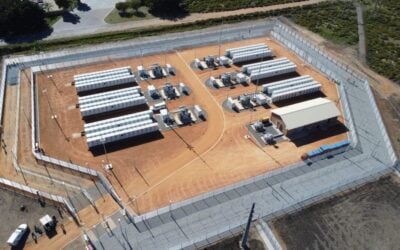
Argentina is set to launch a call for expressions of interest (EOI) for energy storage projects as it looks to reach 20% renewable energy in 2025.
The country’s Ministry of the Economy has released its plans for decarbonisation to 2030 and 2050, as well as set out its target for two years’ time, and said the planned changes to its energy system to meet its goals would require the “progressive integration” of energy storage systems.
The announcement was made in Resolution 906/2023, published on Monday 6 November.
Technical information about the electricity grid in Argentina and a procedure for receiving and evaluating the EOIs will now be prepared by the country’s wholesale electricity market operator, CAMMESA (Compañía Administradora del Mercado Mayorista Eléctrico Sociedad Anónima).
Try Premium for just $1
- Full premium access for the first month at only $1
- Converts to an annual rate after 30 days unless cancelled
- Cancel anytime during the trial period
Premium Benefits
- Expert industry analysis and interviews
- Digital access to PV Tech Power journal
- Exclusive event discounts
Or get the full Premium subscription right away
Or continue reading this article for free
CAMMESA needs to publish its procedure within 20 days of the Resolution’s publication and interested parties will have 120 days to submit their proposals, with CAMMESA then having 60 days to present the evaluations of those proposals to the Ministry.
Interested parties are being invited to propose projects encompassing the financing, construction and management of energy storage systems in the wholesale electricity market. The projects could be for optimising generation dispatch, providing power reserve services or other mechanisms proposed.
Different technologies and technical characteristics will be considered, with proposals expected to outline power and energy, charging and discharging periods, maximum storage periods (in days to years), useful life and number of cycles, degradation and other details.
With Argentina being a major source of lithium carbonate for lithium-ion batteries, EOIs which propose ways to integrate a national supply chain into project delivery will be “valued”, the Resolution added.
The news comes after our publisher Solar Media recently held the Energy Storage Summit Latin America 2023 in Santiago, Chile, where the bulk of the sub-continent’s grid-scale energy storage activity is happening.
See the full bulletin from the Ministry of the Economy in Argentina here (in Spanish).