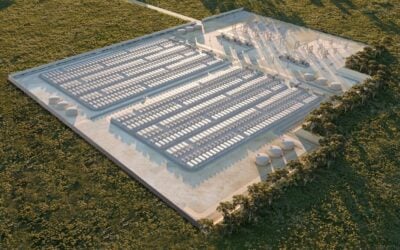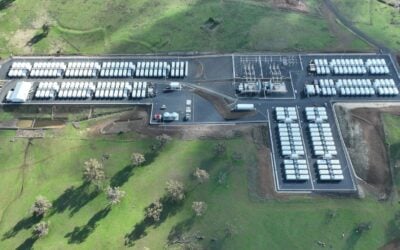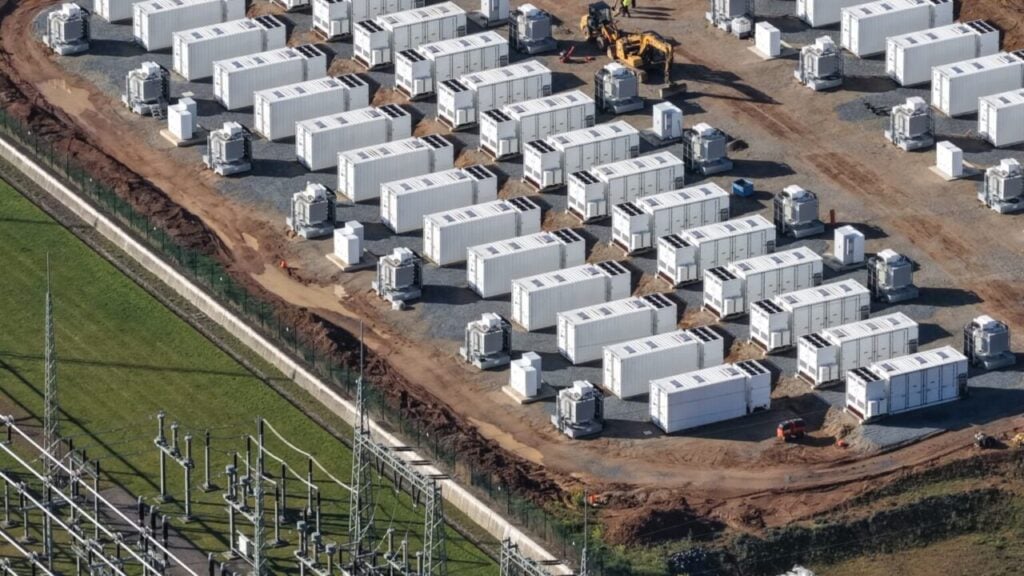
Anza Power has signed a tolling agreement with Amazon Australia for the 50MW/200MWh Bairnsdale battery energy storage system (BESS) in East Gippsland, Victoria.
This marks Amazon’s first standalone battery storage tolling agreement in the Asia-Pacific (APAC) region.
Anza Power is a renewable energy developer, owner, and operator, launched by global infrastructure investor I Squared Capital in January 2026, with a US$300 million commitment to deliver reliable, clean energy across Australia and New Zealand.
Unlike the solar-plus-storage projects that have typically anchored Amazon’s Australian renewable energy portfolio, the Bairnsdale system will connect directly to the electricity grid as an independent asset, without being paired with a co-located solar or wind farm.
Try Premium for just $1
- Full premium access for the first month at only $1
- Converts to an annual rate after 30 days unless cancelled
- Cancel anytime during the trial period
Premium Benefits
- Expert industry analysis and interviews
- Digital access to PV Tech Power journal
- Exclusive event discounts
Or get the full Premium subscription right away
Or continue reading this article for free
The arrangement is also described as a first-of-its-kind agreement in Australia for a non-energy business to contract for a standalone battery storage system.
The project is designed to store electricity and dispatch it during periods of peak demand, supporting regional grid reliability and enabling greater integration of renewable energy generation into the National Electricity Market (NEM).
The Bairnsdale deal extends a pattern of escalating battery storage commitments Amazon has made in Australia over the past year.
In April 2026, Amazon signed nine renewable energy power purchase agreements (PPAs) totalling 430MW, eight of which included co-located battery storage, in what the company described as its largest single-year renewable energy investment in the country and its first solar-plus-storage PPAs both in Australia and outside the US.
That portfolio spanned developers including OX2, X-ELIO, Anza, TagEnergy and European Energy, and directly supported Amazon’s AU$20 billion (US$13.86 billion) commitment, announced alongside Prime Minister Anthony Albanese in June 2025, to expand data centre infrastructure across Australia by 2029.
Amazon has continued to expand that portfolio since. In July 2026, the company signed a battery storage PPA covering the 100MW/220MWh storage component of European Energy’s Winton North solar-plus-storage project in northeast Victoria, adding to an existing solar PPA at the same site and making Winton North one of a small number of Australian projects where a single corporate offtaker has contracted both generation and storage output under separate agreements.
According to Amazon, the company has now invested in ten battery storage projects across Australia, seven of them in Victoria, with a combined capacity of 368MW once completed.
Amazon has framed its battery storage investments around the grid-stability role that storage plays as renewable energy penetration increases.
The company said an estimated 7.2TWh of surplus wind and solar energy was generated in Australia in 2025, roughly enough to power every home in New South Wales through the evening peak for a year, energy Amazon said would otherwise go to waste without battery storage to store and later discharge it.
A market shaped by rising data centre demand and grid connection debates
Amazon’s push into standalone battery storage lands within a broader debate over how data centre operators should contribute to grid infrastructure and stability as their electricity demand grows.
Data centres currently account for around 3% of Australia’s total electricity consumption, and federal energy minister Chris Bowen has argued the sector can help deliver the country’s 82% renewable energy target rather than simply add strain to the grid.
Industry figures have separately warned that social backlash is likely if data centre developers are seen as freeloading on Australia’s clean energy transition, a concern that has prompted the Australian Energy Market Commission (AEMC) to begin developing regulatory frameworks addressing what it terms “inverted baseloads,” referring to large, constant electricity consumers such as data centres.
Amazon has pointed to an independent study from Frontier Economics, finding that Australia’s market and regulatory frameworks are designed so data centres pay prices reflecting the costs they create, preventing those costs from being passed on to households, and has said it funds dedicated high-voltage connections for its own data centres rather than drawing on lower-voltage infrastructure that communities depend on.
The company’s broader Australian AI infrastructure investment, first announced in 2025, is expected to be powered substantially by utility-scale solar, with battery storage increasingly positioned as the complementary asset class needed to firm that generation and support grid reliability as more corporate offtakers.
Never miss an Australian energy storage story. Sign up for our Australia newsletter and get the latest project announcements, policy updates and market analysis delivered directly to you.