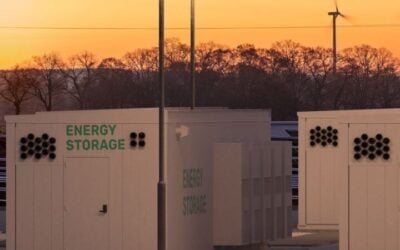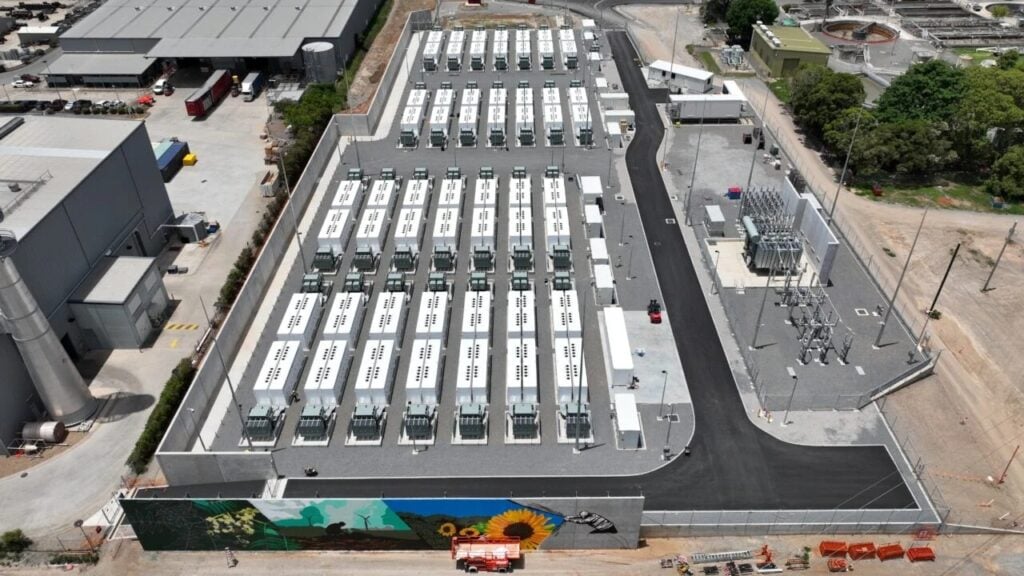
Akaysha Energy’s 415MW/1,660MWh Orana battery energy storage system (BESS) has reached full output, with the facility now listed as operating in Australia’s National Electricity Market (NEM).
According to data from Open Electricity’s facility database, the Orana BESS, located in New South Wales, officially reached full output on 29 May.
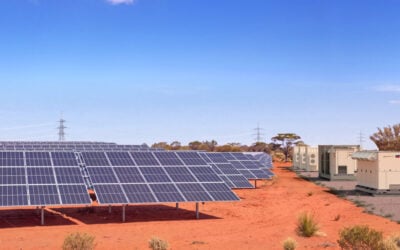
The project features 448 Tesla Megapacks providing 415MW output at 4-hour duration (1,660MWh storage capacity). It is situated on a site approximately 2km north-east of Wellington in the Central-West Orana Renewable Energy Zone (REZ), adjacent to TransGrid’s 330kV zone substation.
In terms of storage capacity, Orana is now the third-largest battery storage system in the NEM, behind Origin’s 1,770MWh Eraring Battery 1 and Akaysha’s own 1,680MWh Waratah Super Battery, which has experienced difficulties in recent months following a catastrophic transformer failure as it continued to work towards full operational status.
Try Premium for just $1
- Full premium access for the first month at only $1
- Converts to an annual rate after 30 days unless cancelled
- Cancel anytime during the trial period
Premium Benefits
- Expert industry analysis and interviews
- Digital access to PV Tech Power journal
- Exclusive event discounts
Or get the full Premium subscription right away
Or continue reading this article for free
Balance of plant was delivered by Consolidated Power Projects Australia, with the facility connecting to the existing TransGrid Wellington substation via approximately 350 metres of 330kV high-voltage cable.
The commercial structure underpinning the project is a combination of merchant revenue and contracted capacity. EnergyAustralia secured 200MW of the BESS’ output under a 12-year virtual tolling agreement, which was described at the time as the largest virtual toll contracted in the NEM to date.
Akaysha’s Orana BESS also holds a Long-Term Energy Service Agreement (LTESA) awarded under the NSW Electricity Infrastructure Roadmap, which provides revenue-top-up payments.
The AU$650 million (US$466 million) debt financing for the project was provided by 11 banks, including ANZ, CBA, Westpac, BNP Paribas, the Canadian Imperial Bank of Commerce and Siemens Financial Services through Siemens Bank.
A portfolio building pace
The Orana commissioning adds to a run of project deliveries that has consolidated Akaysha’s position as Australia’s most active utility-scale battery developer.
Earlier this year, Akaysha brought its 205MW/410MWh Brendale BESS in Queensland into operation close to five months ahead of schedule, with the Tesla Megapack 2-based system connected directly to Powerlink’s South Pine substation and equipped with grid-forming inverters providing fast-acting frequency control and ancillary services.
The Brendale project’s revenue is backed by a battery revenue swap agreement with Gunvor Group, combining contracted and merchant exposure while preserving operational flexibility for market bidding.
Beyond Australia, Akaysha has exposure in several international markets, including the US, Japan and Germany. In September 2025, the group secured an AU$300 million corporate debt facility to support its expansion into these markets.
The Orana milestone arrives as Akaysha’s owner, BlackRock, has reportedly been considering a partial exit from the business.
The BlackRock-backed developer has been weighing funding options to support its battery storage expansion across Australia.
Akaysha Energy’s operational portfolio now encompasses 1.4GWh across multiple Australian markets, with 4.5GWh under construction and an additional 30GWh in development globally.
Interested in Australia? Read Energy-Storage.news’ Energy Storage Summit Australia coverage and related content.