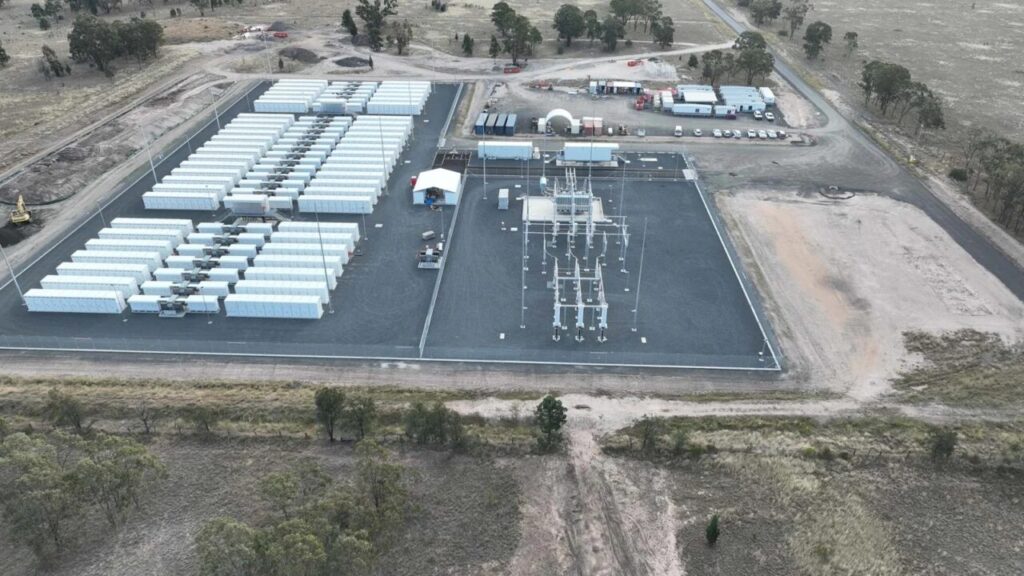
Waratah Super Battery developer Akaysha Energy has put the first phase of its Ulinda Park BESS project into operation in Queensland, Australia.
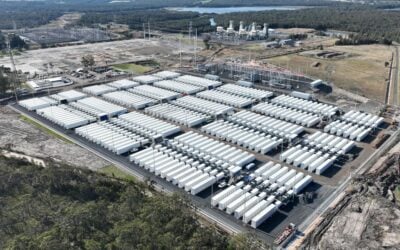
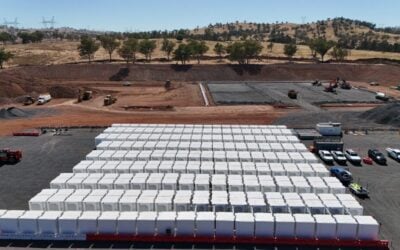
The Melbourne, Victoria-based developer announced this morning that the 155MW/298MWh first phase of its battery energy storage system (BESS) project, located in Queensland’s Western Downs region, is operational and trading in the National Electricity Market (NEM).
Akaysha Energy said the Ulinda Park BESS is providing energy shifting arbitrage and participating in Frequency Control Ancillary Services (FCAS) markets in the NEM, Australia’s largest interconnected electricity market.
Construction on the project began in late 2023, with the company taking a final investment decision (FID) after signing a revenue swap deal for the project with Re2, a provider of backstops for power purchase agreements (PPAs), tolling agreements and other revenue hedging structures.
Try Premium for just $1
- Full premium access for the first month at only $1
- Converts to an annual rate after 30 days unless cancelled
- Cancel anytime during the trial period
Premium Benefits
- Expert industry analysis and interviews
- Digital access to PV Tech Power journal
- Exclusive event discounts
Or get the full Premium subscription right away
Or continue reading this article for free
The 10-year risk hedging deal sees Re2 provide contracted revenues to Akaysha, while the developer can operate the asset and trade it in the NEM. At the time, Akaysha CEO Nick Carter said the agreement was “exactly the sort of innovative offtake product that we need in the market right now to help accelerate the build-out of large-scale battery projects.”
Akaysha later signed a similar deal for Brendale BESS, another Queensland project, with commodities trader Guvnor Group. The 205MW/410MWh Brendale BESS is nearing completion, having been added to the Australian Energy Market Operator (AEMO) Market Management System in Q3 of this year.
Ulinda Park’s location leverages existing grid infrastructure, which previously served fossil fuel generation in the Western Downs, and other companies, including utility CS Energy, have developed BESS assets to connect to the substation hub.
An expansion phase will also be built at Ulinda Park that will add a further 195MW/780MWh, taking the site’s total output to 350MW and storage capacity to 1,078MWh. This came after Akaysha successfully entered the project into the Australian federal government’s Capacity Investment Scheme (CIS) tenders for firm, dispatchable renewable energy. Ulinda Park was among 4.13GW/15.37GWh of winning projects announced in September from the scheme’s third tender round.
For developer Akaysha Energy, which emerged from stealth mode in 2022 with the backing of BlackRock, Ulinda Park and Brendale are two more large-scale projects to add to an Australian portfolio which includes Waratah Super Battery and Orana BESS, both in New South Wales (NSW).
Waratah Super Battery, Australia’s biggest BESS project to date at 850MW/1,680MWh, suffered a setback in its final commissioning phase with a transformer failure, but is thought to be close to full commercial operation. Akaysha closed AU$650 million financing on Orana BESS in mid-2024.
Renewables and storage investments have ‘dropped off a cliff’ in Queensland since last year
Meanwhile, new analysis has shown that investment in renewable energy backed with energy storage has “dropped off a cliff” in Queensland during the first year of state Premier David Crisafulli’s administration.
The Queensland Conservation Council (QCC) said today that, according to data from the Clean Energy Council trade association, investment in large-scale renewable energy and energy storage projects has fallen 74% since Crisafulli’s Liberal National Party (LNP) took power in late October 2024.
The final year of the Labour Party government saw 15 solar, wind and energy storage projects reach financial close or begin construction, whereas the past year has seen just four projects achieve those milestones. The first year of Crisafulli’s reign has seen just 880MW of projects commissioned or start construction, versus four times as much, 3,389MW in the previous year.
Former Queensland Premier Annastacia Palaszczuk introduced an AU$62 billion (US$43 billion) state Energy and Jobs Plan in 2022 and set a renewable energy target of 70% by 2032. The Palaszczuk administration also identified Queensland’s potential advantages in upstream battery materials and manufacturing supply chains, seeking to capitalise on natural resources including vanadium through a State Battery Strategy.
The new administration said it would roll back what it believed were ideological policies enacted by its predecessor, withdrawing government support for a planned 5GW/120GWh pumped hydro energy storage (PHES) project as one of its first acts in government and published a new five-year Energy Roadmap in October this year.
The roadmap forecasts the deployment of between 3.1GW to 4.3GW of short-duration energy storage (defined as up to 4-hour) by 2030 and between an additional 2.2GW to 4GW of medium-duration storage (4-hour to 12-hour) by 2035. It also ended a planned early shutdown for coal plants in the state, with the government ordering the 8GW of operational coal-fired power generation fleet—the largest of any state in Australia—to stay online until at least the end of their technical lives.
This continued reliance on coal has proven to be the most controversial aspect of the Energy Roadmap. Queensland Conservation Council said the past year’s data is “clear evidence” that the LNP’s actions in keeping coal plants in operation for decades more, repealing state renewable energy targets and cancelling projects, including a recent wind-plus-storage site, are pushing investors away.
“Investment in new large-scale renewable energy and storage has dropped off a cliff in Queensland because the Crisafulli Government keeps making ideological attacks on renewable energy, like axing progressed wind farms at the whim of the Deputy Premier,” QCC campaigner Stephanie Gray said.
“It’s basic economics: the less new energy supply we have, the more we’ll have to pay for electricity, especially as our coal power stations age and have rolling blackouts.”
Gray noted that Queensland coal plants were offline 131 times in the past year, calling the Energy Roadmap “nothing but a pathway to a fossil fuel fantasy land where Queenslanders will have to pay more for more polluting energy supply.”
Not only are coal plants expensive to maintain and polluting, but they are also increasingly being outcompeted by batteries and renewables in the NEM, with batteries able to respond to grid signals in much faster sub-second timings and renewables providing ‘fuel’ for free.