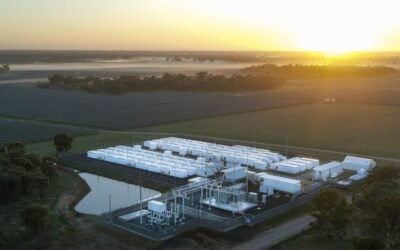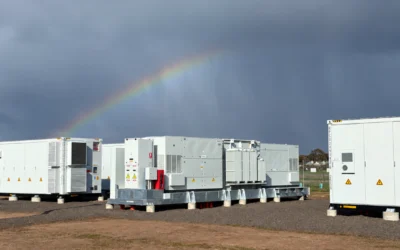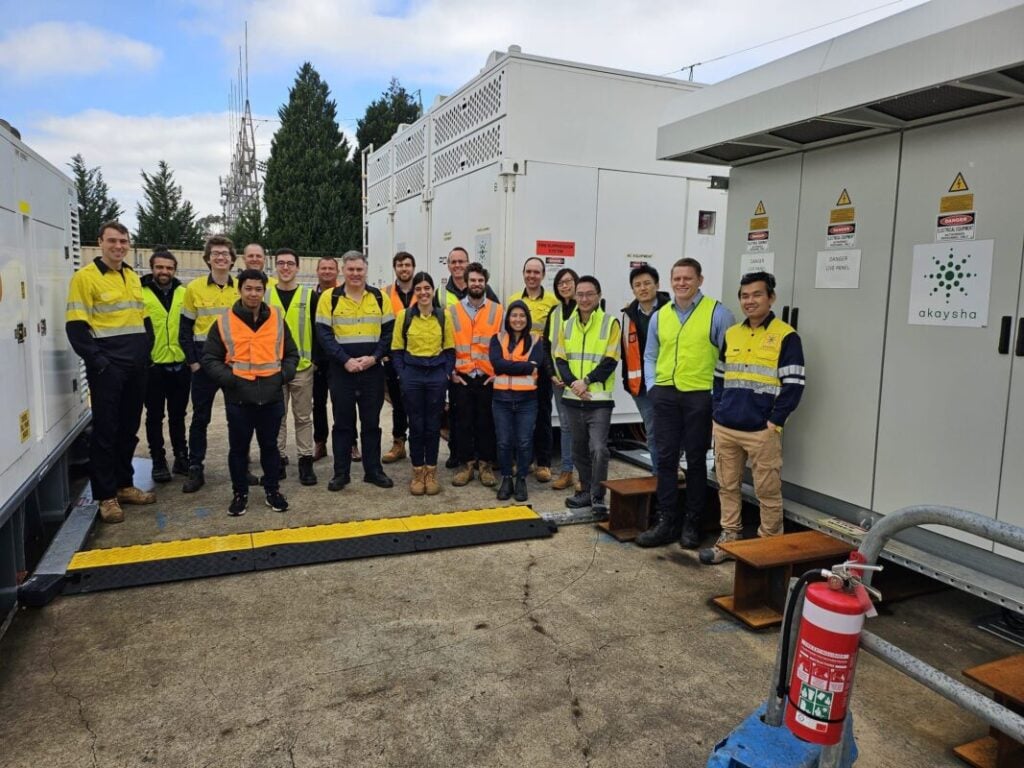
Akaysha Energy has closed financing for a battery storage project in New South Wales, Australia that is planned to be in excess of 1,660MWh capacity.
Energy storage developer Akaysha said this morning (15 July) that 11 banks have agreed to lend AU$650 million (US$440.58 million) for the Orana Battery Energy Storage System (BESS) project.
The funding, which has a three-year term, will go directly towards construction of the project in New South Wales’ (NSW) Central-West Orana Renewable Energy Zone (REZ). The deal includes AU$75 million in support for project security obligations with a Letter of Credit.
The banks are a mix of Australian and overseas lenders, including Australia’s ANZ, CBA and Westpac, and BNP, Canadian Imperial Bank of Commerce, DBS, ING, Mizhuo, Rabobank, Siemens Financial Services via Siemens Bank and SMBC from abroad.
Try Premium for just $1
- Full premium access for the first month at only $1
- Converts to an annual rate after 30 days unless cancelled
- Cancel anytime during the trial period
Premium Benefits
- Expert industry analysis and interviews
- Digital access to PV Tech Power journal
- Exclusive event discounts
Or get the full Premium subscription right away
Or continue reading this article for free
Although Akaysha Energy claimed in its announcement today that this is the single biggest financing for a standalone BESS project in the world to date—and it is clearly significant in scale—last year US developer Plus Power made the same claim when it raised US$707 million for its 250MW/1,000MWh Sierra Estrella BESS project in Arizona, as part of a wider US$1.8 billion finance package for five projects across Arizona and Texas totalling 2.76GWh.
200MW ‘virtual’ offtake deal central to debt financing
It would also likely be the second largest of Blackrock-backed Akaysha Energy’s total of 4GWh of BESS projects to go into construction, after the Waratah Super Battery, also in NSW, and currently at the installation phase of battery equipment.
Waratah Super Battery is being built with 1,680MWh storage capacity, and Akaysha’s slightly ambiguous statement that the Orana project will be a 4-hour duration asset with capacity in excess of 1,660MWh makes it unclear which would be bigger in scale in megawatt-hours when complete.
For Waratah, Akaysha has a contract in place with state-owned NSW Energy Corporation (EnergyCo) to provide 700MW/1,400MWh of grid stability services under the Australian System Integrity Protection Scheme (SIPS).
That offtake deal with the state entity was seen as pivotal in the financing of the Waratah project, and similarly, Akaysha said today that a different kind of contract, signed with energy generator-retailer (‘gentailer’) EnergyAustralia, was central to the debt deal for Orana.
With the system set to play into the interconnection National Electricity Market (NEM), which provides merchant revenue opportunities for battery storage through Frequency Control Ancillary Services (FCAS) and wholesale arbitrage markets, EnergyAustralia has secured 200MW of the BESS’ output over a 12-year contract with the developer.
Under the tolling deal, which Akaysha described as ‘innovative’, the utility will have rights to ‘notionally’ dispatch and charge the output as a form of so-called virtual battery, within pre-agreed daily bidding parameters. The developer said this virtual capacity would be separated from the physical operation of the BESS.
Akaysha also revealed that the Orana project will utilise Tesla’s Megapack BESS solution, with balance of plant (BOP) equipment integrated by Australian company Consolidated Power. The developer is using multiple BESS suppliers and integrators for its projects, with Powin Energy working on Waratah and Akaysha’s Brendale (205MW/410MWh) BESS in Queensland, and Tesla integrating Ulinda Park (150MW/300MWh), also in Queensland.
Central-West Orana Renewable Energy Zone
Commercial operations at Orana are expected to comment in 2026, Akaysha said, ahead of NSW’s planned opening of the Central-West Orana REZ in 2028.
Central-West Orana is one of at least five Renewable Energy Zones that the Australian state’s government is developing, each hosting multiple gigawatts of renewable energy generation.
The NSW government claimed a significant step forward had been taken at the end of June with the approval of a transmission network buildout to interconnect the REZ. Central-West Orana is being planned to transmit up to 4.5GW of electricity and could unlock AUS$20 billion (US$13.5 billion) in private investment into solar, wind and energy storage, the state government claimed.