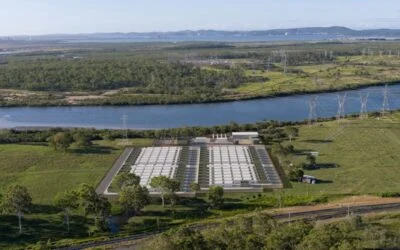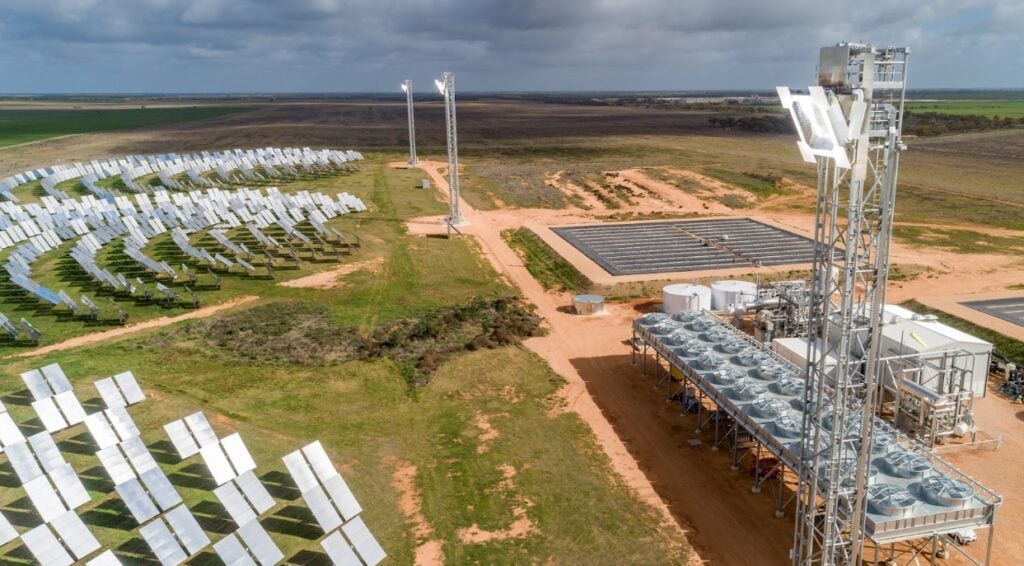
Australian energy major AGL Energy has acquired the Yadnarie solar thermal project in South Australia from Photon Energy, featuring 720MWh of long-duration energy storage (LDES).
This 8-hour duration project, located near Cleve on the Eyre Peninsula, represents a significant step forward in Australia’s renewable energy transition.
The Yadnarie project will be developed in two stages. Once completed, it will include 150MW of solar generation, 90MW of thermal energy capacity, and 90MW/720MWh of long-duration energy storage based on RayGen’s PV Ultra and Thermal Hydro technology.
AGL’s general manager of power development, Travis Hughes, highlighted the company’s dedication to incorporating LDES into its renewable energy strategy. The company aims to add 12GW of new renewable energy and firming solutions by 2035.
Try Premium for just $1
- Full premium access for the first month at only $1
- Converts to an annual rate after 30 days unless cancelled
- Cancel anytime during the trial period
Premium Benefits
- Expert industry analysis and interviews
- Digital access to PV Tech Power journal
- Exclusive event discounts
Or get the full Premium subscription right away
Or continue reading this article for free
“AGL has long been an early supporter and adopter of innovative energy solutions like RayGen’s, and this development has the potential to be a reliable and affordable solution to the challenges of long-duration energy storage as Australia transitions to a renewable energy system,” Hughes said.
RayGen’s long-duration energy storage technology
RayGen has developed novel technology for both energy generation and storage. Its ‘PV Ultra’ system combines solar PV with concentrating solar power (CSP), using heliostats (mirrors) to focus sunlight onto PV modules, significantly boosting efficiency.
On the storage side, RayGen’s ‘Thermal Hydro’ technology uses two reservoirs of water with temperature differences to drive an Organic Rankine Cycle engine.
Unlike traditional pumped hydro energy storage (PHES), which relies on elevation differences, RayGen’s Thermal Hydro system uses one pool of water heated to near-boiling point and another cooled to near-freezing.
This temperature difference powers the engine, with the heated water maintained by run-off heat from the project’s concentrating solar portion.
The refrigeration system is powered by the solar PV modules or off-peak grid electricity, making it a highly efficient LDES solution.
RayGen has attracted significant investment from major players, including Equinor and Chevron’s venture capital arms. Photon Energy, the original developer of the Yadnarie project, has made three investments in RayGen, resulting in a 5.47% stake in the company.
AGL also has strong ties to RayGen, being an investor and having previously agreed on an offtake agreement for production from RayGen’s Carwarp Power Plant.
Last year, RayGen kicked off a Series D funding round following investment from French oilfield services company SLB.
Reliability concerns see South Australia push for LDES solutions
South Australia, which already sources around 75% of its electricity from renewable energy, is facing potential reliability gaps as early as 2026-27.
The rapid adoption of renewables has created challenges for grid stability as coal-fired power stations are phased out. To address these concerns, the South Australian government is incentivising energy storage developers to invest in LDES projects.
LDES has become a focal point in the state’s energy strategy. The South Australian government recently launched a consultation for an upcoming tender seeking projects with a minimum of 30MW output and at least 8-hour storage duration.
According to the 2024 Electricity Development Plan, South Australia will require approximately 2,400MW of LDES capacity within the next five years to ensure grid stability and resiliency.
Our publisher, Solar Media, will host the Battery Asset Management Summit Australia 2025 on 26-27 August in Sydney. You can get 20% off your ticket using the code ESN20 at checkout.