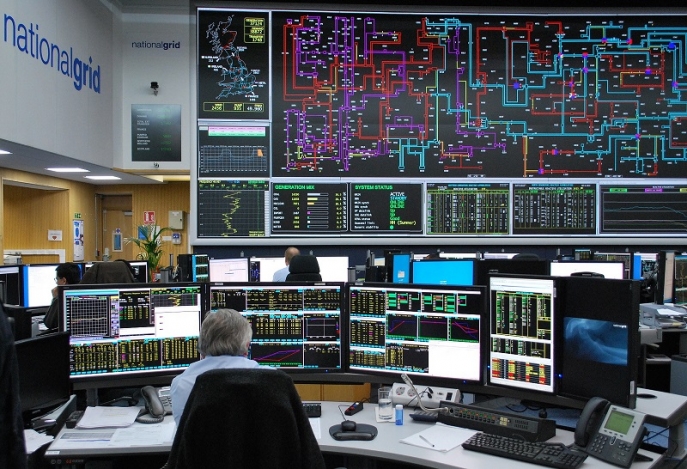
Energy storage and other flexibility providers with units as small as 1MW will soon be able to access ‘Great Britain’s core flexibility market’ under reforms being proposed by transmission system operator (TSO), National Grid.
Under the proposals to widen access to the Balancing Mechanism (BM) by April 2019, aggregators will also be able to play into the market for the first time without needing a supplier licence. One aggregator, Limejump has already entered its virtual power plant into the BM.
The BM, worth an estimated £350 million (US$444.2 million) a year to participants, rewards those able to increase or decrease generation or consumption. This flexibility is bid in to half hourly settlements periods with National Grid paying out what is needed in order to keep the system balanced.
Unlike other services which are contracted often well ahead of time, the BM is required to respond on an intraday basis and can offer significant revenues as a result. Writing for sister publication Current± in June, Flexitricity – which is preparing for its BM entry in October 2018 – said that on rare occasions, prices can reach £2,500/MWh (US$3,167), compared to around £50/MWh (US$63.35) in wholesale markets.
Try Premium for just $1
- Full premium access for the first month at only $1
- Converts to an annual rate after 30 days unless cancelled
- Cancel anytime during the trial period
Premium Benefits
- Expert industry analysis and interviews
- Digital access to PV Tech Power journal
- Exclusive event discounts
Or get the full Premium subscription right away
Or continue reading this article for free
National Grid has published a strategy for providing wider access to the BM, as well as setting out how to improve existing routes to market and enhance the systems needed to improve data flows between the ESO and market participants.
It will do this be creating a new type of participant, a ‘Virtual Lead Party’, which will be able to create a “Secondary BMU” of at least 1MW which can be utilised individually or aggregated together to be used in the BM.
Further modifications to grid codes will seek to create the contractual arrangements needed for this to occur.
On top of this, National Grid claims there are significant benefits to consumers from enabling more parties to access the BM, with a range of studies suggesting an economic benefit of between £110-500 million by 2020.
In advance of the new market structure, UK aggregator and energy services provider Limejump, which itself already has a supplier licence, has been admitted into the Balancing Mechanism (BM) using its Virtual Power Plant (VPP).
This followed a decision by Ofgem to grant ‘dispensation’ to the company from its obligations to comply with existing code structures, which do not allow for the aggregation of data at Grid Supply Point (GSP) Group level, instead requiring submission of data at the GSP level.
Limejump, which counts 150MW of batteries within its VPP, now has three aggregated units active in the BM, with a total of 178MW ready to participate across six BMUs.
“With [six] BMUs registered, we expect to operate up to 600MW+ as the business develops and grows,” a spokesperson told Current±.
For a more detailed look at National Grid’s reforms to the BM, read the full story on Current±.