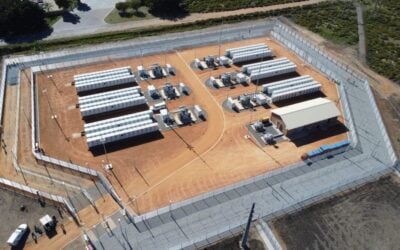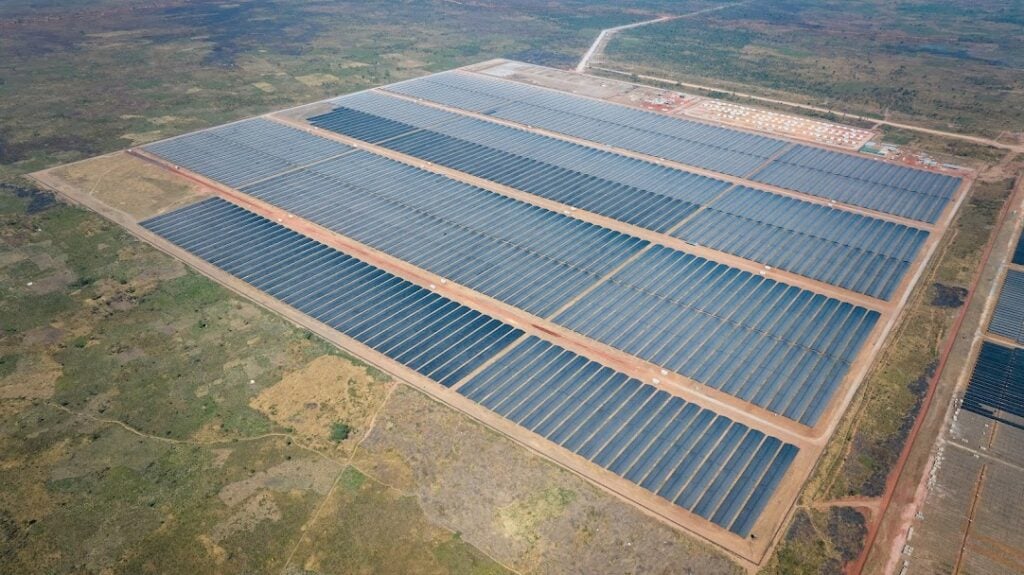
A solar-plus-storage project, claimed as the first of its kind in Africa to deliver 24/7 renewable electricity, has come online at a copper mine in the Democratic Republic of the Congo (DRC).
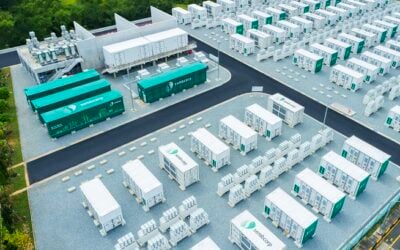
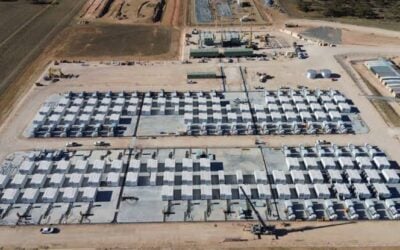
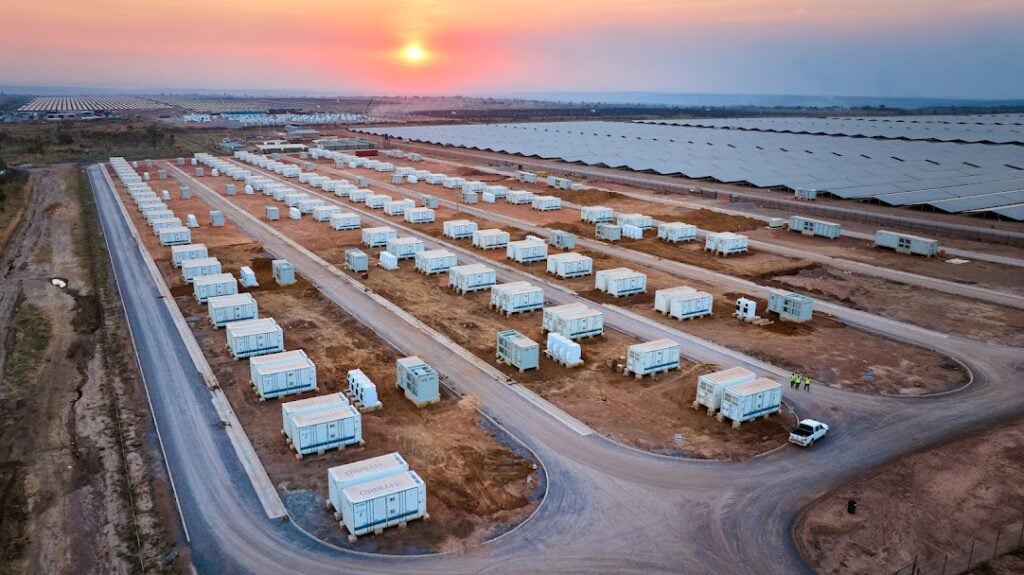
Developer and independent power producer (IPP) CrossBoundary Energy announced earlier this week (25 August) that its 233MWp solar PV and 123MVA/526MWh battery energy storage system (BESS) hybrid resource facility for mining company Kamoa Copper has reached commercial operation.
The combination of solar generation and battery storage enables the supply of 30MW or more in dispatchable baseload power to the Kamoa Copper mining complex, which spans nearly 400 square kilometres of land.
Thought to be Africa’s largest copper mining complex, it includes two mines currently in production, which further areas under exploration and development.
Try Premium for just $1
- Full premium access for the first month at only $1
- Converts to an annual rate after 30 days unless cancelled
- Cancel anytime during the trial period
Premium Benefits
- Expert industry analysis and interviews
- Digital access to PV Tech Power journal
- Exclusive event discounts
Or get the full Premium subscription right away
Or continue reading this article for free
In fact, while the solar-plus-storage plant’s performance guarantee ensures the dispatchable supply of 30MW firm power, CrossBoundary Energy said that in early operation, the PV plant has already been providing more than 150MW of power.
Of that, 50MW has been supplied directly to the mine network, while the remaining power charges the batteries. Its maximum expected output is 180MW.
CrossBoundary Energy’s development director for the DRC, Gracia Munganga, claimed the project’s start of operations was a “significant step to mainstreaming round-the-clock renewable power.”
As well as reducing the site’s carbon emissions, the adoption of round-the-clock (RTC) renewable energy will reduce the mine operator’s exposure to diesel fuel cost volatility and supply chain risk, CrossBoundary said.
According to a project fact sheet sent to media, including Energy-Storage.news, the RTC hybrid plant operates at a 95% availability factor.
The IPP and Kamoa Copper signed a power purchase agreement (PPA) for the project in Q2 2025, as reported by Energy-Storage.news. At the time, CrossBoundary Energy said the fuel offset would amount to an annual 78,750-tonne reduction in CO2 emissions.
The company also said then that while solar PV and BESS installations are becoming increasingly common at mines, a fully 24/7, RTC power guarantee was rare due to concerns over the variable nature of renewable generation.
The increasing efficiency of solar PV and the declining costs of battery storage made it possible at the Kamoa Copper site, CrossBoundary Energy had said. The IPP owns and operates the plant and sells the power to Kamoa Copper via the PPA.
Kamoa Copper project ‘demonstrates how quickly renewable energy can be deployed at scale’ for mining operations
Kamoa Copper is a joint venture (JV) between Canada’s Ivanhoe Mines, China’s Zijin Mining Group and the government of the Democratic Republic of Congo. Their mine began producing copper concentrates in 2021, and in 2025, Africa’s largest copper smelter was fired up at the complex.
Prior to the CrossBoundary deal, the JV company collaborated with DRC’s state-owned electricity company, Société Nationale d’Électricité (SNEL), to build a hydroelectric power plant.
Mwadingusha hydropower station opened in the same year as the mine, and Kamoa Copper and SNEL also added new hydroelectric generation capacity at an existing plant in 2025, with the hydro facilities providing a total 250MW of clean power for the mine and the DRC grid, according to Kamoa Copper’s website.
CrossBoundary Energy also claimed that the project’s speed of execution is notable.
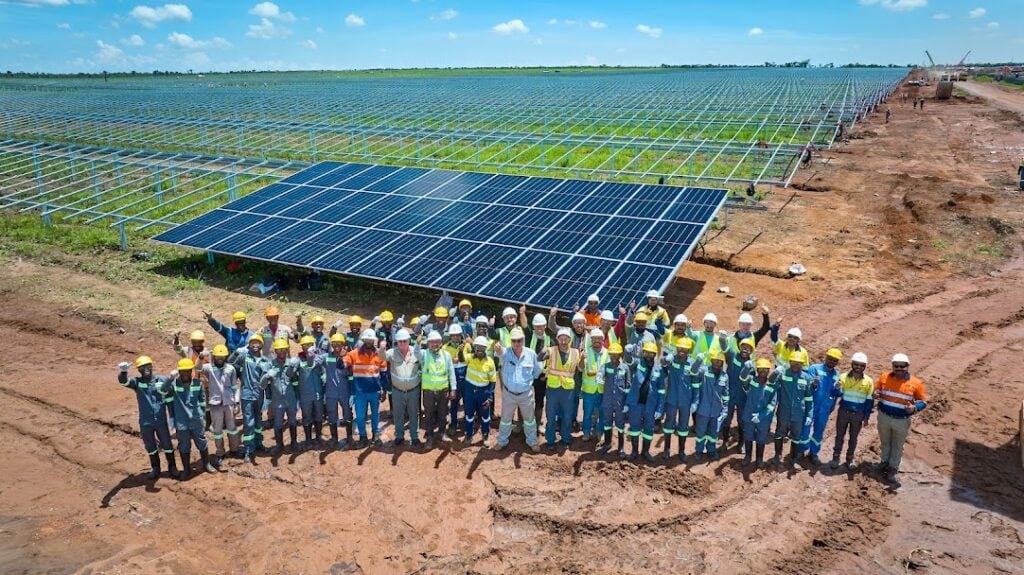
The 350,000+ solar modules, 513 PV inverters and 90 BESS power conversion systems (PCS), 180 BESS enclosures and other equipment, including transformers, that comprise the hybrid PV plant and associated infrastructure were delivered, installed, commissioned and put into commercial operation within 16 months of the PPA’s signing.
“The speed at which this project was delivered demonstrates how quickly renewable energy can be deployed at scale to support remote mining operations,” Kamoa Copper project manager Auguy Bakome said.
As an interesting aside, Kamoa Copper JV partner Ivanhoe Mines’ sister company, Ivanhoe Electric, is the majority owner of VRB Energy, a vanadium redox flow battery (VRFB) technology company. The companies are part of the Ivanhoe Capital group, led by Robert Friedland, a financier and renowned figure in the mining and exploration world.