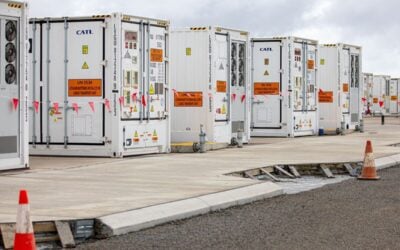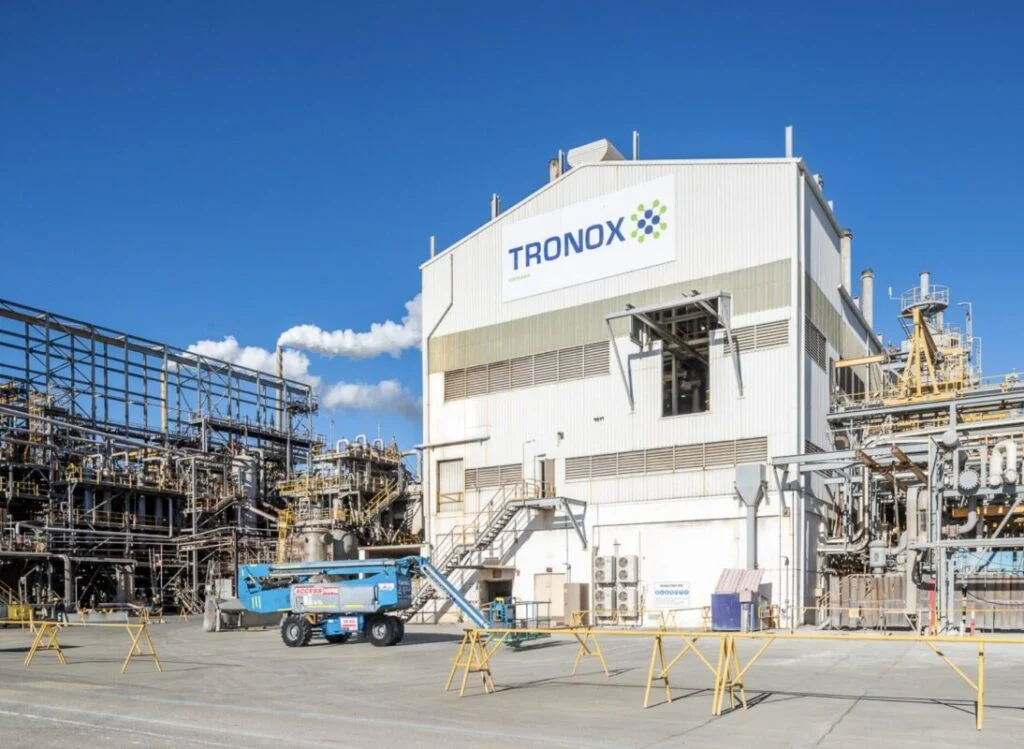
MGA Thermal and Knode have commenced a Front-End Engineering and Design (FEED) study for a 195MWh electro-thermal energy storage project at Tronox’s Kwinana facility in Western Australia.
The project, being developed by Australian industrial solutions company Knode, secured AU$2.95 million (US$2.12 million) in co-funding from the Australian Renewable Energy Agency (ARENA) toward the AU$4.6 million total required to complete the FEED study.
Construction is scheduled to begin in 2027, with commercial operation targeted for 2028.
Under a Heat-as-a-Service agreement, the system will deliver approximately 20 tonnes per hour of renewable steam to Tronox, a global chemicals and mining company.
Try Premium for just $1
- Full premium access for the first month at only $1
- Converts to an annual rate after 30 days unless cancelled
- Cancel anytime during the trial period
Premium Benefits
- Expert industry analysis and interviews
- Digital access to PV Tech Power journal
- Exclusive event discounts
Or get the full Premium subscription right away
Or continue reading this article for free
MGA Thermal claims that the initial rollout is expected to avoid 38,000 tonnes of CO2 emissions annually, with the potential to eliminate fossil fuel usage entirely if deployed at scale across the facility.
Mark Croudace, CEO of MGA Thermal, said: “Commencing the FEED study is a significant step – it’s where engineering challenges are resolved, and the pathway to FID and construction becomes real.
“This project is the first of several we are actively developing, and it demonstrates that MGA Thermal’s technology is ready to scale across industrial and manufacturing sectors.”
From demonstration to commercial deployment
At the core of MGA Thermal’s system is its patented MGA Block technology, which stores energy as latent heat, enabling long-duration thermal storage. Renewable energy is converted into heat and stored in the MGA Blocks before being dispatched on demand as high-grade process heat suitable for industrial applications.
As previously reported by Energy-Storage.news, the company completed the world’s first industrial steam heat energy storage demonstrator in Australia, demonstrating the technology’s capability to store renewable energy and dispatch it as industrial-grade steam. That project validated the technical feasibility of the MGA Block system for industrial applications.
The FEED study is one of five being conducted by MGA Thermal following AU$3.25 million in funding secured from ARENA in February 2026 under the agency’s Powering the Regions: Industrial Transformation Stream.
The studies aim to advance five commercial opportunities with strategic customers, producing detailed technical designs, cost estimates, delivery schedules, risk assessments and commercial strategies to accelerate project investment readiness and wider thermal energy storage adoption across Australia’s industrial sector.
That funding programme was designed to subsidise FEED study costs and reduce early-stage financial barriers for industrial and manufacturing customers exploring opportunities to transition away from fossil fuels.
Global engineering firm GHD will support the consortium through the FEED phase, continuing its involvement from the pre-feasibility study stage. Knode has worked alongside MGA Thermal for four years, taking a consortium approach with Tronox and GHD from the original pre-feasibility study through to the current FEED phase.
One of MGA Thermal’s target markets is the use of heat in industrial processes, which is notoriously tricky to decarbonise and is also being addressed by various other thermal energy storage providers.
MGA Thermal’s investors include the likes of Shell Ventures and Finindus, a Belgian VC part-funded by steel manufacturer Arcellor Mittal, as reported by Energy-Storage.news in 2023.
However, the technology’s development has not been without its struggles. Indeed, in 2023, an overheating incident at the Tomago site led to emergency services being called to the 5MWh demonstration unit in the Hunter Valley after a “dangerous heat build-up” was declared shortly after 05:00 local time.
“It is a reminder that we are working on cutting-edge technology, innovating new large-scale energy storage, and the importance of in-house trials,” the MGA Thermal spokesperson said at the time of reporting.
Alongside MGA’s technology, specially designed bricks that retain heat, various molten salt-based thermal energy storage technologies and sand batteries, a technology primarily used in district heating networks but also applicable to some segments of industry, are among the technologies being commercialised to decarbonise industrial heat.
Perhaps the most common application of these technologies is industrial steam generation, and the higher the required temperature, the greater the difficulty in abating emissions.
Interested in Australia? Read Energy-Storage.news’ Energy Storage Summit Australia coverage and related content.