China-headquartered energy storage firm Gotion and US electronics manufacturer Richardson Electronics have partnered to manufacture BESS in Illinois. It comes at a time when Chinese companies are starting to sell down stakes in US assets amid new FEOC rules.
Richardson Electronics yesterday (13 May) announced a new technology partnership with Gotion Inc, the US arm of China-based Gotion High-tech, a global manufacturer of lithium-ion batteries and battery energy storage systems (BESS).
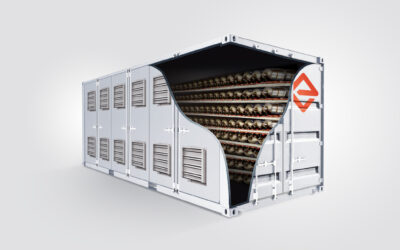
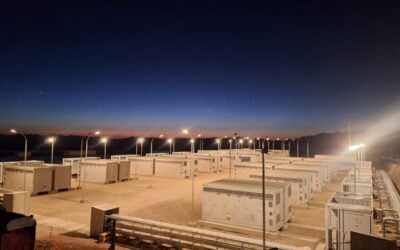
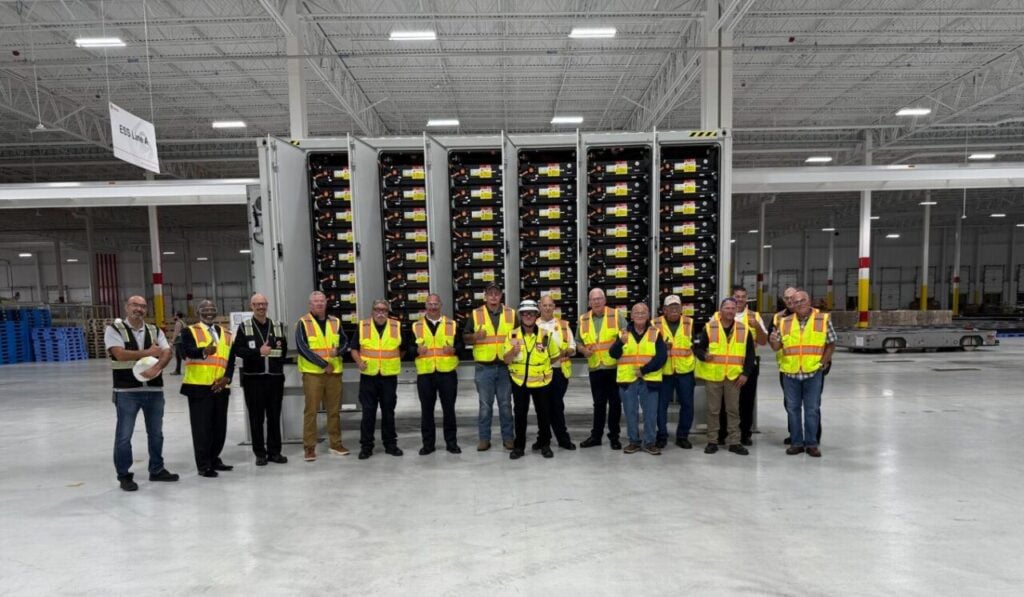
Under the agreement, Gotion will provide advanced battery technology produced at its manufacturing hub in Manteno, Illinois, while Richardson Electronics will ‘support commercialisation, engineering integration, and go-to-market strategy’, it said. Together they are launching a 760kWh system for commercial & industrial (C&I) applications and a 5MWh system for the utility-scale segment.
Both companies have manufacturing hubs in Illinois, Gotion’s in Manteno and Richardson’s in La Fox. Richardson announced plans to expand its La Fox site’s activity to BESS in April last year, with a capital investment of US$8.5 million.
Try Premium for just $1
- Full premium access for the first month at only $1
- Converts to an annual rate after 30 days unless cancelled
- Cancel anytime during the trial period
Premium Benefits
- Expert industry analysis and interviews
- Digital access to PV Tech Power journal
- Exclusive event discounts
Or get the full Premium subscription right away
Or continue reading this article for free
Gotion first announced its Manteno factory in 2023, at a time when new tax credits for clean energy technology manufacturing and downstream deployment sparked billions in investment plans, be it domestic, Korean or Chinese. Illinois also has various local tax credits and other incentives available. Gotion also has a factory in California for smaller-scale BESS products.
FEOC question
The partnership between the two therefore raises some questions as it comes amidst other Chinese companies selling down their stakes in US manufacturing assets, including (so far) AESC, Jinko, Boviet Solar and Trina. This could be the start of a much larger trend, as we wrote in ESN Premium this week.
The key driver for these sales are Foreign Entity of Concern (FEOC) restrictions on those tax credits, which make projects ineligible if they use technology from companies which are 75% (or more) owned by companies seen to have links with FEOC entities (China, Russia etc). FEOC became effective this year.
It also applies to the 45X advanced manufacturing tax credit for batteries and solar, which is paid directly to manufacturers and is a key reason why US clean energy manufacturing has become a viable investment. While the FEOC rules are still being clarified, it also kicks in if there is strong technology licensing or supply chain reliance with a FEOC-linked entity.
The partnership between Richardson and Gotion therefore seems unlikely to be the last announcement regarding Gotion’s manufacturing activities in the US in the near future.
“This partnership reflects Gotion’s long-term commitment to building a localised, resilient battery supply chain in the United States,” said Jacky Yu, VP of sales, Gotion, Inc. “Our collaboration in Illinois represents an important step in expanding US-based manufacturing and deployment of energy storage systems, supporting grid modernisation, energy independence, and economic development.”
Gotion has been active in setting up manufacturing across the globe, in the US but also in Germany, Slovakia and Southeast Asia.
Energy-Storage.news has contacted Gotion and Richardson Electronics for comment and will update this article or publish a fresh one if and when a substantive response is received.