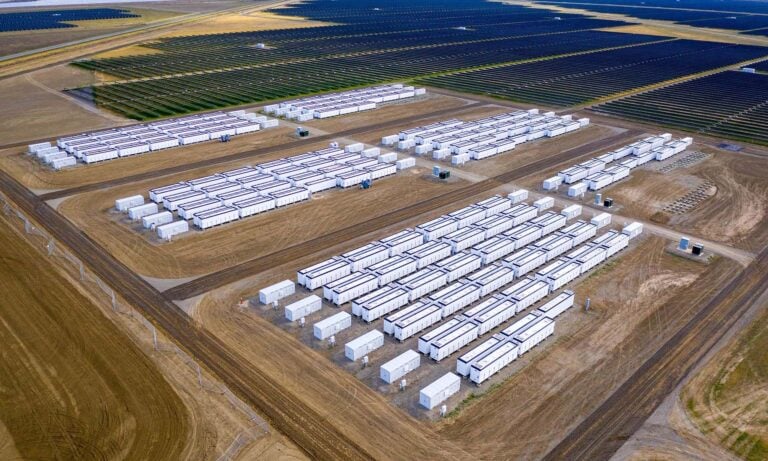
Recurrent Energy Australia has achieved grid connection approval under clause 5.3.4 of the National Electricity Rules from the Australian Energy Market Operator (AEMO) for its Sundown Energy Park.
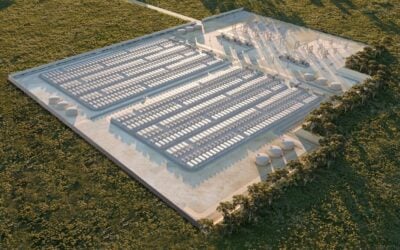
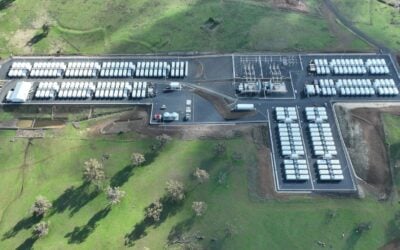
The hybrid renewable energy project, located within the New England Renewable Energy Zone (REZ) in New South Wales, combines 443MWdc of solar PV generation with a co-located 600MWh battery energy storage system (BESS).
Recurrent Energy is the utility-scale solar and energy storage development platform of Canadian Solar, specialising in developing, building, and operating large-scale solar PV and BESS projects across global markets.
Located approximately 30km east of Inverell in the New England Tablelands region, the Sundown Energy Park will connect to the existing 330kV transmission line that traverses the site and the wider National Electricity Market (NEM).
Try Premium for just $1
- Full premium access for the first month at only $1
- Converts to an annual rate after 30 days unless cancelled
- Cancel anytime during the trial period
Premium Benefits
- Expert industry analysis and interviews
- Digital access to PV Tech Power journal
- Exclusive event discounts
Or get the full Premium subscription right away
Or continue reading this article for free
The grid connection approval is notable given Australia’s stringent certification requirements, which forms part of AEMO’s Grid Protection Scheme approval process.
AEMO’s certification process requires developers to demonstrate that their projects can withstand extreme grid conditions and maintain stability under various operational scenarios.
Speaking to ESN Premium last year, Tom Best, chief operating officer of BESS developer Eku Energy, said that the procedure for developers in Australia to connect to the transmission grid and access the NEM frequency control ancillary services (FCAS) and energy trading markets is extremely stringent, representing one of the longest and most costly grid compliance processes among all markets in which his company operates.
AEMO’s technicians subject plants to numerous scenarios, ultimately pushing them or their models to breaking point, which necessitates that project designers conduct extensive studies.
Once completed, the process is documented in a Grid Protection Scheme, which must be approved by both the Network Service Provider and AEMO before the market operator issues the 5.3.4A letter of compliance.
The process continues beyond this approval, as any alterations made during construction that might impact electrical characteristics must be updated through a procedure known as R1.
The Sundown Energy Park
Sundown Energy Park will provide stability to the New South Wales electricity network, particularly as the state prepares for the retirement of large-scale coal-fired power generation.
The integrated storage solution will enhance grid stability by supporting peak demand periods, with the 600MWh battery storage system providing flexible capacity to balance supply and demand.
During its anticipated 35-year operating life, sheep will be permitted to graze within portions of the project footprint, allowing land to continue serving agricultural purposes.
At the end of operations, the site will be decommissioned, rehabilitated and returned to agricultural production. The development is also set to provide local and regional employment opportunities and generate spending in the local economy throughout its construction and operational phases.
Recurrent Energy has been active in several international markets, recently selling a 200MWh BESS project in Texas to Hunt Energy Network. The transaction showcases appetite for standalone battery storage assets in the ERCOT market, where price volatility and grid reliability concerns have driven demand for flexible energy storage capacity.
Meanwhile, the developer also recently secured US$825 million in financing for battery energy storage and solar projects in Arizona. This is specifically set to benefit its Desert Bloom Storage and Papago Solar facilities.
Desert Bloom Storage is a standalone BESS with a capacity of 600MWh, while Papago Solar is a 150MWac solar power plant. Both projects are under construction and are scheduled to start operations in the first half of this year.
Interested in Australia? Read Energy-Storage.news’ Energy Storage Summit Australia coverage and related content.