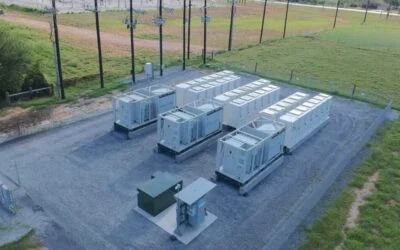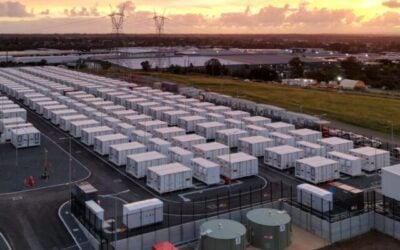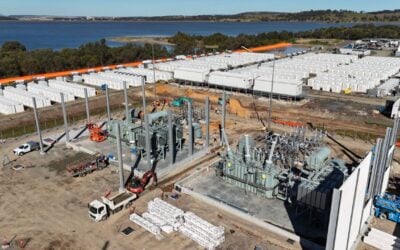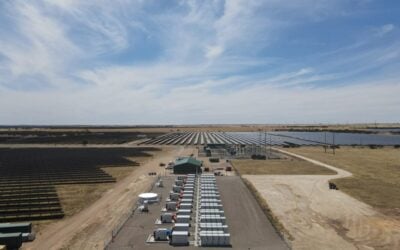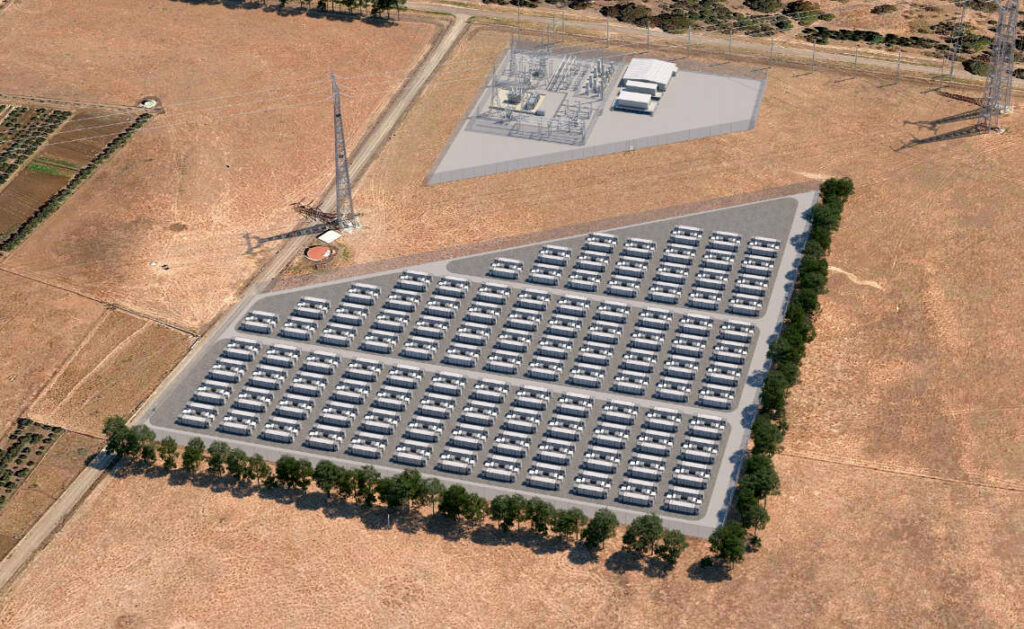
A 225MWp / 450MWh battery energy storage system (BESS) project has been granted development approval by the Minister for Planning and Local Government in South Australia.
The Gould Creek BESS project is being planned by renewable energy asset developer Maoneng, for construction in the South Australian City of Playford, adjacent to a transmission substation 22km from Adelaide’s central business district (CBD).
Maoneng said yesterday (31 October) that the state government ministry gave approval without requiring the developer to make any significant changes to its proposal. The company will take the next steps in the development process and expects to begin the one-year construction period late next year.
The BESS will be charged with electricity from the grid at off-peak times when power is cheaper and generally able to use lower carbon electricity from renewables, then discharging into the grid to support the network at peak times, including through performing services like frequency response to support the grid for the Australian Energy Market Operator (AEMO).
Try Premium for just $1
- Full premium access for the first month at only $1
- Converts to an annual rate after 30 days unless cancelled
- Cancel anytime during the trial period
Premium Benefits
- Expert industry analysis and interviews
- Digital access to PV Tech Power journal
- Exclusive event discounts
Or get the full Premium subscription right away
Or continue reading this article for free
The Gould Creek project has been supported by South Australia’s government already, attracting state-level Crown Sponsorship from the Department of Energy and Mining. That fast-tracked the project, with Department of Energy and Mining chief executive Paul Heithersay describing Gould Creek BESS in March as — in principle — having the potential to benefit the state as an essential public infrastructure asset.
Energy-Storage.news reported that Maoneng had put in its application in July, with its proposal including constructing onsite substation and transformer equipment as well as transmission line infrastructure to connect to the 330kV South Para substation. Maoneng had by that stage already secured the 30 hectare site, on privately-owned agricultural land.
The development approval decision was welcomed by South Australia’s Minister for Trade and Investment, Stephen Patterson. He described Maoneng’s expected investment of AU$150 million (US$112.56 million) to build the project as a significant one for the state’s “sustainable future,” expressing his delight that an Australian-owned company “is so committed to the development of projects that are critical for powering a sustainable world”.
“South Australia’s reputation as Australia’s leader in renewable energy investment, and our credentials of producing around 60% of our energy capacity from renewable sources, is helping to attract further investment into our state, creating jobs for our communities,” Patterson said, adding that the project will create up to 160 construction jobs.
Maoneng CEO and co-founder Morris Zhou said it highlighted how important grid-scale energy storage is, in supporting South Australia’s continuing move to high shares of renewable energy and achieving net zero by 2050 — a policy the state government put in place long before the national Commonwealth Government finally announced its own target a few days ago ahead of the start of COP26 climate talks.
South Australia already has some of the highest shares of wind and solar of any region in the world, and put Australia on the grid-scale battery storage map with the Hornsdale Power Reserve battery storage project delivered in 2019 by developer Neoen using Tesla BESS equipment, at the time the world’s biggest project of its type.
Maoneng meanwhile is developing a number of large-scale BESS projects around the country, including four separate 50MW / 100MWh systems in New South Wales for which dispatch rights deals have been signed with major utility company AGL.
The developer is also planning a 240MWp / 480MWh project in Victoria, sited in a grid-constrained pocket of land in the state’s Mornington Peninsula. Maoneng said in August that it has picked lithium iron phosphate (LFP) chemistry batteries for that project, due to “their strong safety performance”.