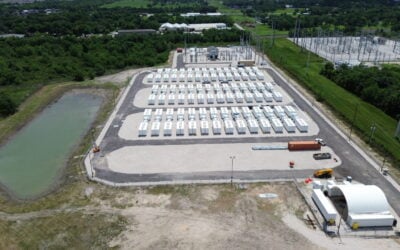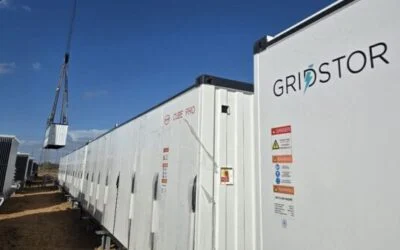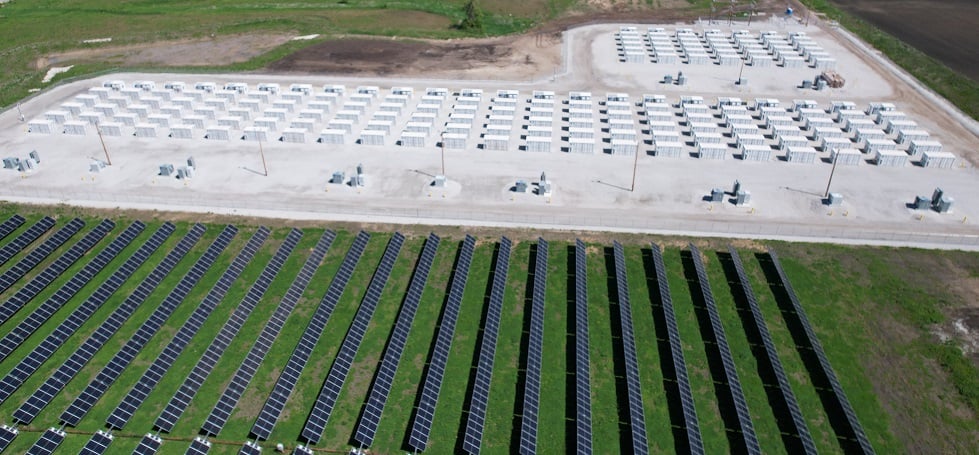
The first large-scale battery energy storage system (BESS) in the US state of Wisconsin, the 110MW Paris Solar-Battery Park, has come online.
The BESS is paired with 200MW of solar, which went into service in December 2024.
Utility We Energies holds the majority ownership of the project, while Wisconsin Public Service (WPS) and Madison Gas and Electric (MGE) share co-ownership.
The Paris Solar-Battery Park was developed by independent power producer (IPP) Invenergy and is located in Kenosha County.
Try Premium for just $1
- Full premium access for the first month at only $1
- Converts to an annual rate after 30 days unless cancelled
- Cancel anytime during the trial period
Premium Benefits
- Expert industry analysis and interviews
- Digital access to PV Tech Power journal
- Exclusive event discounts
Or get the full Premium subscription right away
Or continue reading this article for free
Wisconsin’s utilities have worked with Invenergy multiple times.
Last month, MGE partnered with WPS and We Energies to purchase 30MW of solar capacity and 16.5MW of battery storage from Invenergy’s High Noon Solar Energy Centre.
High Noon Solar Energy Centre is expected to reach commercial operations in 2027. That deal also saw We Energies and WPS owning the remaining 270MW of solar and 148.5MW of battery storage.
In 2023, MGE revealed plans to purchase energy generated by Invenergy’s Koshkonong Solar Energy Centre located in Dane County, Wisconsin.
This deal marked another collaboration for MGE with WPS and We Energies.
In October 2024, Energy-Storage.news announced that three utilities, including MGE, were pursuing regulatory approval for two solar-plus-storage projects from Invenergy as part of a US$1.92 billion investment to lower carbon emissions throughout the state.
The acquisition saw MGE share 10MW of BESS capacity with Wisconsin Public Service Corporation (WPSC) and obtain 5MW of solar capacity.
In December 2024, when the US Department of Energy’s (DOE) Loan Programs Office (LPO) worked to push clean energy grants ahead of the Trump administration, the office announced a conditional commitment for a loan of up to US$2.5 billion to Wisconsin Electric Power Company (WEPCO), a subsidiary of We Energies.
That loan would have been used to help finance approximately 1,650MW of utility-scale renewable energy power generation and energy storage projects in the state.
Mike Hooper, president of We Energies, said of the Paris Solar-Battery Park:
“Bringing Wisconsin’s first large-scale battery storage project online is historic and continues our commitment to provide customers reliable and affordable energy.”
“Our ‘all of the above’ power generation approach means customers can count on the energy they need, no matter the weather or the time of day.”