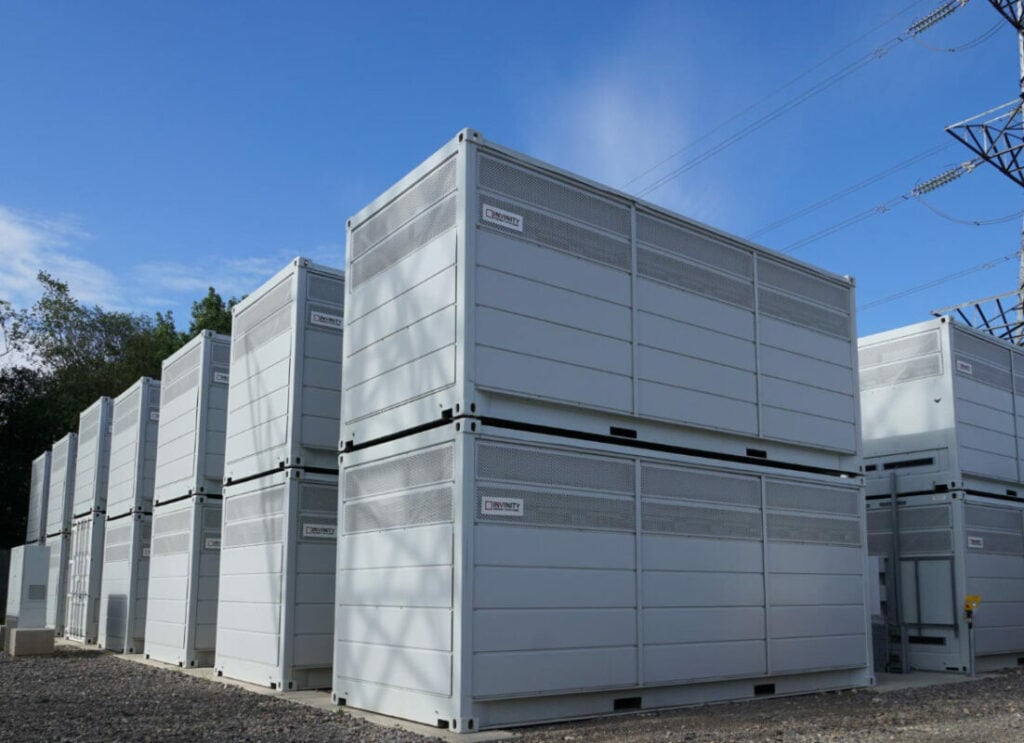
A vanadium redox flow battery with a 24-hour discharge duration will be built and tested in a project launched by Pacific Northwest National Laboratory (PNNL) and technology provider Invinity Energy Systems.
The vanadium redox flow battery (VRFB) will be installed at PNNL’s Richland Campus in Washington state, US. The system will have a power rating of 525kW which it will be able to discharge continuously for 24 hours, meaning a total energy storage capacity of 12.6MWh.
Building on its existing research in the VRFB technology space, PNNL will evaluate the technical performance of the project, which will be used to support the campus’ energy resiliency. A project team will first conduct engineering design to determine the best location to support resiliency.
PNNL claimed it is the first time a battery with a 24-hour capacity will be deployed and tested in a field environment.
Try Premium for just $1
- Full premium access for the first month at only $1
- Converts to an annual rate after 30 days unless cancelled
- Cancel anytime during the trial period
Premium Benefits
- Expert industry analysis and interviews
- Digital access to PV Tech Power journal
- Exclusive event discounts
Or get the full Premium subscription right away
Or continue reading this article for free
Vincent Sprenkle, energy storage expert at PNNL, commented: “We anticipate this project will help pave the way to broader commercial adoption of long-duration energy storage (LDES) for stakeholders with similar resilience, environmental, and economic goals.”
“Not only will this system improve PNNL’s resiliency, but the performance and operational data from this project will help guide new LDES applications across the country.”
Sprenkle is also the director of a new facility opening in 2024 dedicated to research and development of LDES technologies, the Grid Storage Launchpad (GSL).
The project has been made possible by US$10 million in funding from the US Department of Energy’s (DOE) Office of Clean Energy Demonstrations (OCED).
VRFB technology is amongst the most commercially mature long-duration energy storage (LDES) technologies and alternatives to lithium-ion. Lithium-ion is currently seen as more cost-effective for durations of 4-8 hours (and occasionally even higher).
Last year, Haresh Kamath of the utility-funded Electric Power Research Institute (EPRI) suggested that with cost decreases over lithium-ion may become competitive at up to 24′ hours of duration. Though, another flow battery provider, ESS Inc, provided a written statement in response strongly contesting this (ESS Inc’s technology uses iron and salt rather than vanadium).
The minor debate came at a time when lithium-ion costs were increasing for the first time in a decade, but this trend reversed in 2023 back to the norm of cost falls.
PNNL is also providing its technical assistant and expertise to two additional projects which also received funding from the OCED. It will provide techno-economic analysis for both the Rural Energy Viability for Integrated Vital Energy (REVIVE) project, which seeks to bring flow batteries to disadvantaged rural communities, and the Communities Accessing Resilient Energy Storage (CARES) project, which will install upcycled EV batteries in affordable housing complexes in California and a Native American community in Minnesota.
Energy-Storage.news’ publisher Solar Media will host the 5th Energy Storage Summit USA, 19-20 March 2024 in Austin, Texas. Featuring a packed programme of panels, presentations and fireside chats from industry leaders focusing on accelerating the market for energy storage across the country. For more information, go to the website.