Major US utility company Duke Energy has filed its biennial long-range energy modernisation plan for North and South Carolina, US. The plan includes a 5,600MW battery storage target.
Duke projects that if implemented, the changes proposed in the plan would cause a 2.1% increase in customer bills, which the company says is less than the projected costs for the previously approved plan.
The 2025 Carolinas Resource Plan also responds to major policy shifts at both the state and federal levels.
Duke says that recent energy laws in each state focus on ensuring reliability, while new federal rules and tax incentives promote advanced nuclear power and battery storage, offering more “flexibility for existing coal and new natural gas generation.”
Try Premium for just $1
- Full premium access for the first month at only $1
- Converts to an annual rate after 30 days unless cancelled
- Cancel anytime during the trial period
Premium Benefits
- Expert industry analysis and interviews
- Digital access to PV Tech Power journal
- Exclusive event discounts
Or get the full Premium subscription right away
Or continue reading this article for free
With the goal of keeping future costs down for customers, ensuring reliability, and supporting growth, the company has adjusted its recommended energy mix accordingly.
The 2023 Carolinas Resource Plan called for 2,700MW of battery storage through 2031, making the 5,600MW figure a 2,900MW increase, “to meet near-term growth and leverage tax credits.”
The company is looking to install the projects across the Carolinas, including at the Allen Riverbend and Mayo coal plant sites.
Duke is also targeting 4,000MW of solar PV by 2034, maintaining the 2025 procurement target to maximise customer benefits of the remaining federal energy tax credits for solar.
The locations for these installations will be determined through an annual competitive bidding process.
Notably, the company determines that wind is not an economically viable resource for customers through 2040.
The 2023 plan called for 1,200MW of onshore wind and also targeted 600MW of nuclear generation. While Duke did not provide an updated target in the newest plan, it did note that the company added large light-water reactor (LLWR) technology for evaluation in addition to small modular reactors (SMRs).
The company is “targeting potential 2037 in service for new nuclear generation at either Belews Creek, North Carolina (SMR) or the W.S. Lee site in Cherokee County, South Carolina (LLWR), expanding license activities to include both LLWR and SMR sites to preserve optionality.”
Duke is maintaining the five combined-cycle (CC) natural gas units it called for in 2023.
The company is also extending the operational life of the Belews Creek, Cliffside, and Marshall coal plants by two to four years, citing “federal actions that eased restrictions on coal generation.”
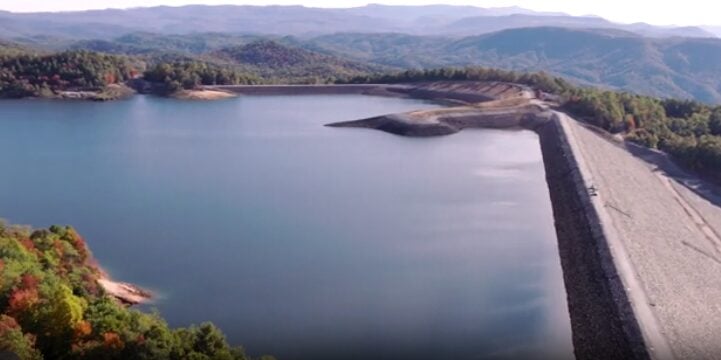
Duke is also developing a second power block at its Bad Creek pumped hydro energy storage (PHES) project.
As reported by Energy-Storage.news in August, Duke submitted its final license application to the Federal Energy Regulatory Commission (FERC) to extend operation at the Bad Creek Pumped Storage Hydroelectric Station for an additional 50 years.
Duke was first granted authorisation by FERC in 1977 to build and run Bad Creek. The license for the project will expire in 2027, and the utility is now applying for relicensing. It anticipates getting a decision from FERC before the current license ends.
The North Carolina Utilities Commission will conduct hearings on the 2025 resource plan in 2026, with specific dates yet to be announced, and will issue an order by 31 December 2026.
Later this year, Duke Energy will submit an updated resource plan to the Public Service Commission of South Carolina, which will include details from the 2025 Carolinas Resource Plan.