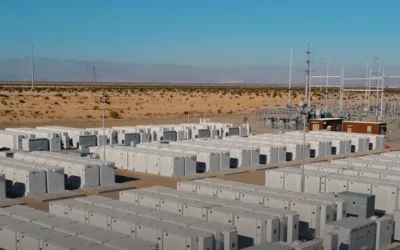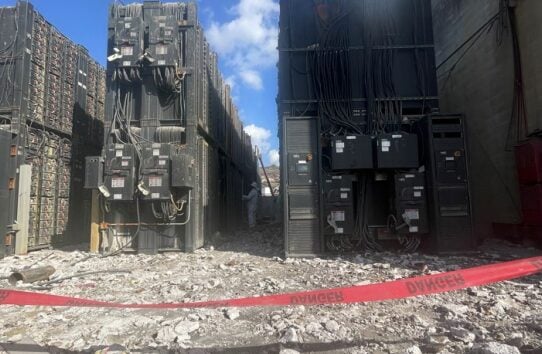
The US Environmental Protection Agency (EPA) has entered into a settlement agreement with IPP LS Power to direct cleanup after a lithium-ion battery fire at the company’s Gateway energy storage facility in San Diego, California.
On 15 May 2024, a fire broke out at LS Power’s 250MW Gateway energy storage facility. While firefighters quickly responded, the fire flared up multiple times until 28 May.
According to local news outlet The San Diego Union-Tribune, the county’s hazmat team tested water runoff, and no toxic levels were found. The team also monitored smoke in the area, and no dangerous levels were detected.
When the project first came online, it was thought to be the world’s largest single-site battery project at the time.
Try Premium for just $1
- Full premium access for the first month at only $1
- Converts to an annual rate after 30 days unless cancelled
- Cancel anytime during the trial period
Premium Benefits
- Expert industry analysis and interviews
- Digital access to PV Tech Power journal
- Exclusive event discounts
Or get the full Premium subscription right away
Or continue reading this article for free
The facility contained approximately 14,796 nickel manganese cobalt (NMC) lithium-ion (Li-ion) batteries.
LS Power operates the facility as Gateway Energy Storage, LLC. The EPA says that the company is considered a responsible party under the Comprehensive Environmental Response, Compensation, and Liability Act (CERCLA) and must bear the cleanup costs.
CERCLA, commonly called Superfund, was created by the EPA in 1980 to finance the investigation and cleanup of sites polluted with hazardous substances. These sites are known as Superfund sites.
According to the settlement agreement, Gateway is required to perform environmental monitoring throughout all battery handling activities. It must also safely remove, package, and dispose of all affected battery packs and submit detailed work plans along with progress reports to the EPA.
BESS safety concerns
EPA Pacific Southwest Region Administrator Josh F.W. Cook had less than favourable comments regarding BESS following the announcement:
“Calling a technology ‘green energy’ does not mean there are no environmental impacts. This is an issue of growing concern.”
Cook continued, “I am alarmed by the incidents and impacts of utility-grade battery fires on first responders, specifically the professional firefighters who are exposed to horrible, toxic conditions when batteries catch fire. This settlement action is a step in the right direction, but the broader battery storage fire issue requires additional attention and EPA enforcement.”
While fire incidents involving BESS are serious, they have relatively low occurrences, and failure incidents are decreasing.
Speaking with Energy-Storage.news, about Cook’s comments, Nick Warner, Principal, Co-Founder, of Energy Safety Response Group (ESRG), said:
“All fires pose a toxicity risk, including those of lithium-ion batteries, and the fire service and supporting scientific community is taking an increasingly proactive approach to understanding and managing those risks. Though utility-scale battery fires are rare, their novelty draws attention and raises important questions about how to keep firefighters safe.”
Warner continued:
“Lithium-ion batteries contain many of the same materials common throughout the built environment, including metals, plastics, and insulation, and industry best practice is for firefighters to protect themselves when responding to them as they would during any other fire exposure.”
“This is a position strongly advocated by ESRG and myself personally, who has been impacted by firefighter exposure hazards.”
The industry has broadly called for more community engagement and coordination with local fire departments to ensure that if a fire incident does occur, it’s appropriately addressed.
Warner noted of BESS and fire safety:
“Energy storage is quickly becoming an invaluable part of the grid, providing much needed resiliency at a critical time. ESRG looks forward to continuing to engage with and educate the fire service on the best practices of handling BESS fires, on improving efficiency and duration of events, and ensuring the fire service does so safely.”
“At the same time, we look forward to continuing our research on BESS fire exposure risks and working to educate stakeholders as we do so.”