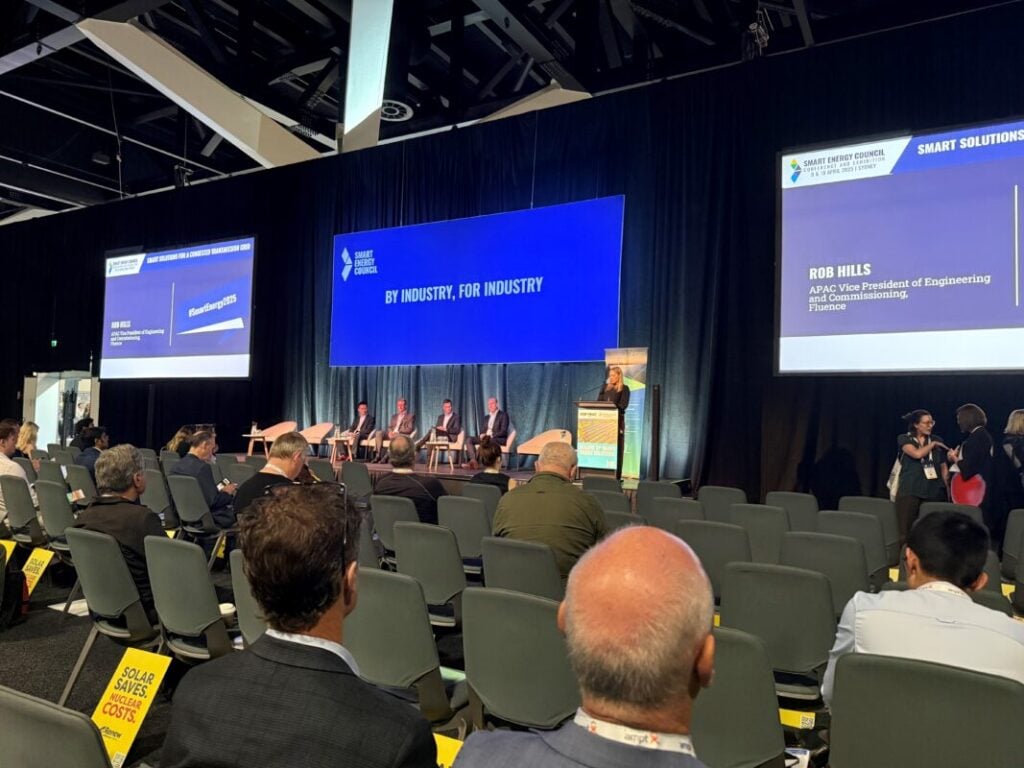
“If I look at Australia, the real issue we have is that there’s a lead time to make things happen; there are a lot of stars that need to align,” said Rob Hills, APAC vice-president of engineering and commissioning at Fluence, when commenting on batteries as virtual transmission.
Speaking at the Smart Energy Conference 2025, which took place in Sydney this week, Hills noted on a panel discussion centred around the role of batteries as virtual transmission lines that good things can happen in Australia regarding its energy transition. However, several entities, such as governments, market bodies, and customers, must be aligned in the goal.
This need for collaboration was a hot topic throughout the conference, and various speakers noted the need to collaborate to help Australia become a “renewable energy superpower.” This is becoming increasingly important with the impending federal election on 3 May, which is anticipated to weaponise energy policy and define Australia’s renewable energy future.
Batteries as virtual transmission lines
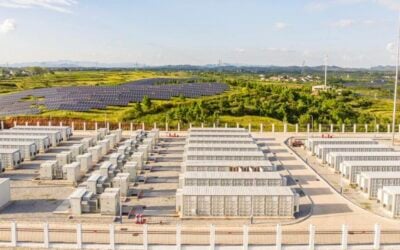
As noted by Hills, battery energy storage systems (BESS) can be deployed as virtual transmission lines, which Fluence has dubbed ‘storage-as-transmission,’ by securing excess energy and releasing it at a later time or location. This effectively increases the grid capacity and reduces the reliance and strain on traditional transmission lines.
Try Premium for just $1
- Full premium access for the first month at only $1
- Converts to an annual rate after 30 days unless cancelled
- Cancel anytime during the trial period
Premium Benefits
- Expert industry analysis and interviews
- Digital access to PV Tech Power journal
- Exclusive event discounts
Or get the full Premium subscription right away
Or continue reading this article for free
“It [batteries] allows the system operator to operate transmission lines at 100% of their capacity. An advantage is that the load is immediately taken up on the second line in the event of an outage on those lines. Before that gets too hot and loses its capacity, the battery can start injecting energy,” Hill said.
For context, Fluence, a US-headquartered energy storage system integrator and renewable energy services provider, has several projects in Australia that are under consideration and are looking to use batteries as virtual transmission.
The organisation submitted a proposal to the Australian Energy Market Operator (AEMO) for two 250MW virtual transmission assets to work in tandem. These assets would add 250MW of bidirectional transmission capacity to the line. Fluence said this would add “much-needed” capacity, facilitating “more large-scale electricity transfers between New South Wales and Victoria.”
Germany is another market in which Fluence has been involved. Plans to deploy batteries as virtual transmission, nicknamed ‘Grid Boosters,’ are being developed to help transmit clean energy from the north of Germany, rich in renewable energy generation potential, to the industrial heartlands of southern Germany, including cities such as Stuttgart and Munich.
Warwick O’Dell, head of sales at EVO Power, a Melbourne-based energy storage provider, lauded the use of BESS in Australia, stating that it will play a vital role in shoring up renewable energy generation. O’Dell also believes it is becoming increasingly attractive as virtual transmission due to its lower costs.
“The cost of battery energy storage systems is coming down, making a more attractive and reliable option for transmission and distribution applications,” O’Dell said.
The rapid adoption of DERs is a challenge in Western Australia
On the same panel discussion, Jamie Pickles, manager of DER portfolio coordination at Western Australia’s Synergy, said that the growing popularity of distributed energy resources (DERs) presents a new challenge for the grid.
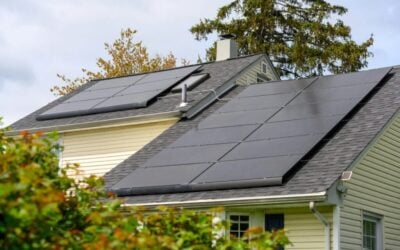
“When we talk about DERs, we’re talking about rooftop solar. At the moment, we’re up to about 40% penetration on the roofs with residential solar, and last year, we hit 80% instantaneous penetration,” Pickles said.
“We’re looking at around 70% of roofs having solar, which means incredibly high penetration. If that remains uncontrolled and unmanaged, we’ll have significant issues. Western Australia has picked up residential batteries as quickly as it can.”
Although increasing the rooftop solar PV generation capacity is positive for the energy transition, it can also raise issues surrounding the grid. For instance, a high level of rooftop solar can reduce the need for traditional generators, leading to concerns about inertia and system services needed for grid stability.
Additionally, reverse power flow from solar installations can strain grid infrastructure and lead to voltage issues. Batteries can support the grid by increasing capacity while storing excess solar generation to prevent curtailment.