The Texas, US state senate has passed a bill aimed at limiting renewables and encouraging natural gas production.
Texas Senate Bill 388 (SB 388) is sponsored by Republican Texas state senators Phil King, Paul Bettencourt and Lois Kolkhorst.
The bill states an intent that 50% of the generating capacity installed in the Electric Reliability Council of Texas (ERCOT) service region “be sourced from dispatchable generation other than battery energy storage,” after 1 January 2026.
It further states that any power generation company, municipally owned utility or electric cooperative that does not meet this requirement must purchase dispatchable generation credits from sources other than battery energy storage.
Try Premium for just $1
- Full premium access for the first month at only $1
- Converts to an annual rate after 30 days unless cancelled
- Cancel anytime during the trial period
Premium Benefits
- Expert industry analysis and interviews
- Digital access to PV Tech Power journal
- Exclusive event discounts
Or get the full Premium subscription right away
Or continue reading this article for free
A power generation company that only operates battery energy storage resources will not be required to purchase these credits.
Generation requirements will be structured in such a way as to “encourage the development, construction and operation of new natural gas energy projects in the ERCOT power region that have the greatest economic potential for capture and development of this state’s environmentally beneficial natural gas resources.”
To put the language of the bill into other words, power plant owners, utilities or electric cooperatives which don’t source enough generation from resources other than battery energy storage must buy credits to be compliant with regulatory bodies.
The bill is approximately halfway through the process of becoming a law in Texas.
It was introduced to the Senate, passed the Senate after committee hearings and amendments took place and has now been sent to the House.
A House committee can approve, amend or vote no on the bill. If approved, it goes to the full House for a debate and vote. If approved from there, it goes to Texas governor Greg Abbott, who can sign it, veto it or allow it to become a law without signature.
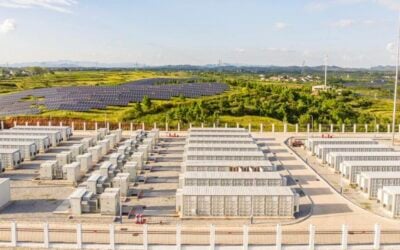
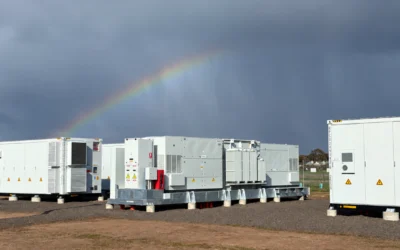
SB 388 would be quite the change to ERCOT’s dynamic market, which has made the state incredibly popular for energy storage and other renewable energy developers.
According to the Q1 2025 US Energy Storage Monitor from Wood Mackenzie Power, Texas led energy storage installations in Q4 2024, with 1,185MW of installed capacity.
In the same period, California, which was the second-highest state in number of energy storage installations, saw 857MW installed, although in terms of cumulative installations, California’s CAISO still has the lead on ERCOT in Texas, for now.
SB 388 is also unique because it actively discourages energy storage development, and in previous versions of the bill, it actively encouraged natural gas development.
Texas has seen a growth in its population spurred on by tech companies such as Tesla moving into the state. The growth of data centres is also bringing a significant demand to the grid.
Together, these and other factors bring about increasing energy demands that need resources in order to be met.
It is currently unclear if the bill will become a law, but if it does, it will almost certainly bring large-scale changes to developing energy storage projects in the state.