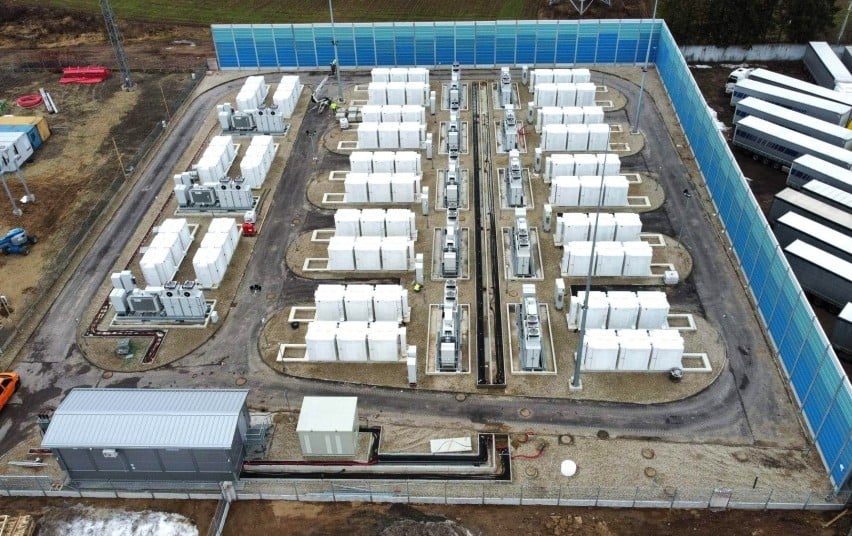
Testing has started on four battery storage projects in Lithuania totalling 200MW/200MWh provided by system integrator Fluence, with a view to turning the projects online in a few months.
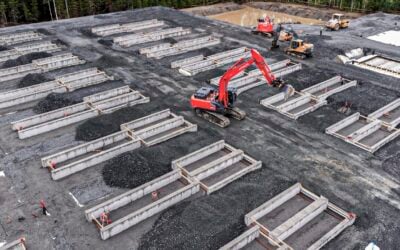
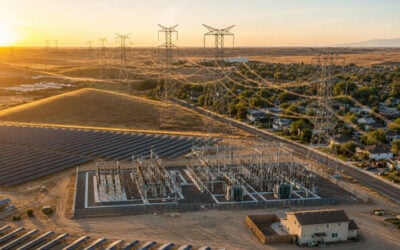
Construction began on the four projects connected to substations in Šiauliai, Alytus, Utena and Vilnius in June last year, as reported by Energy-Storage.news. They will enable the country’s electricity grid to run in islanded mode as well as synchronise with the EU grid as Lithuania seeks to disconnect from the Russian energy system, a move which pre-dates the latter’s invasion of Ukraine in early 2022.
Initial tests of the battery cells, transformers and other electrical equipment were carried out last month and further testing and commissioning will take place for a full launch and connection to the power grid by the end of spring. The projects are being developed by state-owned energy sector holding company EPSO-G through a special purpose company Energy Cells.
The projects are set to begin operation in sequence rather than all at the same time, and will provide ‘Isolated Electric Power System Operating Reserve Service’, EPSO-G said. The company first announced the projects back in December 2021.
Try Premium for just $1
- Full premium access for the first month at only $1
- Converts to an annual rate after 30 days unless cancelled
- Cancel anytime during the trial period
Premium Benefits
- Expert industry analysis and interviews
- Digital access to PV Tech Power journal
- Exclusive event discounts
Or get the full Premium subscription right away
Or continue reading this article for free
The four battery storage projects will total €109 million of investment (US$116 million) and are being majority-funded (c.80%) by the EU‘s Recovery and Resilience Facility (RRF) NextGenerationEU plan called New Generation Lithuania. The bloc-wide framework has seen money go to energy storage projects in Finland and Greece too.
Fluence, the largest battery storage system integrator globally, won the contract to design, manufacture and connect the battery energy storage projects to the transmission system and provide maintenance services for 15 years thereafter, in partnership with its parent company Siemens.
The four systems are comprised of 78 of Fluence Cubes, its modular energy storage system product, and follow on from a smaller 1MW pilot project Fluence deployed in 2021.
Energy-Storage.news’ publisher Solar Media will host the eighth annual Energy Storage Summit EU in London, 22-23 February 2023. This year it is moving to a larger venue, bringing together Europe’s leading investors, policymakers, developers, utilities, energy buyers and service providers all in one place. Visit the official site for more info.