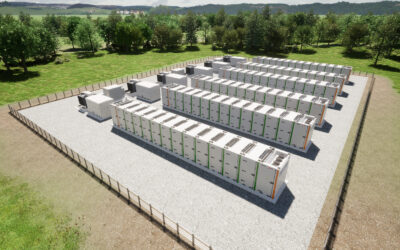
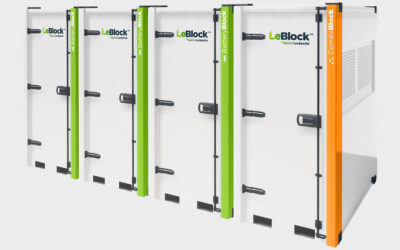
Cost, complexity and carbon footprint. Earlier this month, Switzerland-headquartered Leclanché launched its new, modular energy storage system solution aimed at reducing all three of these challenging points for the industry. VP for system engineering Daniel Fohr and EMEA region sales and business development manager Cyril Carpentier speak about how and why Leclanché believe LeBlock solves some of the major concerns energy storage developers face.
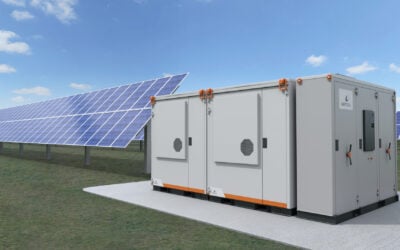
Aimed at reducing the cost, complexity and environmental footprint of stationary energy storage system (ESS) installations, Leclanché has launched a modular battery storage solution based on easily transportable, plug and play racks that can be put together onsite.
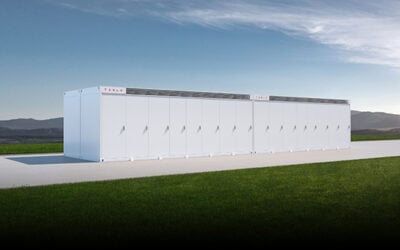
Tesla CEO Elon Musk has said that the company is already achieving “good margins” on the residential Powerwall product, but that “some additional work is needed” for its utility-scale Megapack to do so.
Quebec’s largest grid-scale battery energy storage system to date will maintain electricity supply and power quality for customers of Canadian utility company Hydro-Québec while it carries out major transmission line upgrade work in the province.
Hickory Park Solar project, a 200MW PV power plant in the US state of Georgia, will be equipped with a battery energy storage system that allows the local utility company to maximise the benefit of the renewable resource.
The residents of Parlier, a small city in Fresno County, California, are being offered a 20% reduction on their energy bills and reduce the amount of power they buy from utility Pacific Gas & Electric by 90%, by getting solar-plus-storage and energy efficiency equipment installed.
Vertically-integrated solar PV company Canadian Solar won nearly 1GWh of battery storage contracts in 2020 and CEO Shawn Qu has said it expects to “capture around 10% of the battery storage market in the US alone” during this year.
Decision-makers across Canada now recognise the value that energy storage can bring to the grid, with Ontario’s grid operator establishing its first-ever set of market rules for energy storage’s participation.
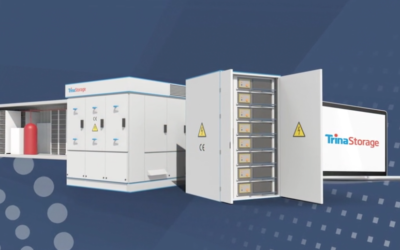
Update 2 March 2021: A Trina Storage representative contacted Energy-Storage.news to highlight that while the company is building out production capacity for lithium iron phosphate (LFP) battery cells for stationary energy storage, the major focus of the newly-launched division is on providing full integrated battery energy storage system (BESS) solutions to the renewables and grid storage markets.
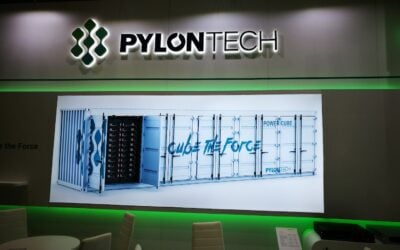
Pylontech has said it will have 4GWh of battery energy storage system manufacturing facilities in operation within three years, after it raised around US$300 million from listing on the Shanghai Stock Exchange.