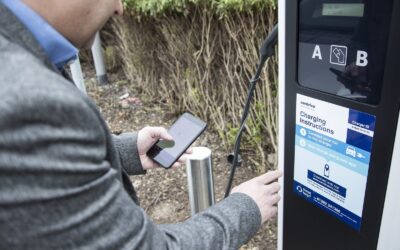
Energy supplier Centrica has unveiled its new electric vehicle offering, targeted at helping businesses across the globe navigate the EV transition, with solar and battery storage expected to play a major role.
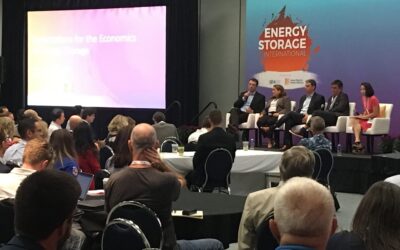
Energy storage has moved out of an early, marketing and awareness phase, and real business is being done throughout Europe, Energy-Storage.news heard yesterday at the annual ees Europe show Munich, Germany.
Following February’s excellent Energy Storage Summit at London’s Victoria Park Plaza hotel and hosted by our publisher Solar Media, here’s a short series of videos posing some of the big questions around energy storage, renewables, climate change, business and the industry, and more.
Walking around Energy Storage Europe this year it was obvious that the show, like the market, has grown from a small handful of “strong believers” as one source put it, to a forward-looking show focused on a ‘business-as-usual’ scenario.
In today’s third and final instalment of our series to welcome in 2019, we look at what our respondents are expecting to see this year, what they would like to see happen and some of the ways they will be trying to fulfil those expectations.
While the relationship between renewable energy and energy storage is a close one, combining storage with natural gas is also an important stepping stone measure in the transition to 100% renewables, Energy-Storage.news has heard.
The CEO of Orsted, the world’s largest offshore wind developer, has said that his company is working to establish “a scalable commercial model” for solar PV and energy storage, viewing both as potential drivers of long-term growth.
Since the launch of the site almost four years ago, Energy-Storage.News (and PV Tech Storage as it was previously known), has consistently brought you high-quality blogs from both guest contributors and our team of journalists and experts here at Solar Media. Here’s just a selection of some of the best guest blogs we ran from January to June, 2017:
Northern Powergrid, one of the six distribution network operators (DNOs) responsible for delivering power across regions of the UK, is to plough £1.9 million (US$2.53 million) into the creation of a smart energy grid across its network, allowing its eight million customers to trade power and services using their home solar, battery systems and electric vehicles (EVs).