Progress on BESS projects in Saudi Arabia and Chile totalling a combined 16GWh of energy storage capacity using Sungrow and BYD batteries has been revealed by the projects’ owners.
Sungrow manufactured 7.8GWh of BESS for Saudi project in 58 days
China-based inverter and battery energy storage system (BESS) manufacturer Sungrow signed an agreement with Saudi engineering procurement and construction (EPC) firm Algihaz Holding in July 2024 for three projects totalling 7.8GWh of capacity.
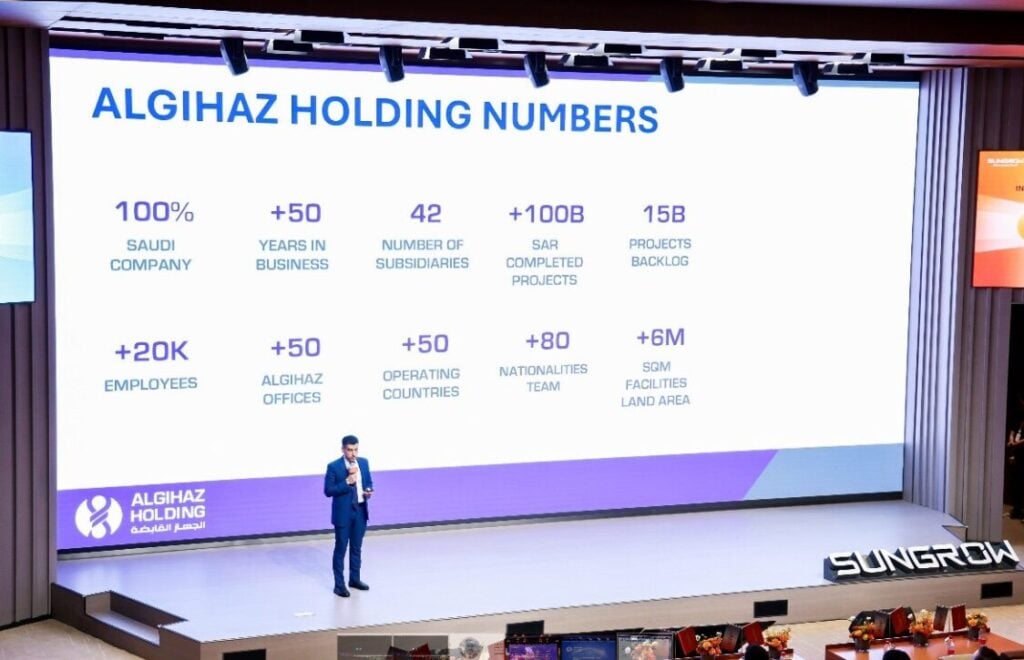
Speaking at Sungrow’s Global Renewable Energy Summit in Hefei, China on 9 April, Algihaz’ VP Dr Mohamed Shatla gave details and a progress update on the three projects, which are being deployed in line with the country’s Vision 2030 modernisation programme.
They are located in the provinces of Najran, Asir and Jazan, and are using Sungrow’s PowerTitan 2.0 which is integrated with power conversion systems (PCS), i.e. an AC block. The 683.8MW/2,607MWh Najran project, a 3.8 hour duration project with a 0.25P C-rate, will have grid-forming and black start capabilities.
Try Premium for just $1
- Full premium access for the first month at only $1
- Converts to an annual rate after 30 days unless cancelled
- Cancel anytime during the trial period
Premium Benefits
- Expert industry analysis and interviews
- Digital access to PV Tech Power journal
- Exclusive event discounts
Or get the full Premium subscription right away
Or continue reading this article for free
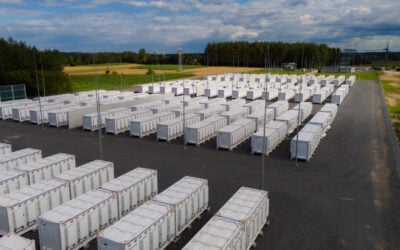
Manufacturing of the BESS units for the projects were completed in just 58 days, with shipping then commencing from Taicang port in Jiangsu province. The three projects then started construction simultaneously and system commissioning is now underway.
Shatlan said the Najran project will be finalised this summer, equating to just 14 months after the agreement was signed. Over 200 Sungrow engineers have been to Saudi Arabia to help complete the project.
Saudi Arabia needs an estimated 48GWh of large-scale BESS by 2030 to meet decarbonisation targets, and numerous state bodies and private companies have moved in the past 12 months to progress projects at an unprecedented rate and scale, alongside Algihaz’s. Chinese companies have been the main technology providers so far.
The largest BESS completed anywhere this year was a 500MW/2,000MWh one completed by Power Construction Corporation of China (PowerChina) in Bisha, Saudi Arabia, while the Saudi Power Procurement Company (SPPC) is in the midst of tendering 2GW/8GWh of BESS provision across four projects of the same size.
China-based EV and BESS firm BYD meanwhile has already won a total of 15.1GWh of BESS orders from the Saudi Electricity Company, the state utility and transmission & distribution (T&D) system operator of Saudi Arabia, including the Bisha BESS.
Another of Sungrow’s major customers, owner-operator BW ESS, discussed a high-profile UK project the pair worked on at the event too, covered in this Premium access article.
Grenergy shipping BYD BESS units for third phase of Oasis de Atacama project in Chile
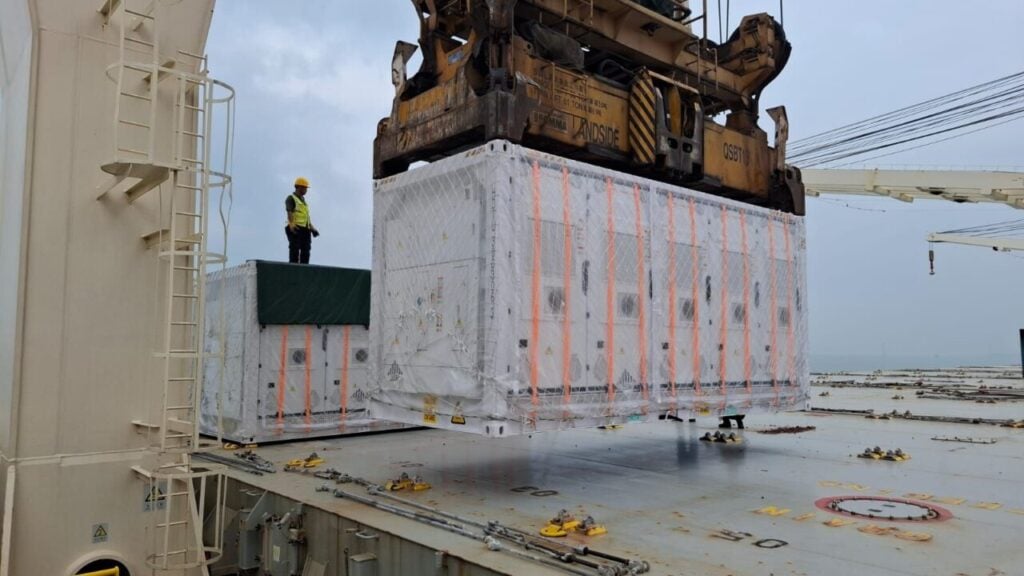
BYD is also providing BESS for developer and independent power producer (IPP) Grenergy’s Oasis de Atacama project in Chile, a solar-plus-storage project being built in seven phases to eventually total a staggering 11GWh of energy storage capacity alongside 11GW of PV.
The first two phases (Quillagua 1 and 2) comprising 221MW of solar PV and 1.2GWh are already online, as reported recently by Energy-Storage.news, with Grenergy selling those phases plus the third, Victor Jara phase to investor ContourGlobal.
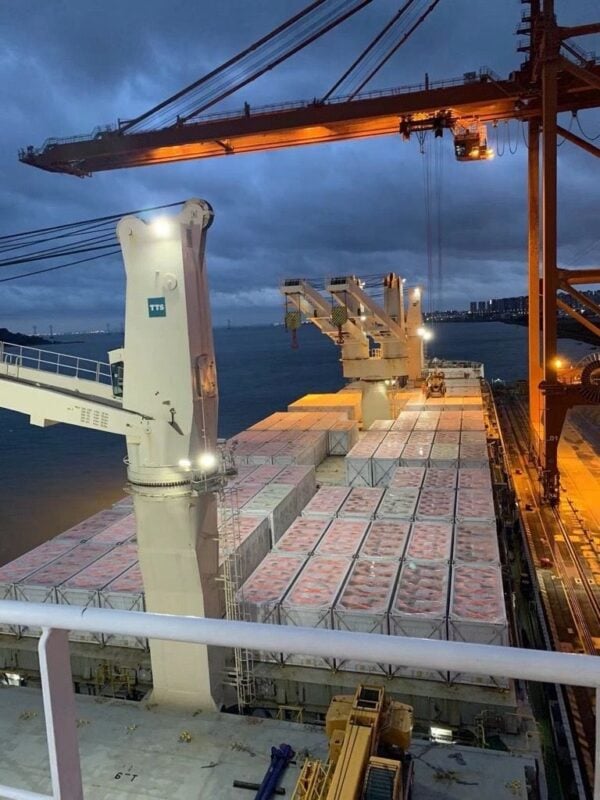
In a LinkedIn post last week, Grenergy said its fourth break bulk vessel loaded with 150 BYD battery units is en route from Dachan Port in China to Iquiquie in Chile for the Victor Jara phase, which will add another 800MWh of energy storage capacity to the project. The trip takes six weeks and is the firm’s heaviest load so far.
Chile is currently a hotbed of grid-scale BESS activity as the country looks to reduce sky-high curtailment of solar PV energy. Almost all large-scale solar PV projects are adding BESS capacity, while standalone projects are also being built.
Around 3.4GW of BESS is needed to solve the curtailment issues alone, but much more will come online to help solve other intermittency and grid stability challenges. Energy-Storage.news did a deep dive into the country for a recent edition of our quarterly journal PV Tech Power.