The digital ledger system blockchain has been both praised and misunderstood in equal measure and its relationship to the physical world of electrons is at its earliest stages of exploration. In the latest ‘Storage & Smart Power’ section of PV Tech Power, Carsten Reincke-Collon, CTO of Younicos looks at how energy storage and management software will interact with blockchain-led or blockchain-like systems of data processing and recording.
UK energy regulator Ofgem has published guidance outlining how developers and asset owners can add storage to their subsidised solar installations without losing accreditation to the Renewables Obligation (RO) and Feed-in Tariff (FiT).
Hospitals, schools and railways in South Australia will be powered by an electricity retailer started up by billionaire steel trader Sanjeev Gupta, following the signing of an agreement between the state government and Gupta’s SIMEC ZEN Energy.
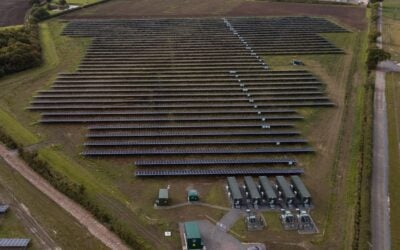
German renewables company Wirsol has tabled plans for two subsidy-free ground-mounted solar parks in the UK, for which energy storage is expected to be included in “phase two of the build-out”.
Distribution network operators (DNOs) in Britain should be able to own and operate a minimal amount of battery storage capacity in certain cases, and be able to compete in the ancillary services market to fund the projects, according to the head of regulation and strategy at Northern Powergrid (NPg), one of the country’s seven DNOs.
Major Japanese business and government entities have extended their involvement in energy storage with the announcement of the country’s first virtual power plants, an investment in a US frequency regulation project and partnerships on technology.
Massachusetts, one of the few US states thus far to put consideration of energy storage into long-term planning decisions for electric utilities, will support 26 projects with US$20 million in grants.
Changes to the de-rating factors for battery storage projects competing in the UK’s Capacity Market (CM) will push the sector towards longer-duration batteries, while potentially sparking a shift towards energy arbitrage as a source of revenue for shorter duration applications. David Pratt heard from several industry sources following last week’s announcement.
Government policy and regulation offer the biggest barriers to the deployment of battery energy storage in the UK according to a cross-party group of MPs focussed on energy storage, which claims 12GW of batteries could be deployed by 2021 under the right circumstances.
The latest confirmed initiative supporting the restoration of power in Puerto Rico is the donation of 6MW of batteries from AES, which has suggested microgrids and large-scale solar could be the answer to long term stability issues.