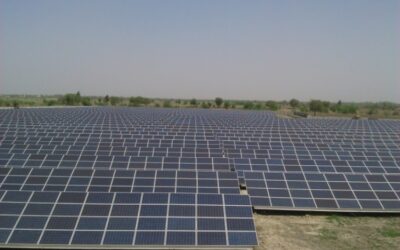
The Asian Development Bank (ADB) has agreed to part-fund a US$53.2 million undertaking to power Tonga with renewable energy, including the installation of 22.2MWh of energy storage.
With Brexit day less than a month away and still no certainty around what the final deal will look like, the time is now for the energy storage sector to prepare for every eventuality so it can play to its increasing strengths, writes Stephen Irish, co-founder of Hyperdrive Innovation.
This year’s Energy Storage Europe event marked something of a culmination of “more or less 10 years of continuous evolution” in the industry, Energy-Storage.news has heard.
In the hierarchy of grid needs, peaking power is often a priority in terms of providing resiliency and balance to the network. This is usually provided by natural gas turbines, which come at a high environmental and economic cost. Andy Colthorpe charts the rise of the solar-plus-storage peaker plant.
The new mission focuses on local manufacturing across the whole supply chain for electric vehicles (EV) including battery and cell manufacturing while also supporting clean energy and storage uptake.
RP Global, an independent renewable energy developer and majority shareholder of JUMEME Rural Power Supply, has commenced construction on the first phase of a solar-hybrid mini-grid project in Tanzania.
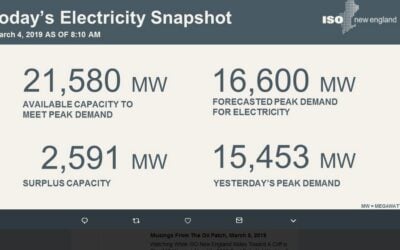
Revisions aimed at enabling energy storage’s participation in wholesale markets, proposed by New England’s Independent System Operator (ISO) have been accepted by the Federal Energy Regulatory Commission (FERC), effective 1 April this year.
Solar Energy Corporation of India (SECI) has announced three huge tenders across the country with various combinations of solar, energy storage, wind and hybrid concepts, to be connected to the Interstate Transmission System (ISTS)