South Africa continues its push for energy storage capacity, with utility and grid operator Eskom issuing a call to work on a 21GWh pumped hydro energy storage (PHES) project.
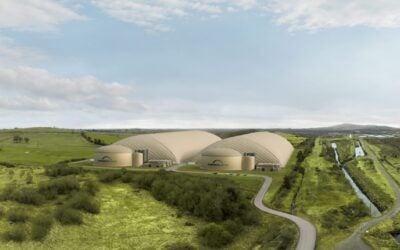
Eskom Holdings’ renewable energy subsidiary Eskom Green is developing the 1.5GW/21GWh Tubatse Pumped Storage Scheme (Tubatse Project) in Limpopo, the north-eastern South African province bordering Botswana, Mozambique and Zimbabwe.
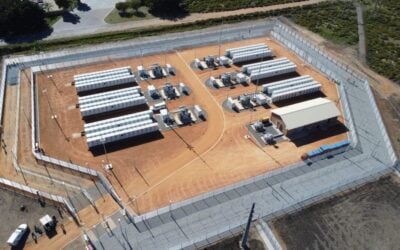
The news comes shortly after the South African government’s Section 34 determination to prioritise the deployment of 4.6GW of battery energy storage systems (BESS) alongside 5GW of power-to-gas, to aid renewable energy integration and reduce curtailment.
That determination, made a few days ago, has been welcomed by the South African Energy Storage Association (SAESA), a national trade group.
Try Premium for just $1
- Full premium access for the first month at only $1
- Converts to an annual rate after 30 days unless cancelled
- Cancel anytime during the trial period
Premium Benefits
- Expert industry analysis and interviews
- Digital access to PV Tech Power journal
- Exclusive event discounts
Or get the full Premium subscription right away
Or continue reading this article for free
Meanwhile, Eskom Green is seeking a strategic partner to participate in developing, financing and delivering the 14-hour long-duration energy storage (LDES) project through a Request for Qualification. Qualified respondents with the requisite experience and financial capability will be invited to participate in the Request for Proposal (RfP) to follow.
The Tubatse Project will be the largest single energy storage system (ESS) in South Africa to date.
It has been selected alongside 11 other projects as a designated Strategic Integrated Project (SIP20d) by the national infrastructure investment coordinator, Infrastructure South Africa (ISA) and is part of the Just Energy Transition (JET) energy and economic programme.
Eskom said “several offtake avenues” are being pursued, although the utility’s preferred route would allocate PHES capacity under its Integrated Resource Plan of 2025, which would then enable Eskom to enter a long-term power purchase agreement (PPA) or capacity agreement. The buyer would be the National Transmission Company South Africa (NTCSA).
Eskom currently operates 2,732MW of pumped hydro across three existing facilities, as well as 661MW of hydroelectric power generation capacity at two plants.
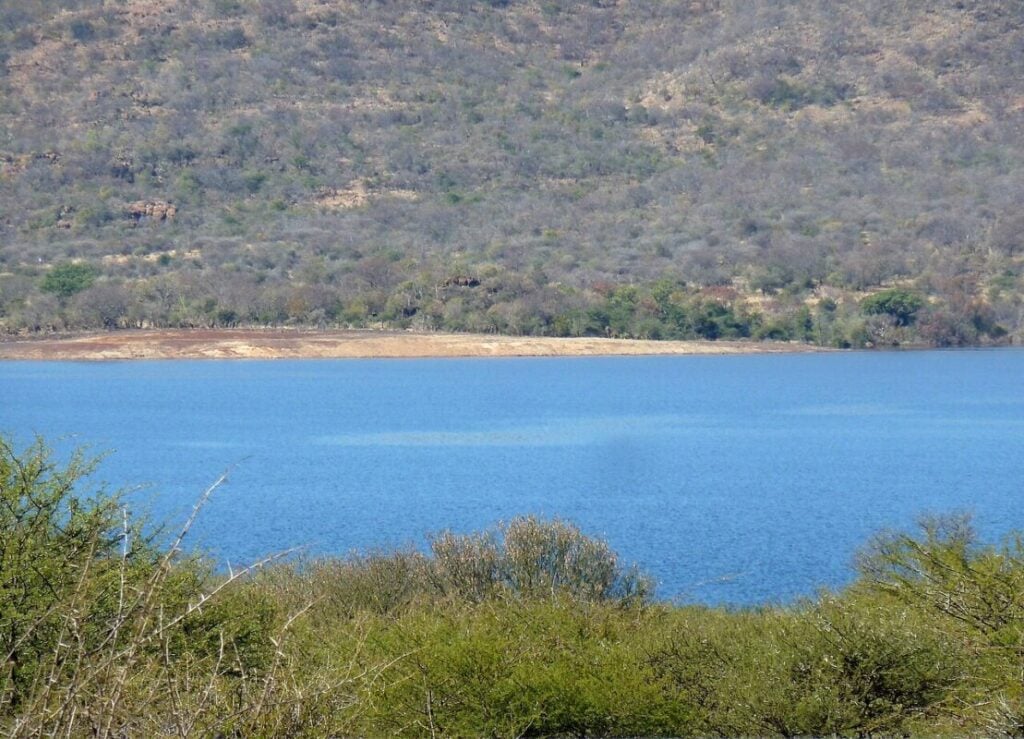
According to the utility, land and Environmental Authorisation have been granted for Tubatse, while grid connection studies have “advanced” and water supply availability confirmed by the Department of Water and Sanitation to come from the nearby De Hoop Dam roller-compacted concrete (RCC) gravity dam.
Trade group SAESA welcomes 4.6GW BESS determination
The official ministerial decision Eskom seeks in favour of its plan is called a Section 34 determination. Section 34 determinations guide the implementation of the Integrated Resource Plan (IRP). It was one of those that enabled the earlier decision to prioritise BESS and power-to-gas deployments.
Trade group SAESA welcomed the government’s prioritisation of BESS in a statement sent to Energy-Storage.news. SAESA said the timing is “significant.”
“Recent Integrated Energy Plan (IEP) modelling and assumptions discussions highlighted a fundamental shift that South Africa’s energy planning now needs to capture: we cannot plan the future power system by counting megawatts of generation alone,” the statement read.
“We must plan for when energy is available, where it is available, how it moves through a constrained grid and how it is stored and dispatched when the system needs it most. The announcement reinforces that shift. Battery energy storage systems (BESS) are becoming critical system infrastructure, supporting flexibility, reducing avoidable curtailment, shifting energy into periods of demand and strengthening security of supply.”
“For SAESA, the message for the IEP is clear: storage, flexibility and system services must be modelled as integral components of South Africa’s future electricity architecture, with their contribution considered from the outset of generation planning.”