South Africa’s government has put battery storage and power-to-gas technologies at the heart of the national long-term electricity supply and demand strategy.
The Integrated Resource Plan 2025 (IRP 2025) was approved last October to be implemented in stages over multiple years.
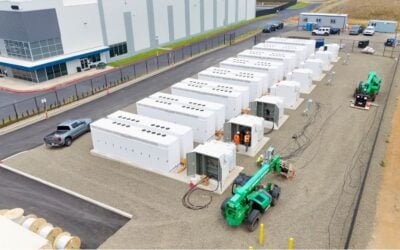
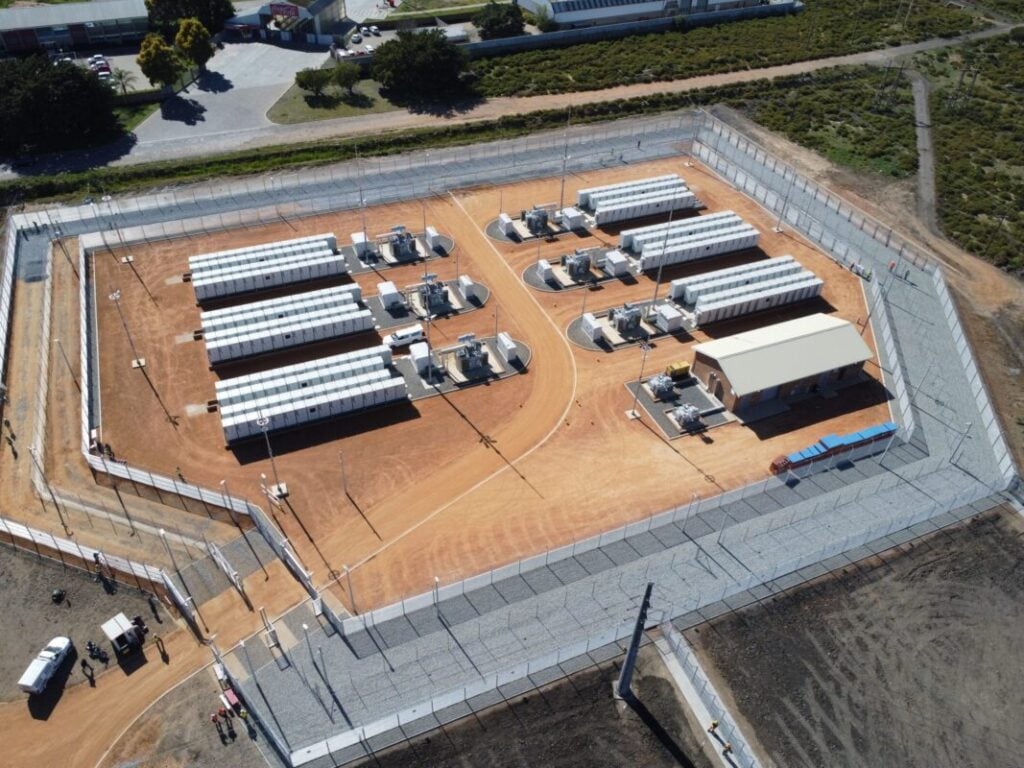
It will prioritise the deployment of 4.6GW of battery energy storage systems (BESS) and 5GW of gas-to-power, Minister of Electricity and Energy Dr Kgosientsho Ramokgopa confirmed earlier this week (7 October).
Battery storage resources will play a critical role in mitigating curtailment of generation, particularly from variable renewable energy (VRE) sources. Gas-to-power will add flexibility to the network and enhance the dependability of supply, the government said in a release.
Try Premium for just $1
- Full premium access for the first month at only $1
- Converts to an annual rate after 30 days unless cancelled
- Cancel anytime during the trial period
Premium Benefits
- Expert industry analysis and interviews
- Digital access to PV Tech Power journal
- Exclusive event discounts
Or get the full Premium subscription right away
Or continue reading this article for free
Minister Ramokgopa confirmed the Section 34 determination—the category of formal ministerial decision made in conjunction with the National Energy Regulator of South Africa (NERSA)—regarding the prioritisation of the two technologies.
Wind, solar PV, hybrid and pumped storage determinations to follow
The Ministry has to date overseen three tenders for BESS resources, the most recent of which Ramokgopa fiercely defended the integrity of the process from opposition party uMkhonto weSizwe’s (MK’s) allegations of “pre-arranged deals, insider networks and foreign capture of South Africa’s energy infrastructure” in June 2025.
By that time, through various programmes, including the Battery Storage Independent Power Producers Procurement Program (BESIPPPP), had secured contracts for developers with national utility and grid operator Eskom totalling almost 1.7GW/11GWh.
An Energy-Storage.news analysis article in September 2025 highlighted South Africa’s 11GWh of awarded procurements in numbers, charts and analysis of the drivers and market dynamics.
The government highlighted in its release this week that all five projects awarded in the first bid window, totalling 513MW, have reached commercial close and begun construction, attracting around ZAR15.4 billion (US$930 million) in private investment.
Meanwhile, the new gas-powered resources will operate in complement to the energy storage capacity, providing dispatchable electricity during shortfalls in renewable generation and when demand rises.
Further determinations will be made: the government acknowledged that no provisions for wind and solar PV have been made in this first determination, while a subsequent determination will be made to address the role of renewables, including hybrid solar-plus-storage or wind-plus-storage and pumped hydro energy storage (PHES).