South Africa’s public utility and TSO, Eskom, and energy storage technology firm Energy Vault have partnered to deploy projects using the latter’s gravity-based technology.
The firms have entered into a strategic development agreement to deploy a 25MW/100MWh gravity energy storage system at the Hindrina Power Station in Mpumalanga province, northeastern South Africa. It can later be scaled to 4GW, though they didn’t give any timelines for the project.
Energy Vault will provide Eskom with its latest EVx 2.0 GESS technology along with on‑site engineering, project management, and training support services. Energy Vault said the product has advancemenents over the first EVx design, part of which enables the scaling to multiple gigawatts (GW).
They also plan to license, co-develop and partner to deploy up to 4GWh of long duration energy storage (LDES) across all 16 member states of the Southern African Development Community (SADC). As well as helping the region transition away from coal, the partnership aims to increase economic re-use of waste coal ash within the energy storage medium.
Try Premium for just $1
- Full premium access for the first month at only $1
- Converts to an annual rate after 30 days unless cancelled
- Cancel anytime during the trial period
Premium Benefits
- Expert industry analysis and interviews
- Digital access to PV Tech Power journal
- Exclusive event discounts
Or get the full Premium subscription right away
Or continue reading this article for free
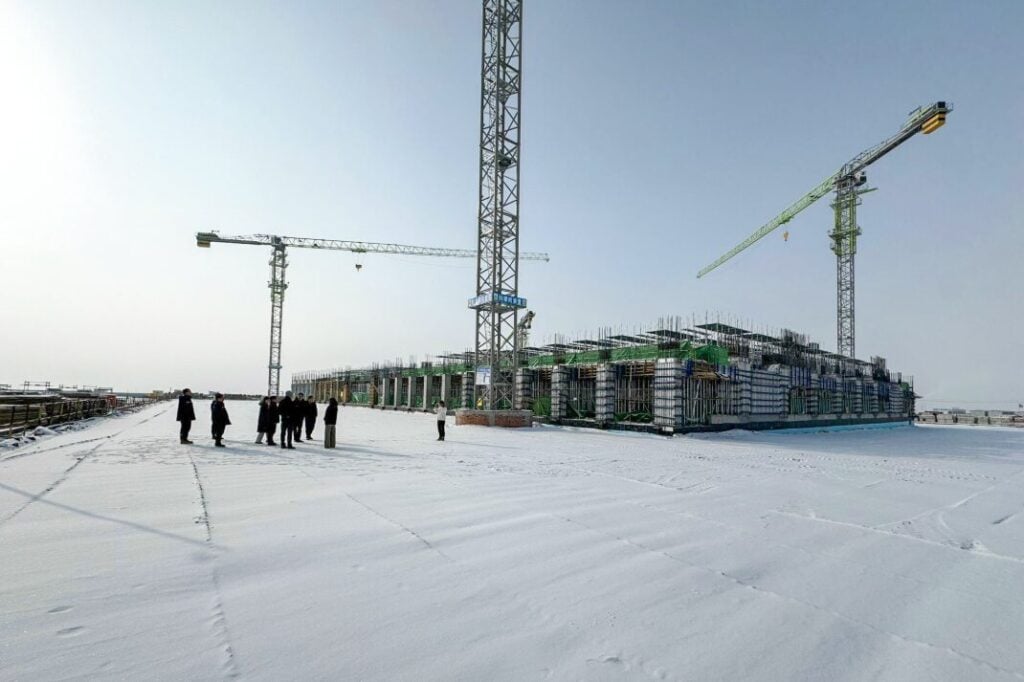
Energy Vault’s gravity-based energy storage technology works by moving composite blocks up and down, in the same way that pumped hydo storage does with water. The blocks can be made of anything, but are often made up of industrial waste and byproducts, including coal ash. Its first operational systems are in China, and were done in partnership with a waste management company.
However, the gravity energy storage technology has more than its fair share of critics and criticisms. We put many of these to CEO Rob Piconi in a 2023 interview. Since then, the company has diversified into short-duration battery energy storage systems (BESS) and green hydrogen, including as an owner-operator of projects.
But it hasn’t stopped developing and marketing its gravity-based technology either, including with eyebrow-raising announcements about deploying gravity storage in skyscrapers. See all our coverage of Energy Vault here. Note that UK-based peer Gravitricity went into administration earlier this year.
The collaboration in South Africa is in line with Eskom’s Just Energy Transition Partnership (JETP) initiative to transition away from coal while ensuring grid reliability, job creation and local economic development, Energy Vault said.
Eskom’s grid in South Africa has been beset by reliability issues with frequent and widespread blackouts. Alongside other measures, energy storage is being deployed to shore it up, particularly as it transitions away from renewables towards intermittent solar and wind. It is procuring vast gigawatts of renewables and BESS via various schemes, which we rounded up into this useful infographic-led article in September.
Its efforts appear to be bearing fruit, recently going over 300 days without load shedding. It has, unfortunately, also been plagued by allegations of corruption.
Energy Vault this week released its financial results, in which it reaffirmed its 2026 guidance of US$225-300 million in revenues.