Ion Storage Systems (ION), a company that has developed a solid-state lithium-ion battery technology, has raised a US$30 million Series A to expand its production facility and accelerate its entry into the stationary storage sector.
Automative giant Toyota’s VC arm Toyota Ventures, energy company Tenaska and Thai oil and energy conglomerate Bangchak Corporation took part in the fundraising round alongside several other investment groups.
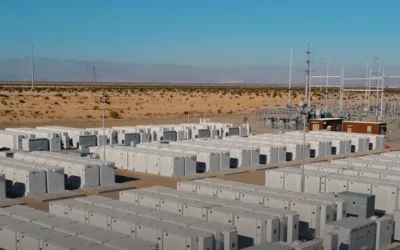
The money will go towards the expansion of ION’s facility in Beltsville, Maryland (pictured), to commission and qualify a manufacturing line with an annual capacity of 10MWh of its next-generation solid-state batteries.
Phase one of its rollout will come next year when its first cells will go its first market customer, the US Department of Defense (DOD). It expects to generate commercial revenues from this by the end of 2023.
Try Premium for just $1
- Full premium access for the first month at only $1
- Converts to an annual rate after 30 days unless cancelled
- Cancel anytime during the trial period
Premium Benefits
- Expert industry analysis and interviews
- Digital access to PV Tech Power journal
- Exclusive event discounts
Or get the full Premium subscription right away
Or continue reading this article for free
The Series A will also accelerate development projects the company has with partners and customers in the consumer electronics, automative and stationary storage sectors, which are rollout phases two, three and four, respectively.
ION has to-date had the most traction within the military space, where it is building a Conformal Wearable Battery (CWB) for the DOD that can be carried by soldiers to extend the operating time of equipment and weapons systems. It also started a year-long paid evaluation with defense, aerospace and information technology company Lockheed Martin in December 2021 to assess its tech.
Lisa Coca, Climate Fund partner for Toyota Ventures, said: “ION’s bi-layer cell design is a breakthrough for the industry. The architecture addresses the technological barriers that have historically plagued solid state batteries, and it enables critical next-generation performance metrics for widespread adoption – including high-energy density, strong cycling performance, wide temperature range, and fast charging.”
Convention lithium-ion batteries use a liquid electrolyte which carries lithium-ions back and forth between electrodes, while solid-state batteries use a solid electrolyte instead. The benefit is a much lower thermal runaway risk and higher energy density, but no such battery has been commercialised to-date although many are working on it. Another company developing a solid state battery Dragonfly Energy Corp, just went public on the Nasdaq through a SPAC merger.
The main issue with solid-state batteries to-date has been in the need for compression to achieve optimal charging conditions, expansion and contraction of the cell during cycling, and the formation of dendrites at high currents due to voids created during discharge. Toyota Ventures’ Coca wrote about how ION’s technology has gotten around these in a recent blog on Medium.
Other participants in ION’s Series A included GAINTECH Capital, Alumni Ventures Group, Z2Sixty Ventures, Climate Capital, and the University of Maryland Discovery Fund.