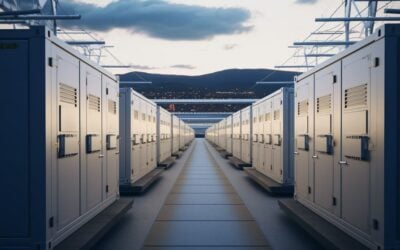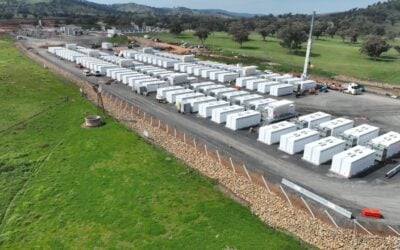
Publicly owned California utility Sacramento Municipal Utility District (SMUD) and developer D. E. Shaw Renewable Investments (DESRI) have executed a long-term power purchase agreement (PPA) for a 640MWh battery energy storage system (BESS) in California.
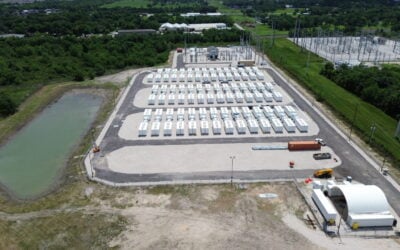
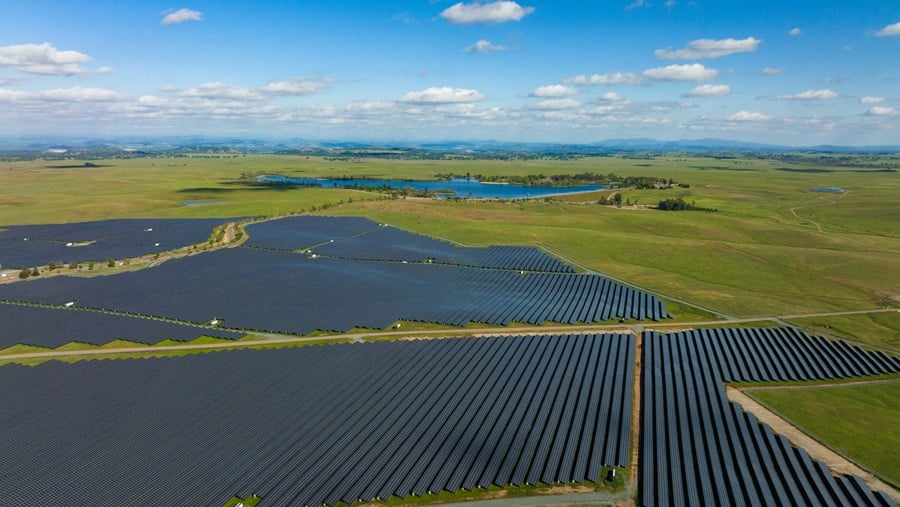
The 160MW/640MWh Dry Creek Energy Storage project is located in Sacramento County at the decommissioned Rancho Seco nuclear generating facility.
The Rancho Seco location also includes a 160MW solar facility with sustainable land management through sheep grazing.
Energy-Storage.news previously covered news of the PPA between the two companies (Premium access article), which has now been officially executed.
Try Premium for just $1
- Full premium access for the first month at only $1
- Converts to an annual rate after 30 days unless cancelled
- Cancel anytime during the trial period
Premium Benefits
- Expert industry analysis and interviews
- Digital access to PV Tech Power journal
- Exclusive event discounts
Or get the full Premium subscription right away
Or continue reading this article for free
At that time, it was noted that SMUD included clauses in the PPA that safeguard against future increases in project prices due to tariff changes. If an independent evaluator determines that tariffs have directly increased the Dry Creek Energy Storage project costs, the contract price increase will stay within a preset cap. However, if the project becomes too costly for DESRI, the developer will likely seek to modify the contract price or cancel the PPA entirely.
The PPA is for 20 years and sees SMUD purchasing the energy, capacity and ancillary services from DESRI’s project.
As evidenced by recent analyses, tariffs have had a significant impact on the energy storage industry, and agreements like this could become more common.
Procurement platform Anza Renewables noted in its Q2 US energy storage pricing insights report that Q2 2025 saw the sharpest jump in BESS prices since 2021.
Additionally, Anza stated that the 90-day tariff pause starting on 14 May is expected to increase shipping costs in Q3 2025, as different industries seek to import goods into the US to take advantage of the lower tariffs.
Research firm Wood Mackenzie noted in its report, ‘All aboard the tariff coaster: implications for the US power industry,’ that the reliance on imported products from China will have a greater effect on BESS than the solar or wind sectors.
The company also observed that, based on the severity of possible tariff hikes, the cost of utility-scale BESS might increase by 12% to 50% across three tariff scenarios.
A recent update to Clean Energy Associates’ quarterly ‘Energy Storage System Price Forecasting Report’ indicated that, despite the ongoing 90-day pause on US-China tariffs, the total duties on Chinese battery imports still exceed 40%.