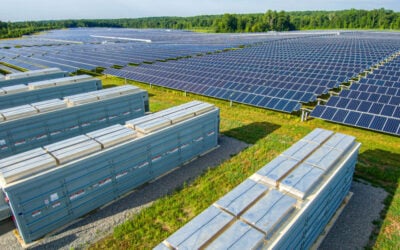
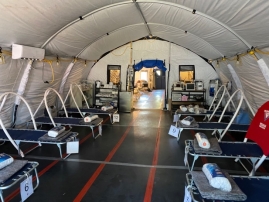
A solar-plus-storage microgrid is powering a mobile intensive care unit (ICU), set up to treat people suffering from COVID-19 symptoms at a migrant camp on the border between Texas and Mexico.
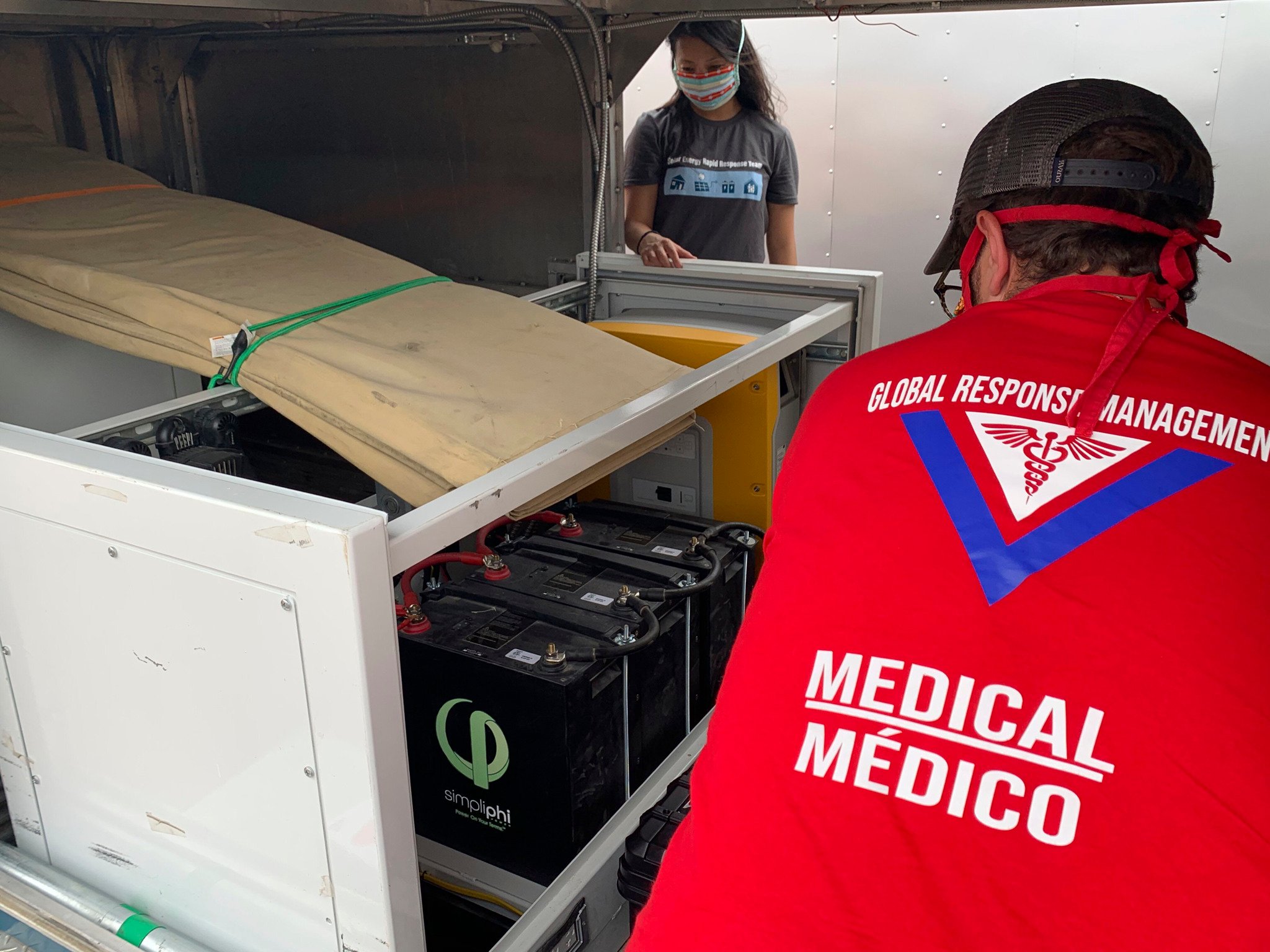
US manufacturer SimpliPhi energy has supplied its ‘PHI’ brand 3.8kWh lithium iron phosphate (LFP) battery storage systems to the ‘pop-up’ ICU, which has capacity to treat 20 patients at the Matamaros Migrant Camp, which is home to around 3,000 asylum seekers.
The batteries are connected to solar panels on a trailer and the containerised microgrid-on-wheels is the ICU’s primary power source, providing electricity not just for medical equipment for diagnosis and treatment, but also for HVAC systems to control the temperature in the clinic’s two tents.
Using batteries and solar as a power source in this location is especially useful, SimpliPhi pointed out in a press release, because diesel or gas generators would give off fumes that would be unlikely to help the ailing respiratory systems of patients struck by the novel coronavirus. A diesel generator could also run up fuel costs around US$2,000 per month for Global Response Management, the NGO that is running the clinic.
Try Premium for just $1
- Full premium access for the first month at only $1
- Converts to an annual rate after 30 days unless cancelled
- Cancel anytime during the trial period
Premium Benefits
- Expert industry analysis and interviews
- Digital access to PV Tech Power journal
- Exclusive event discounts
Or get the full Premium subscription right away
Or continue reading this article for free
SimpliPhi, headquartered in California, said it is supplying “portable and containerised microgrids” of this type to other locations in the US and around the world for clinics set up to fight COVID-19. Meanwhile, at the Matamaros Migrant Camp, SimpliPhi’s partner, non-profit organisation Footprint Project which got the system installed, will train up camp staff and volunteers on how to maintain and operate the microgrid.
“Thank you to the Mexican government for helping us to provide this critical clean-air microgrid and associated medical equipment to the Matamoros migrant camp. We appreciate their support and efforts to ensure asylum seekers have access to medical care to help stop the spread of COVID-19,” Footprint project founder and director Will Heegaard said.
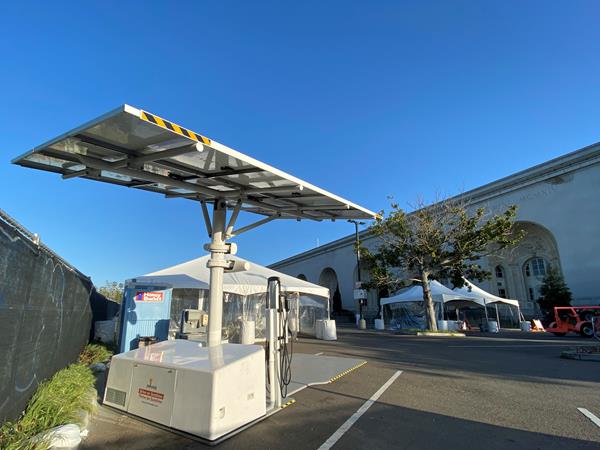
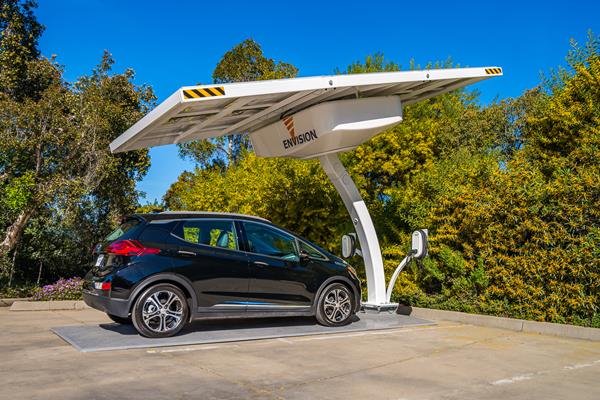
In somewhat related news, a COVID-19 testing centre in California has been equipped with a mobile energy solution from Envision Solar International, a manufacturer of EV charging, energy resiliency and outdoor media (think solar-powered advertising screens).
Envision Solar (not to be confused with Shanghai-headquartered Envision Energy), makes EV ARC, an off-grid EV charging station that comes with built-in lithium-ion battery energy storage and solar panels on its canopy. Not only can it be transported to different locations and set up in minutes without need for connecting to the utility grid, but Envision Solar claimed in an April release that the newest iteration of the EV ARC can be received by customers “without any human interaction,” and installers will provide sanitation checklists and so on.
“Yesterday this EV ARC was a solar powered electric vehicle charger providing fuel to the City’s zero emission vehicle fleet, and today it is providing zero-emission electrical power to a COVID-19 response site,” Richard Battersby, Oakland Public Works assistant director said.
Again, the portable power solution saves on fuel costs versus the hire of a diesel or gas generator and purchase of fuel.
“During times of peace and prosperity our products deliver the driving on sunshine experience day and night throughout the year. They cost nothing to run and they deliver service with precious little care or maintenance.
“That’s exactly what they are designed to do. But they are also designed to provide a highly reliable and clean source of fuel for transportation and other requirements in the event that the utility-grid cannot deliver. We could not forecast when the requirement would hit or what it would be, but we designed the products knowing that one day they might be the only reliable source of power our first responders and frontline workers could rely upon,” Envision Solar CEO Desmond Wheatley said.
“Tragically, COVID-19 has delivered an opportunity for EV ARC to demonstrate its multiple layers of value. I am proud to support Oakland and our other customers at this time.”