Tesla’s former EMEA vice-present has taken on an advisory role for Solo Energy as the company seeks to build out its vision of a virtual power plant driven by residential and commercial battery systems.
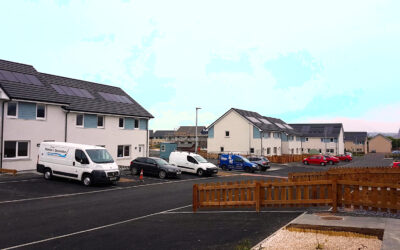
Battery installations are underway at a European Regional Development Fund-backed project deploying low carbon infrastructure on the Isles of Scilly, in a model that it is hoped could be widely replicated elsewhere.
What has driven the recent boom in Germany’s household energy storage installation figures? What value do customers expect when adding a storage system to their homes? And more importantly, what are energy storage providers doing to sustain and accelerate growth, which can eventually unlock a true mass market? Florian Mayr of Apricum takes a closer look.

UK renewable electricity supplier Solo Energy is set to launch a ‘free battery’ business model to UK homeowners after a successful pilot on the remote Scottish islands of Orkney.
Over the last thousand days, project partners from all walks of life in the energy sector have come together to deliver Europe’s largest commercial energy storage system using second life and new battery modules. Energy.Sorage-News attended the launch at Amsterdam’s Johan Cruyff ArenA to find out what the project has to offer.
Softbank Energy and Kyocera, two major names in Japan’s solar energy industry, are partnering with utilities, grid operators and other stakeholders to execute virtual power plant (VPP) projects backed by the government.
Only large scale and intelligent energy storage can realistically solve the issue of variable renewable electricity generation. Patrick Clerens, Secretary General at the European Association for Storage of Energy and a member of the advisory board for Electrify Europe, argues that we can make it happen – but only if we get the incentives right.
Germany’s sonnen introduced a scheme a while back in which customers pay a flat, reduced rate for their electricity each month while the company aggregate their batteries together to benefit the grid – and now the offer has been extended to electric vehicle owners.
Car manufacturer Renault has created a new energy subsidiary which will create smart charging networks, explore vehicle-to-grid (V2G) solutions and utilise second-life EV batteries for stationary energy storage projects.
The sale of an NEC Corporation business division involved in manufacturing lithium-ion batteries will have no material impact on the group’s activities in energy storage, according to a company spokesman.