A national solar energy industry association has criticised the UK government’s newly-released Battery Strategy for paying “insufficient attention” to opportunities presented by battery energy storage systems (BESS).
The Battery Strategy, published last Sunday (26 November) includes 15 ‘policy options’ provided by the Department of Business and Trade to help build “a globally competitive battery supply chain that supports economic prosperity and the net zero transition.”
Although trade group Solar Energy UK welcomed the boost for the domestic manufacturing of batteries in electric vehicles (EVs) presented by the Strategy, the trade association expressed concern that the document “appears to underplay” how fast the BESS sector is growing.
The strategy stated that BESS demand is set to rise from 10GWh in 2030 to 20GWh by 2035, Solar Energy UK noted that the current pipeline suggests that this growth may be even faster.
Try Premium for just $1
- Full premium access for the first month at only $1
- Converts to an annual rate after 30 days unless cancelled
- Cancel anytime during the trial period
Premium Benefits
- Expert industry analysis and interviews
- Digital access to PV Tech Power journal
- Exclusive event discounts
Or get the full Premium subscription right away
Or continue reading this article for free
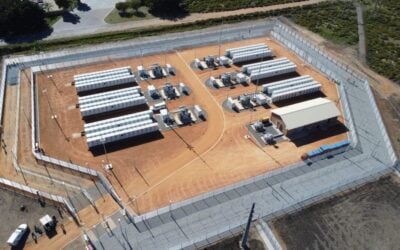
In November alone an impressive number of BESS plans have been announced, such as Statera’s 300MW/600MWh BESS facility in Essex and Sungrow’s 100MW BESS asset which recently grew in storage capacity from 260MWh to 330MWh.
November also saw construction begin on the UK’s “largest under-construction BESS” – SSE Renewables’ 320MW/640MWh asset in North Yorkshire.
“Solar Energy UK is further aware of a 400MW project in the pipeline,” added the trade association.
Additionally, the grid connection process for BESS is expected to be accelerated following the National Grid’s recent unveiling of plans to streamline 10GW of BESS capacity currently waiting for grid connection.
Referring to the section within the Battery Strategy discussing strengthening electricity networks to support the growing electricity demand, Solar Energy UK pointed out that the role BESS can play in balancing the grid, providing frequency support and reducing renewable energy curtailment was “sadly neglected.”
Behind-the-meter storage
Domestic storage could maximise the value of roof-mounted solar panels, allowing consumers to store cheap solar energy during the day when it’s not needed and use it at night. However, at present, there is a 20% VAT imposed on retrofitted BESS when fitted to solar installations; a VAT that new solar and storage installations are exempt from.
Solar Energy UK stated it had expected the “anomaly” to be resolved in the recent government Autumn Statement following its own calls for the removal of the VAT for retrofitted BESS’ and a consultation on the matter.
“UK is leading the rest of Europe in the deployment of utility scale batteries and there are several UK manufacturers of residential batteries expanding their operations,” said Solar Energy UK in conclusion.
“By overlooking this rapidly expanding part of the clean energy sector, the Government is missing half the picture with its Battery Strategy.”
This story first appeared on Solar Power Portal.
Energy-Storage.news’ publisher Solar Media will host the 9th annual Energy Storage Summit EU in London, 20-21 February 2024. This year it is moving to a larger venue, bringing together Europe’s leading investors, policymakers, developers, utilities, energy buyers and service providers all in one place. Visit the official site for more info.