
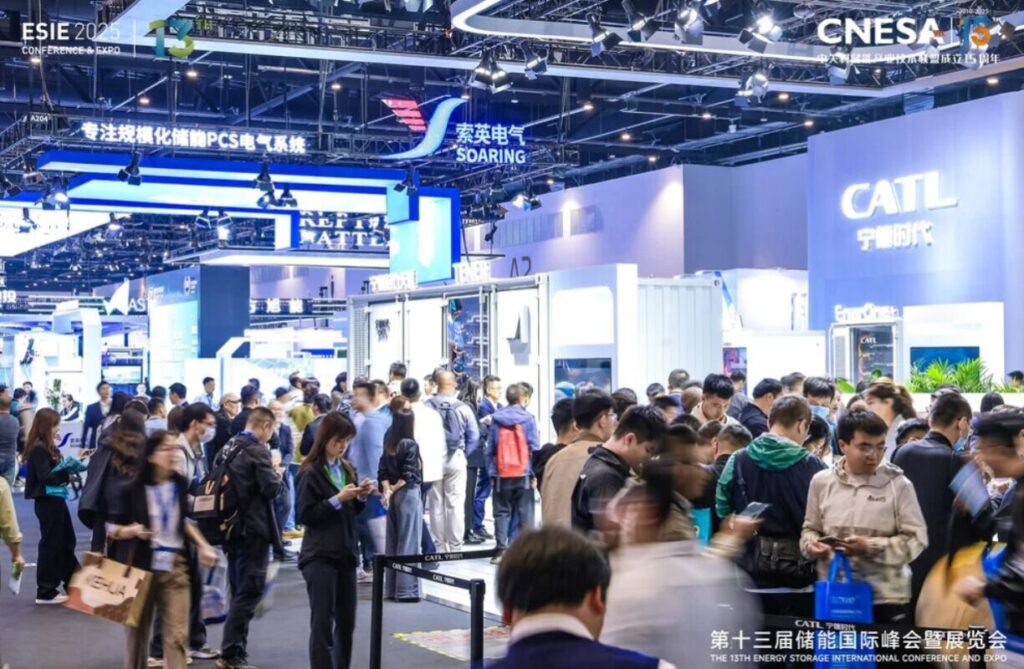
The global battery energy storage market is entering a new phase, with shifting cell prices, intensifying competition and rapid international expansion reshaping the supplier landscape. The latest Battery StorageTech Bankability Ratings Report for Q2 highlights these changes, with CATL upgraded to AAA on the back of strong growth in its energy storage business, while Wärtsilä has been downgraded to BB amid persistently low orders and changes to its energy storage business.
The changes underline how quickly supplier risk profiles are evolving as the BESS market matures. Financial performance, exposure to battery-cell costs, manufacturing scale, and the ability to compete in increasingly international markets are becoming critical factors in assessing the long-term bankability of storage providers.
The Report’s methodology has been updated to place greater emphasis on battery cell production in response to changing market dynamics, particularly the recent spike in lithium carbonate prices. The reversal of the steady battery price declines seen over recent years highlights the potential strategic advantage of vertical integration, with suppliers that control both cell production and ESS manufacturing better positioned to manage exposure to input-cost volatility. This has been reflected in the latest methodology and contributed to CATL’s improved score, alongside the company’s strong growth in energy storage revenue. More broadly, the shift illustrates why access to cell manufacturing and upstream supply chains is becoming an increasingly important consideration when assessing the long-term bankability of BESS suppliers.
Meanwhile, Finland-headquartered Wärtsilä was downgraded from BBB to BB due to continuously low energy storage orders and the company’s decision to spin off its ESS business into a JV with RCT Solutions, which is expected to be loss-making in 2026. The downgrade also underscores the growing pressure on established system integrators to demonstrate sustainable order growth and profitability amid intensifying competition in the BESS market.
Try Premium for just $1
- Full premium access for the first month at only $1
- Converts to an annual rate after 30 days unless cancelled
- Cancel anytime during the trial period
Premium Benefits
- Expert industry analysis and interviews
- Digital access to PV Tech Power journal
- Exclusive event discounts
Or get the full Premium subscription right away
Or continue reading this article for free
Meanwhile, there were strong profit increases for other Chinese integrated lithium-ion cell and BESS players, including Rept Battero, CALB, and Eve Energy, while US system integrator Fluence posted an all-time high backlog of US$5.6 billion.
An overall bankability score is calculated based on a company’s financial health, manufacturing operations and shipments. Companies are then benchmarked against each other on risk metrics and placed into a final ranking from AAA to C.
The bankability score of a company is accompanied by detailed commentary explaining exactly why a supplier may, or may not, be a suitable option for your projects. All aspects of the analysis use coefficients to ensure the methodology remains representative of current BESS market dynamics affecting BESS procurement.
Chinese players increasingly look to international markets
The rapid growth of battery storage deployment has attracted new players from the solar and automotive industries, but this is also intensifying competition in an increasingly crowded market. In China, where many of the leading ESS suppliers are based, strong domestic competition and pressure on system margins are encouraging established and emerging suppliers to look increasingly towards international markets for growth.
This intense competition is particularly felt in China, the largest end market and where the majority of leading ESS suppliers are based, and, combined with the falling price of lithium carbonate over the past several years, has pushed down energy storage system prices in the country and squeezed margins. The rise in lithium carbonate prices in Q2 2026 and the resulting increase in LFP cell prices put further pressure on integrators’ profit margins, especially those still scaling up and trying to gain market share at competitive prices.
Suppliers have been trying to mitigate this risk by accelerating their expansion into global markets. RelyEZ’s deployments were previously heavily concentrated in China, with over 95% of 2024 and 2025 shipment volume delivered domestically. This year, however, saw further expansion into Europe, where the company delivered to sites in both Poland and Hungary. RelyEZ is an example of a wider trend among Chinese suppliers, as overseas markets become increasingly important for diversifying revenue and offsetting the intense competitive pressure of the domestic market.
Overseas revenue share for Chinese-based suppliers has been rising, increasing by an average of 51% in H1 2026 and by 3 percentage points as a share of total revenue. The growth of emerging markets has created opportunities for companies to gain an early-mover advantage.
Eastern Europe has seen acute interest, driven by new funding such as a €150 million (US$174 million) scheme approved in Romania and Bulgaria’s RESTORE program, which supports over 4GWh of battery storage projects. While Chile has been the main end market in South America due to the high solar energy penetration, other countries in the region are seeing policy developments that are priming them for significant ESS growth, such as Argentina’s battery storage tenders, first launched in 2025, and Brazil’s first battery storage auction scheduled to take place this year.
Together, these developments point to a broadening of the global BESS opportunity beyond the established markets of China, Europe and the US, although suppliers entering these markets will need to balance early-mover opportunities with evolving regulatory and localisation requirements.
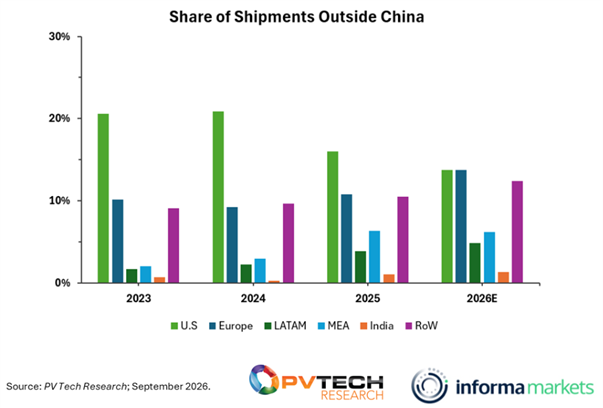
India is also set to experience rapid growth in energy storage deployment; the country’s largest BESS, at 3.37 GWh, was commissioned this year, and the high volume of tendered projects from past years are finally seeing build-out. A mandatory co-location requirement for new solar and wind projects has also been proposed. Despite the current low levels of domestic manufacturing, there is a push for India-made batteries and a reduction of import dependency. In the long term, this could make India a more challenging market for international suppliers, despite its significant growth potential. The emerging model, therefore, presents a broader strategic tension for global BESS suppliers: international expansion offers new sources of growth, but rising localisation requirements could make it more dependent on local manufacturing or long-term partnerships to establish a durable position in these markets.
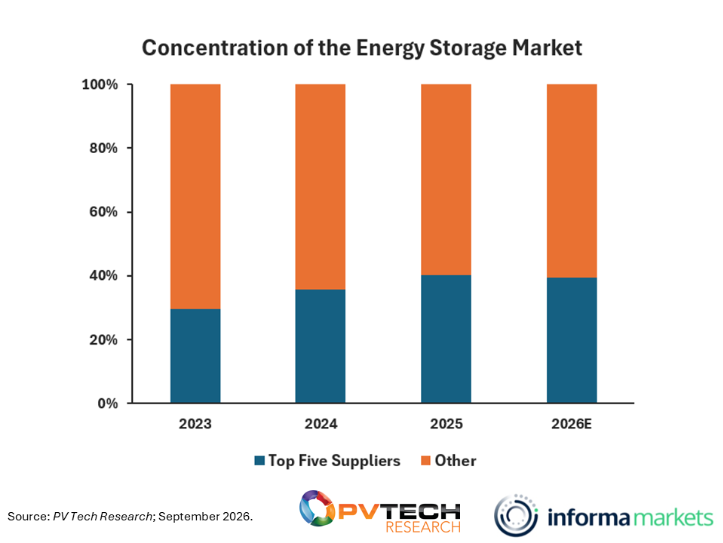
Despite the continued entry of new companies, the top end of the energy storage market remains highly consolidated, suggesting that scale and established market positions are becoming increasingly important competitive advantages. The mid-tier remains much more contested, with suppliers competing for share in a market where price competition is intense, and differentiation can be difficult. For newer entrants, gaining meaningful market share may therefore increasingly depend on access to a larger corporate ecosystem, technological differentiation or a strong position in a specific geographic market.
For the energy storage suppliers featured in the report, the Concentration Ratio (market share) of the top five players (CR5) was around 39%, only a slight decline from the 40% in 2025. Mid-tier suppliers are still competing for a higher market share, with the average shipment volume gap between the suppliers narrowing.
Investment in increasing production capacity has remained strong; over 120 billion yuan of new battery manufacturing projects to be constructed in China were publicly announced in H1 2026.
The scale of investment also highlights a potential contradiction facing the industry: suppliers continue to add capacity at a time when competition and margin pressure are already significant. How quickly this new capacity is absorbed by demand will be an important factor in determining future pricing, profitability and supplier consolidation.
Outside of China, there have been further developments in localising the upstream battery supply chain, with battery-grade lithium carbonate now being produced in GEL’s Cornwall facility and Europe’s first complete lithium processing site, completed this year in Finland.
The latest Battery StorageTech Bankability Ratings Report highlights a BESS market that is simultaneously expanding, becoming more competitive and increasingly concentrated at the top end. While significant investment in new manufacturing capacity and the growth of emerging markets are creating opportunities for suppliers, intense competition in China is putting pressure on margins and making international expansion increasingly important. For buyers, this makes supplier selection more complex: shipment volumes and pricing alone are no longer sufficient indicators of long-term resilience, as financial strength, manufacturing capability, supply-chain exposure, and international market position become increasingly important measures of bankability.
Learn more about the Battery StorageTech Bankability Ratings Report here.
