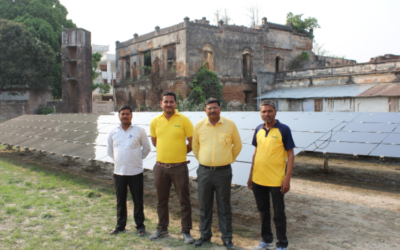
Tom Kenning of PV Tech/Energy-Storage.news visited a village in the heart of the North Indian plains where Uttar Pradesh borders Bihar, to see how a bold mix of biomass, solar and energy storage technologies is transforming local businesses by providing round-the-clock clean energy at prices cheaper than those of the main grid – all the while helping to solve India’s long struggle with power theft.
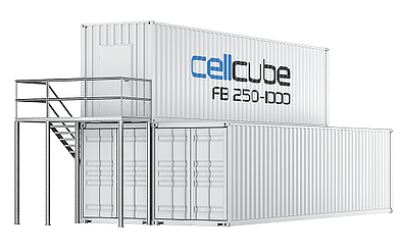
Redox flow energy storage systems, earmarked by Navigant Research to be one of the fastest growing electrochemical storage technology sets over the next decade, are being deployed in recent or upcoming projects by Cellcube Energy Storage Systems and Redflow.
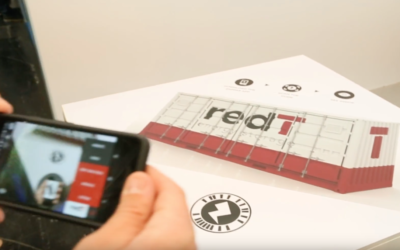
As an interactive way to introduce its third generation of stacks, vanadium redox flow storage maker RedT debuted its augmented reality app at Intersolar Europe/ees Europe this year.
The Solar Energy Corporation of India (SECI) has issued a tender for two 1.5MW(AC) solar power projects with battery energy storage systems of 0.75MW / 2.5MWh each at two locations in the Indian state of Jammu and Kashmir.
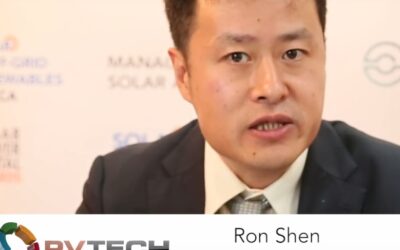
At this year’s Intersolar Europe/ees Europe event, Ron Shen of GoodWe spoke on camera with our sister site PV Tech. The China headquartered inverter manufacturer, which has recently diversified into adding capabilities such as module-level monitoring and optimisation to its range and launched products specifically aimed at the growing market for bi-facial (two-sided) solar panels, sees energy storage as a critical component of a successful future PV business.
Australia’s energy and environment minister has hailed the country’s accelerating residential energy storage sales as a report has emerged from Chief Scientist Dr Alan Finkel which says the “financial equation is straightforward” for adding batteries to home PV systems.
Despite the growing interest and deployment figures for lithium-ion batteries for stationary energy storage, its ‘predecessor’ lead acid still has a strong role to play in enabling more and more people to go solar, a representative of Trojan Battery has argued.
BYD has just opened a gigawatt-scale lithium battery factory in Qinghai Province, a few days after a senior company representative told Energy-Storage.news that, like electric vehicles (EVs), it is only a matter of time before lithium batteries for stationary storage reach mainstream acceptance.
Softbank Energy and Kyocera, two major names in Japan’s solar energy industry, are partnering with utilities, grid operators and other stakeholders to execute virtual power plant (VPP) projects backed by the government.
Even among high level stakeholders, there are real gaps in education, knowledge and understanding of what energy storage is, and what it can do. We were privileged at last week’s Intersolar Europe/ees Europe shows in Munich, Germany, to be joined by four leading thinkers – and doers – in the energy storage industry, who helped us tackle this difficult question.