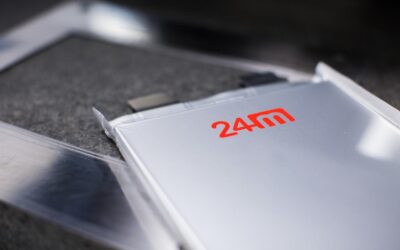
24M, spun out of an MIT laboratory, claims its latest semi-solid battery ‘breakthrough’, Dual Electrolyte technology, heralds a new era to come for advanced lithium batteries. Andy Colthorpe spoke to some of the company’s leadership team to find out more.
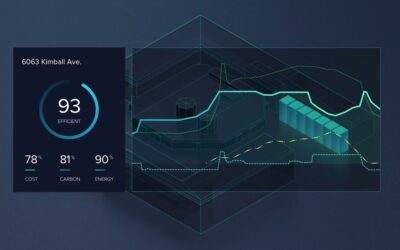
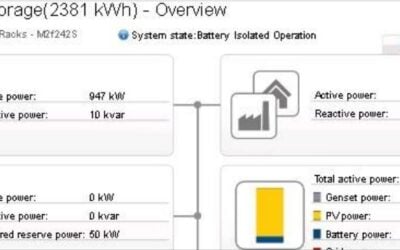
A contract with utility Southern California Edison (SCE) has led to Advanced Microgrid Solutions (AMS) supplying 2GWh of grid services from just 60MWh of energy storage during 2018, with one analyst dubbing the feat an “impressive milestone”.
24M, a startup battery company founded as a spin-off from MIT, claims it has made a breakthrough in creating semi-solid lithium-ion battery cells with an energy density exceeding 350Wh per kg.
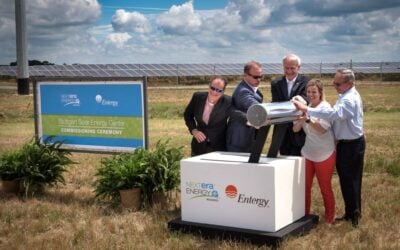
NextEra Resources will build a 100MW solar farm for Arkansas utility Entergy Arkansas, to include 30MW of battery energy storage, as Entergy seeks to build out solar capacity in the state.
Unlike the solar PV sector where there’s often an attitude of “let’s sell the project first and worry about O&M later,” storage projects must have services built in to the thinking and financial process from the beginning. With storage, a strong O&M plan and team become part and parcel of making and closing a strong productive deal, NEXTracker’s Marty Rogers argues.
Saba Electric Company, sole supplier of electricity to the Dutch Caribbean island of Saba, celebrated as the island ran on 100% solar for the first time ever this month, with the switch-on of a solar-plus-storage microgrid.
In the hierarchy of grid needs, peaking power is often a priority in terms of providing resiliency and balance to the network. This is usually provided by natural gas turbines, which come at a high environmental and economic cost. Andy Colthorpe charts the rise of the solar-plus-storage peaker plant.
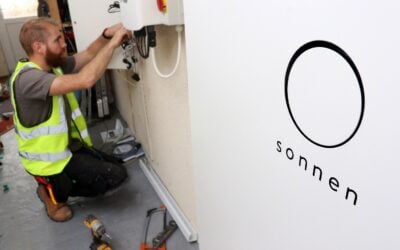
Perhaps the biggest indicator of the recognition of behind-the-meter storage so far this year has been the acquisition of Sonnen by oil major Shell. CEO Christoph Ostermann spoke to Andy Colthorpe about why home storage uptake could be on a worldwide series of inflection points.
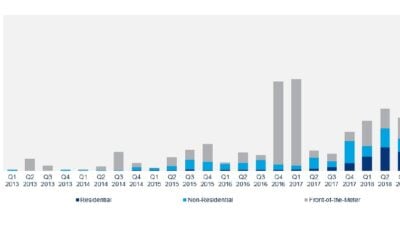
Energy storage enjoyed another record-breaking year of deployments in the US in 2018, while the residential segment is now “moving beyond early adopters” and into commercial viability, a report from Wood Mackenzie Power & Renewables claims.
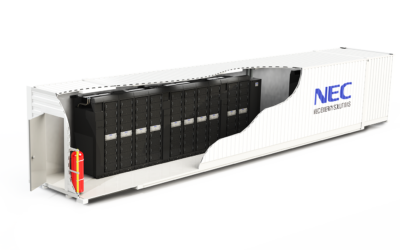
NEC Energy Solutions, the distributed energy division of Japanese information tech company NEC, has commissioned a 2MW / 2MWh battery energy storage system in Chile.