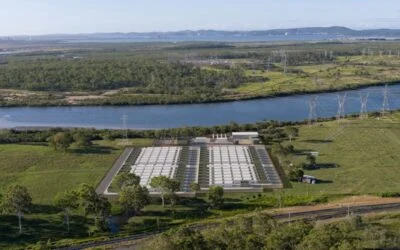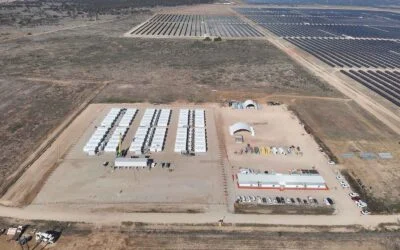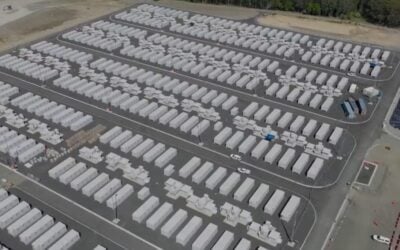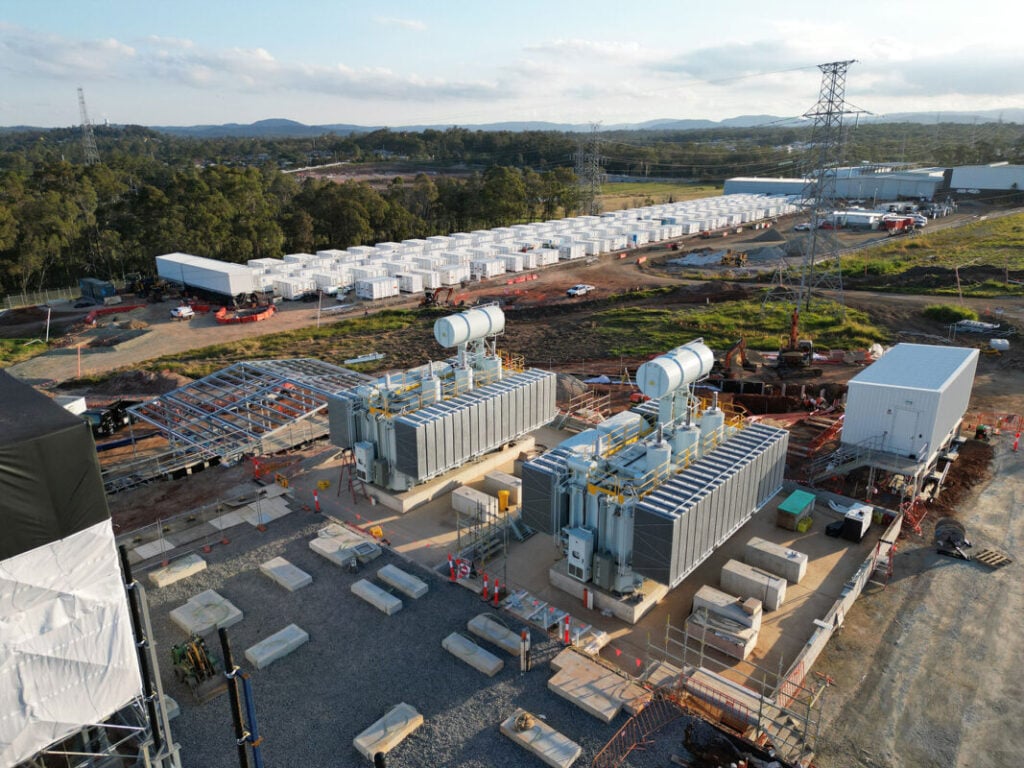
New laws went into effect last week in Queensland, Australia, that mean large-scale battery storage project applications must be dealt with at the state level.
The northeastern state’s deputy premier, Jarrod Bleijie of the Liberal National Party (LNP), announced last Thursday (11 December) that from the following day, approval processes for large-scale battery energy storage system (BESS) projects would be handled by the State Assessment and Referral Agency (SARA).
Bleijie said the move is aligned with the LNP’s election promise to ensure the impacts of renewable energy projects can be assessed and land use approvals consistent with those applicable to other sectors, such as mining and agriculture.
The new legislation, Planning (Battery Storage Facilities) and Other Legislation Amendment Regulation 2025, requires social impact assessments and community benefit agreements to be made with local governments for large-scale BESS projects of 50MW or more to proceed.
Try Premium for just $1
- Full premium access for the first month at only $1
- Converts to an annual rate after 30 days unless cancelled
- Cancel anytime during the trial period
Premium Benefits
- Expert industry analysis and interviews
- Digital access to PV Tech Power journal
- Exclusive event discounts
Or get the full Premium subscription right away
Or continue reading this article for free
The deputy premier claimed that David Crisafulli’s LNP is “giving communities a stronger voice and empowering local governments to play a greater role in managing social impacts, negotiating community benefits, ensuring projects deliver the best outcomes for communities.”
The new rules also bring battery storage approvals processes in line with renewable energy planning reforms the Crisafulli administration introduced for solar PV and wind projects in July.
The LNP was elected just over a year ago, replacing the Labor Party, which had introduced a 70% by 2032 renewable energy target and directed AU$62 billion (US$43 billion) investment into a state Energy and Jobs Plan, as well as creating a State Battery Strategy to capitalise on natural resources and industrial infrastructure advantages.
Crisafulli’s government claims to be taking a measured approach to investing in renewables, describing the previous administration’s policies as driven by “ideology”. The current government put out its five-year Energy Roadmap plan in October, which, although calling for up to 6.8GW of new large-scale solar and wind, and up to 3.8GW of energy storage by 2030, was criticised by Jackie Trad, CEO of trade body Clean Energy Council (CEC) for lacking ambition.
Trad said the roadmap acknowledged the important role of renewables in Queensland’s energy mix, but said she hoped the plan would act “as a floor and not a ceiling, to avoid the state falling behind the rest of Australia in attracting future investment.”
Last week, environmental advocacy group Queensland Conservation Council (QCC) said that investment in renewable energy backed with energy storage has ground to a halt under the LNP government.
QCC analysed Clean Energy Council data, and found that only four new solar, wind or storage projects reached financial close or began construction in the first year of the administration, compared with 15 projects in the final year of the Labor Party government led by Annastacia Palaszczuk.
The four projects approved under LNP rule total 240MW of solar capacity and 640MW/2,292MWh of energy storage, versus 1,754MW of solar and wind and 1,635MW/3,870MWh of energy storage in the last year of Labor.
Another criticism levelled at the energy roadmap was the government’s strategy to keep coal plants operating to the end of their technical lifetime.
What do the new rules mean?
Partner Wendy Evans and senior counsel Nicole Besgrove at commercial law firm Holding Redlich, wrote about the new reforms on their company’s corporate blog.
The move brings large-scale BESS into Queensland’s Social Impact Assessment (SIA) and Community Benefit Agreement (CBA) framework, as with solar and wind projects. The new regulation has been accompanied by the introduction of a new state-level code of assessment benchmarks that projects must meet.
Any BESS development over 50MW output to the grid, which creates a material change in the use of land, must be impact assessable and will require SIA and CBA documentation.
While pre-existing applications for projects smaller than 50MW will continue to be assessed by local governments, new applications for smaller projects will need to be lodged with SARA.
The new state code, State code 27: Battery storage facility development, meanwhile, is set out in State Development Assessment Provisions (SDAP), and includes technical assessment benchmarks for fire and hazard risk management, ecological impacts, proximity to sensitive land uses, minimising the loss of high-quality agricultural land, noise, lighting and decommissioning arrangements.
Some pre-existing applications will now be deemed to be not properly made, and therefore not accepted as of 12 December, the date the rules went into effect.
Evans and Besgrove wrote that these include properly made development applications for material change of use of premises for a 50MW instantaneous output BESS that was made but not decided by 12 December and any change application (beyond a minor change) that was submitted but not decided before the cut-off date.