Prevalon Energy’s battery energy storage system (BESS) has entered commercial operations at utility Idaho Power’s Happy Valley battery storage project.
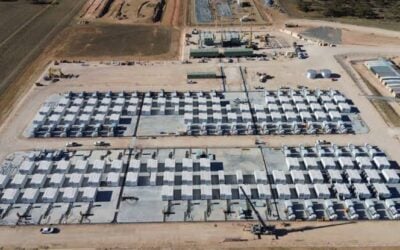
Happy Valley features an 80MW/320MWh BESS and was completed ahead of schedule by Prevalon, the dedicated BESS spin-out of Mitsubishi Power Americas.
Idaho Power, an investor-owned-utility (IOU), chose the project via a competitive request for proposals (RFP) process, which identified it as a low-cost resource well matched to meet the company’s needs.
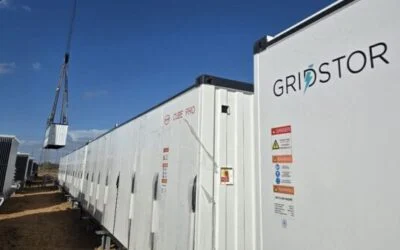
The Happy Valley project uses Prevalon’s modular AC energy storage platform, including the battery enclosures, inverters, medium voltage transformers and the company’s energy management system (EMS), insightOS.
Try Premium for just $1
- Full premium access for the first month at only $1
- Converts to an annual rate after 30 days unless cancelled
- Cancel anytime during the trial period
Premium Benefits
- Expert industry analysis and interviews
- Digital access to PV Tech Power journal
- Exclusive event discounts
Or get the full Premium subscription right away
Or continue reading this article for free
Speaking with Energy-Storage.news Premium in April, Thomas Cornell, Prevalon’s president and CEO said of its EMS:
“Whether or not you’re doing a 10MW project, 100MW or even 1,000MW project, we put features in this to make it a very scalable and user-friendly system. The other feature that we’ve made paramount is giving it flexibility because a lot of the projects we do are used for a whole host of different applications.”
At the beginning of this year, Prevalon secured a contract with Idaho Power for a 200MW/800MWh BESS.
The project contract includes a detailed long-term service agreement covering system maintenance and remote monitoring, with deployment planned for 2026.
Idaho Power aims to incorporate more than 5,000MW of wind and solar power, along with 1,100MW of four-hour energy storage, over the next twenty years to achieve its goal of delivering 100% clean energy by 2045.
When that announcement was made, an Idaho Power representative explained that one reason the IOU is adding more BESS projects to its portfolio is Idaho’s recent dramatic surge in demand within its service area.
“Our annual peak loads typically occur in the summer, driven primarily by air conditioner use and agricultural irrigation. That is the period when BESS installations are the most useful.”
Idaho Power hopes that Happy Valley will help to provide greater reliability and stability to Idaho’s electric grid and the company’s energy portfolio.