Potentia Renewables has successfully closed financing for the Skyview 2 battery energy storage system (BESS) in Edwardsburgh Cardinal, Ontario, Canada.
The project is owned by the Power Sustainable Energy Infrastructure Partnership (PSEIP) and the Algonquins of Pikwakanagan, with Potentia acting as developer on behalf of PSEIP.
Skyview 2 was awarded under Ontario’s Long-Term Reliability (LT1) energy storage procurement process. It has an installed 411MW/1,644MWh capacity and Potentia claims it will be the largest BESS project in Canada.
German commercial bank KfW IPEX-Bank GmbH and Desjardins Group are providing approximately CA$542 million (US$399 million) in construction and long-term operational financing for the project. KfW IPEX-Bank serves as the sole bookrunner, while Desjardins Group acts as the administrative agent and collateral agent. Both institutions have been appointed as joint lead arrangers.
Try Premium for just $1
- Full premium access for the first month at only $1
- Converts to an annual rate after 30 days unless cancelled
- Cancel anytime during the trial period
Premium Benefits
- Expert industry analysis and interviews
- Digital access to PV Tech Power journal
- Exclusive event discounts
Or get the full Premium subscription right away
Or continue reading this article for free
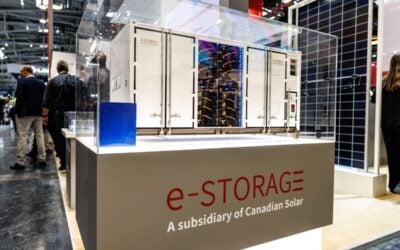
In November 2025, it was announced that e-Storage, Canadian Solar’s energy storage subsidiary, had been contracted to provide engineering, procurement, and construction (EPC) services for the BESS.
E-Storage, as the turnkey EPC provider, will supply around 390 units of its proprietary SolBank 3.0 ESS solution for the project. It will also offer a 21-year service agreement for the project.
Ontario’s Office of the Premier, Doug Ford, announced Skyview 2 had begun construction on 12 November, also claiming it to be the largest BESS in Canada.
The office added, “With electricity demand in Ontario expected to rise sharply by 2050, Skyview 2 represents a key milestone in Ontario’s clean energy transition and will be essential in supporting the province’s clean electricity grid.”
Ontario has introduced major policy changes to incorporate energy storage into its electricity system. The province’s Integrated Energy Plan aims to increase storage capacity and expand transmission networks to facilitate distributed storage solutions.
Ontario and Alberta, Canada’s primary wholesale electricity market regions, lead the country in installed energy storage capacity, with Ontario accounting for over two-thirds (approximately 486MW) of the grid-connected storage, and Alberta holding more than a quarter (approximately 190MW).