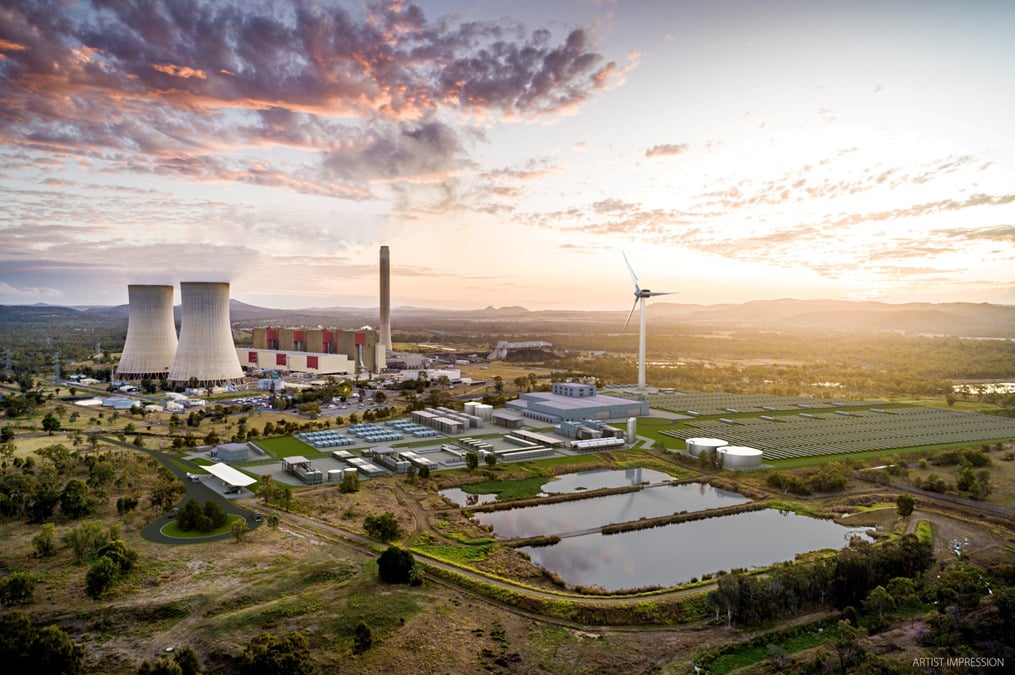
Octopus Investments Australia has bought one of the biggest battery energy storage system (BESS) projects in development in the country, from developer Firm Power.
Octopus Investments Australia has acquired Blackstone BESS, a proposed 500MW/1,000MWh project in the eastern state of Queensland. The company said the BESS will be part of a business strategy to broker power purchase agreements (PPAs) for selling “firmed blocks of energy” generated from wind and solar PV.
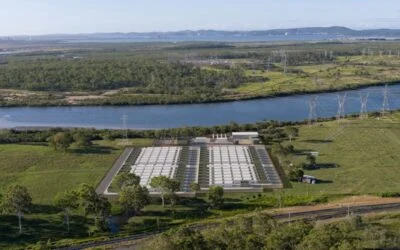
If it goes ahead, plans are for it to be built adjacent to an existing 275kv substation in the industrial locality of Swanbank in the city of Ipswich, about 44km southeast of the centre of state capital Brisbane.
Octopus Investments said it is in discussion with network provider Powerlink, Firm Power and Ipswich local authorities and expects a final investment decision (FID) to be made in H2 2025.
Try Premium for just $1
- Full premium access for the first month at only $1
- Converts to an annual rate after 30 days unless cancelled
- Cancel anytime during the trial period
Premium Benefits
- Expert industry analysis and interviews
- Digital access to PV Tech Power journal
- Exclusive event discounts
Or get the full Premium subscription right away
Or continue reading this article for free
The buyer is one of the portfolio companies of UK-based investment holding company Octopus Group alongside energy retailer-generator Octopus Energy Group. It announced the acquisition this week (4 October).
It adds to Octopus Investments Australia’s growing portfolio in Queensland, which is fast becoming the state moving fastest on embracing clean energy infrastructure and battery storage in particular, according to sources Energy-Storage.news has spoken with.
That is at least in part due to state policy aims to promote renewables and storage from the state government led by Premier Annastacia Palaszczuk. Palaszczuk’s Labor Party administration has also committed to keeping major parts of Queensland’s energy sector in public ownership.
One of Octopus Investments Australia’s Queensland assets is Ardandra Solar and Storage. Acquired earlier this year, it was the single largest renewable energy generation project under construction in Australia as of August, according to a report from the Clean Energy Council (CEC) trade group. Ardandra combines 175MW of solar PV with a 400MWh battery storage system.
It also has a 180MW wind farm in the state which the company said is “progressing through pre-commissioning”.
Octopus Australia head of investment and development Sonia Teitel said the Blackstone project acquisition “advances our portfolio strategy”.
“Once developed the project will enable innovative offtake products to be structured. Additionally, the acquisition underlines our commitment to the growing Queensland energy market,” Teitel said.
The company now has a claimed AU$1.5 billion (US$0.96 billion) portfolio of assets in operation in Australia and a pipeline of AU$8 billion of in-development assets across wind, solar and battery storage technologies. Its other projects covered by this site include joint ventures (JVs) with the national Clean Energy Finance Council (CEFC) to develop a 1.5GW clean energy hub in Victoria and a co-located solar-plus-storage project with a 600MWh BESS in New South Wales.
Premier announces 150MW flow battery project
Queensland’s shift towards clean energy is gathering pace for the state which has historically been among Australia’s highest emitters – in 2018, according to government statistics, it was responsible for 32% of total greenhouse gas (GHG) emissions in the country.
Regular readers of Energy-Storage.news and our sister site PV Tech will be familiar with many of the initiatives being taken by the Queensland Labor Party government, such as a 6GW transmission build-out and direct support for battery storage in terms of both downstream deployment and upstream manufacturing.
The state’s roadmap is set out in Labor’s AU$62 billion Clean Energy and Jobs Plan.
This week, premier Palaszczuk announced that state-owned energy company Stanwell Corporation will seek to deploy a 150MW long-duration energy storage (LDES) project using iron flow battery technology developed by US company ESS Inc and licensed to Australia’s Energy Storage Industries Asia-Pacific (ESI) for local distribution and manufacturing.
Stanwell and ESI were already in a partnership which includes plans for the power provider to install a 1MW/10MWh pilot project. Palaszczuk said in her annual State of the State address that the next step is going to be the 150MW facility, to be deployed at the major Stanwell Clean Energy Hub facility and Stanwell will retain the right to purchase up to 200MW of flow batteries from ESI annually after that.
The batteries will be made locally at ESI’s Queensland plant in Maryborough, the premier said.
A report prepared by consultancy Accenture for the Queensland government found that the state could hold strategic advantages in the flow battery value chain, particularly for vanadium redox flow batteries (VRFBs), although clearly it also sees some scope for getting value out of ESS Inc’s iron flow technology too.
Queensland is thought to hold as much as a third of the world’s primary vanadium reserves, and the government recently gave “Prescribed Project” status to a vanadium electrolyte plant under construction through Australian company Vecco. The status enables the fast-tracking of various elements of the plant’s development in recognition of its importance to the state.