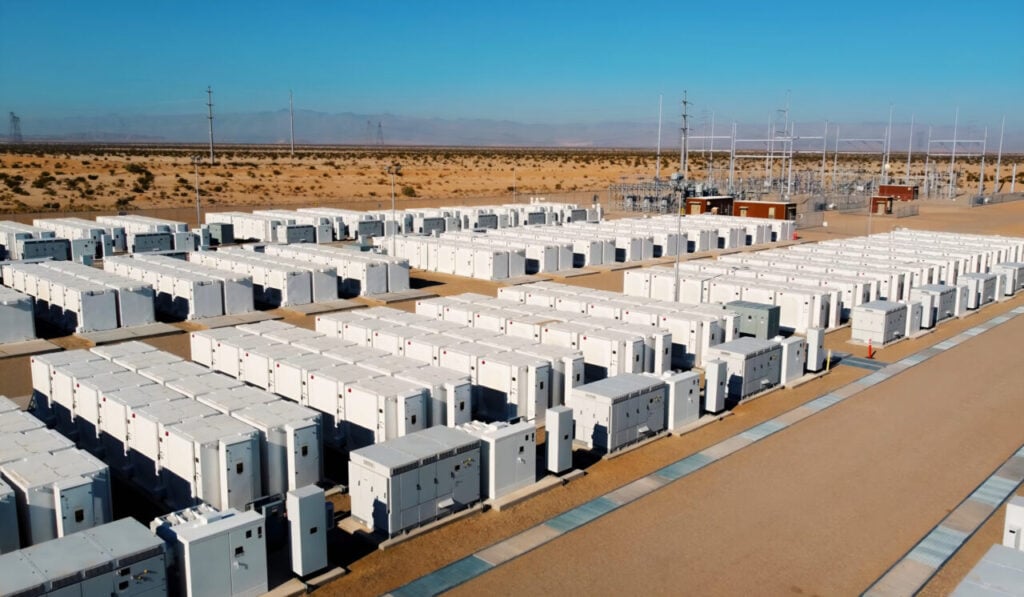
Octopus Australia has acquired the Coleambally battery energy storage system (BESS), a 100MW/400MWh standalone project in development located in southern New South Wales.
The Coleambally BESS project features up to 4-hours of energy storage duration, positioning it as a grid-scale asset capable of providing extended energy services to the National Electricity Market (NEM).
The battery storage system is strategically located approximately 9km northeast of Coleambally, a small town in the Riverina region of the state, adjacent to Transgrid’s existing transmission infrastructure.
Octopus Australia said the project will be positioned 120 metres from Neoen’s 150MW Coleambally Solar Farm, combining to form a renewable energy hub in the region. It is expected to have an operational lifespan of 30 years.
Try Premium for just $1
- Full premium access for the first month at only $1
- Converts to an annual rate after 30 days unless cancelled
- Cancel anytime during the trial period
Premium Benefits
- Expert industry analysis and interviews
- Digital access to PV Tech Power journal
- Exclusive event discounts
Or get the full Premium subscription right away
Or continue reading this article for free
Risen Energy Australia previously held development rights for the project and secured grid connection approval from the Australian Energy Market Commission (AEMC) through a 5.3.4 Letter in May 2025.
The lithium-ion battery system was designed to feature batteries manufactured by Risen’s subsidiary SYL Battery, though Octopus Australia’s acquisition may alter the technology selection and supply arrangements.
Octopus Australia expands portfolio following AU$1 billion investment
Octopus Australia’s expansion follows significant investment in the platform, with Dutch pension fund APG investing approximately AU$1 billion (US$650 million) in the company’s renewables portfolio in early August.
As reported by our sister site, PV Tech, the investment is set to support Octopus Australia’s operating and development portfolio, exceeding AU$11 billion across wind, solar and battery storage assets.
The acquisition will also strengthen Octopus Australia’s position in New South Wales as it advances its broader development pipeline across multiple states.
For instance, Octopus recently commenced construction of its 80MW Fulham Solar Farm and 128MWh BESS project in Victoria, valued at over AU$300 million and supported by equity contributions from Rest, the Clean Energy Finance Corporation, and Westpac Private Bank clients.
The company has positioned itself as a developer, owner, and long-term operator of energy assets. The Fulham project represents an in-house development that highlights the team’s integrated approach to project delivery.
Kian Nam Loke, senior investment manager at Octopus Australia, highlighted the market positioning benefits of integrated storage and generation assets.
“Investors and customers want certainty, and by building storage alongside generation, we can create products that deliver stability in price and supply. That’s what unlocks confidence for households, businesses and investors, and that’s where the long-term value lies,” Loke said.
“It is strategically located in one of the state’s strongest renewable energy corridors, Coleambally allows us to capture solar generation during the day and shift it to when it’s needed most.”
The transaction details, including acquisition price and timeline for development progression, were not disclosed.
Octopus Australia indicated that the project will advance through its development pipeline alongside the company’s other New South Wales and Queensland battery projects, which are scheduled for construction commencement in 2025.