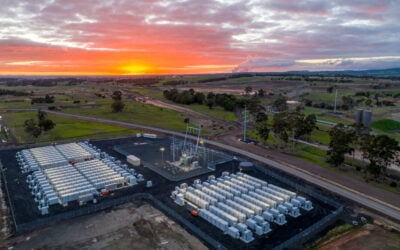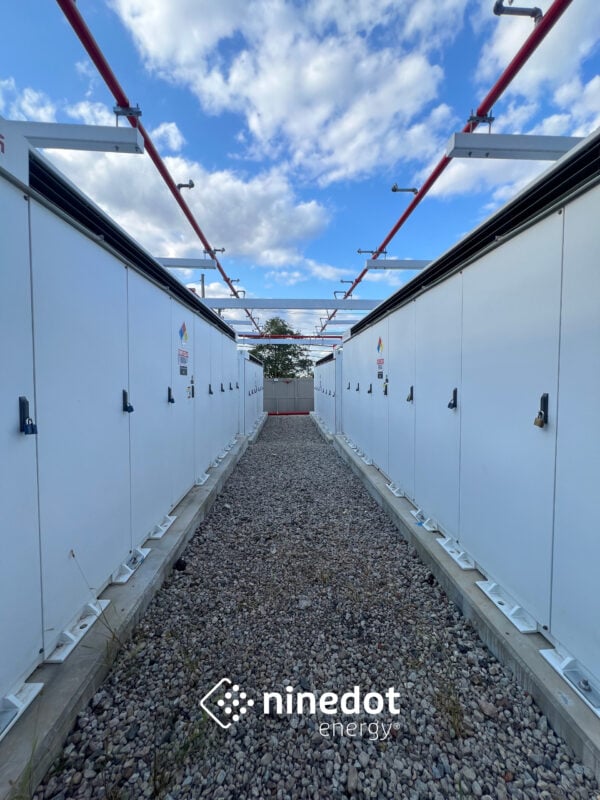
Energy storage developer NineDot has announced the closing of a US$65 million equipment financing supporting the purchase of up to 100MW/400MWh of batteries for use in 20 battery storage projects across New York City, New York, US.
Financing was led by First Citizens Bank, which has been active in the energy storage market, including providing a recent bridge loan of US$100 million to Innergex Renewable Energy for the Halue Kuawehi battery energy storage system (BESS) project in Hawaii.
Ninedot is a community-scale BESS developer. As defined by research and analysis group Wood Mackenzie, community-scale energy storage is a solar-paired or standalone storage facility “brought online within a specific community-scale generation programme.”
In April 2024, the company secured US$13 million from SolaREIT, a specialist real estate investment trust, to purchase project sites in New York. Ninedot had plans to develop between 30 and 40 BESS projects in the New York Metropolitan area, each planned with 5MW output and 20MWh capacity.
Try Premium for just $1
- Full premium access for the first month at only $1
- Converts to an annual rate after 30 days unless cancelled
- Cancel anytime during the trial period
Premium Benefits
- Expert industry analysis and interviews
- Digital access to PV Tech Power journal
- Exclusive event discounts
Or get the full Premium subscription right away
Or continue reading this article for free
In New York’s Energy Storage Roadmap, behind-the-meter projects of up to 5MW, often referred to as community-scale, are given the term “retail energy storage” while larger utility-scale systems over 5MW are called “bulk energy storage”.
Ninedot monetizes community storage through New York’s Value of Distributed Energy Resources (VDER) programme, known as the Value Stack, as well as through enrolment in demand response programmes.
The Value Stack assigns values based on energy, capacity, environmental benefits, demand reduction, and locational system relief, with compensation provided as bill credits by the New York Public Service Commission.
Customers can subscribe to the community programme. In 2023, for example, Starbucks signed up as a subscriber to Ninedot’s battery storage site in Pelham Gardens, located in the Northeast Bronx region of New York City.
New York State has implemented an incentive program for bulk energy storage too, a segment which has been relatively slow to develop to-date.
From the New York State Energy Research and Development Authority (NYSERDA)’s ‘Bulk Energy Storage Incentive Program’ report in 2021: “Incentives will be offered at a fixed amount per usable kWh of installed energy storage capacity measured in AC at Commercial Operation Date (COD).”
“During NYSERDA’s QA inspection, the usable capacity will be verified based upon the total capacity measured during a complete discharge from a 100% usable state of charge, performed in accordance with the storage manufacturer’s specifications.”
Another part of the state’s plan for bulk storage procurement is using the ‘Index Storage Credit’, where the state underwrites some of the merchant risk for developers, but when revenues exceed the strike price, profits will be paid back.
Embracing the Index Storage Credit and utilities issuing Request for Proposals (RFPs), as Con Edison has done in a joint RFP with Orand and Rockland Utilities, could be a sign that bulk energy storage projects will increase in the state.
David Arfin, CEO and Co-founder of Ninedot said of the announced financing with First Citizens: “NineDot has made tremendous progress in providing battery energy storage to the New York City area.”
“For New York to achieve its sustainability goals, we know that battery storage is a critical enabler. First Citizens Bank understands this need and opportunity well, and we’re thrilled to have them provide this equipment financing that affirms NineDot’s vision and execution capability.”