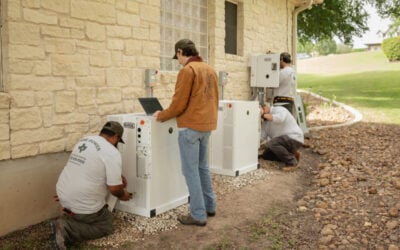
The 2.5kWh batteries will enter the North American market in early 2017, and will be followed up with large commercial and industrial systems. Source: Mercedes-Benz Energy
The energy storage business of German auto manufacturer Mercedes-Benz is expanding to the US market starting early 2017.
Daimler AG energy storage was officially launched this summer, focusing on a range of 2.5kWh lithium-ion battery systems with distribution beginning in Germany.
Now the company is taking the first step into international expansion with its newly-established Mercedes-Benz Energy Americas. The subsidiary will assume the development and sales of stationary energy storage systems for residential, commercial and utility-scale applications in North America.
Boris von Bormann, former CEO of German intelligent storage system maker Sonnen’s US division, has been appointed CEO of Mercedes’ new US branch.
Try Premium for just $1
- Full premium access for the first month at only $1
- Converts to an annual rate after 30 days unless cancelled
- Cancel anytime during the trial period
Premium Benefits
- Expert industry analysis and interviews
- Digital access to PV Tech Power journal
- Exclusive event discounts
Or get the full Premium subscription right away
Or continue reading this article for free
“By founding Mercedes-Benz Energy Americas, we are once again underscoring our ambition to be a technological and market leader in the field of highly efficient storage systems on a global scale,” said Marc Thomas, CEO of Mercedes-Benz Energy Germany.
“At the same time, we are making an active contribution to the process of transition towards sustainable energy generation and continuing the success story of German-based battery production.”
The Mercedes-Benz energy storage systems were originally developed for use in vehicles and harness grid stabilisation and peak shaving capabilities for energy producers and homeowners alike. The systems can be stacked to create a system with a combined capacity of 20kWh and used in various applications such as for back-up power and solar self-consumption.
These systems will be followed up by larger energy storage systems for commercial and industrial use.
“Mercedes Benz Energy is uniquely positioned to not only offer solutions to the energy and storage market that will help utilities, businesses and home-owners save costs and solve needs, but also combine the advantages of electric vehicles and energy solutions into one holistic platform,” said von Bormann.