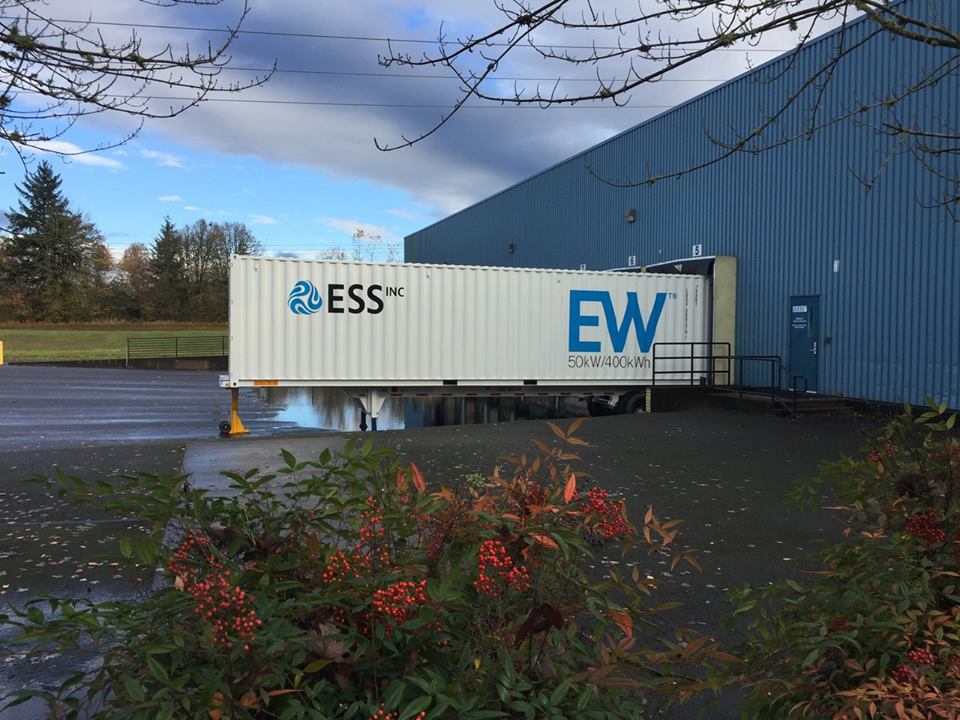
Iron electrolyte flow battery company ESS Inc has become the latest energy storage industry player to target public listing of its stock, announcing a merger with a special purpose acquisition company (SPAC).
The US company told Energy-Storage.news that a definitive agreement has been entered into for a business combination with ACON S2 Acquisition Corp, a NASDAQ-listed SPAC. The transaction values the combined company at US$1.07 billion while the deal will provide around US$465 million in net proceeds.
ESS Inc is the only manufacturer of flow batteries using the novel electrolyte chemistry for commercial and utility-scale applications. The company was established in 2011 and claims its long-duration energy storage technology is durable and safe, using non-flammable, non-toxic batteries that utilise abundant and low-cost materials. It’s designed to deliver up to about 12 hours of storage and discharge duration.
After several years of pilot projects and a few iterations of the battery and complete system products that ESS Inc makes, the company launched its newest containerised large-scale energy storage system solution in February, starting at 3MW power capacity but with the capability of being custom-designed to meet the needs of different project sizes. At the end of April, Energy-Storage.news reported on a contract awarded to the company to integrate 300kW / 2MWh of its technology into a solar microgrid to help a utility in rural Chile to greatly reduce its use of diesel when its nearby run-of-river hydroelectric facility is not generating enough electricity to meet the utility’s peak demand.
Try Premium for just $1
- Full premium access for the first month at only $1
- Converts to an annual rate after 30 days unless cancelled
- Cancel anytime during the trial period
Premium Benefits
- Expert industry analysis and interviews
- Digital access to PV Tech Power journal
- Exclusive event discounts
Or get the full Premium subscription right away
Or continue reading this article for free
Proceeds raised from the SPAC deal will be used to create 16GWh of manufacturing capacity on three continents, ESS Inc said in a release on Friday. Private investment in public equity (PIPE) financing with US$250 million has already been committed to the deal from parties including existing investors in the company, Softbank Group’s SB Energy, Breakthrough Energy Ventures and BASF, all of which increased their existing equity holdings in the company. Also joining the PIPE is investment manager Fidelity Management and Research Company.
Shareholders in ESS Inc will own about 64% of the company post-merger, including those PIPE investors, who will own around 16% of common stock. With both the SPAC and ESS Inc’s boards of directors having approved the deal, it is expected to close in the third quarter of this year. A couple of weeks ago co-founding CEO Craig Evans stepped aside for new CEO Eric Dresselhuys, although Evans remains company president.
As with other companies in the industry that have targeted SPAC mergers, including zinc battery storage system maker Eos Energy Storage (now Eos Energy Enterprises post-SPAC), smart commercial energy storage provider Stem Inc and battery recycler Li-Cycle, ESS Inc now has to put forward information about the transaction for the US SEC.
ACON S2 will be filing a Form 8-K; previous filings from the likes of Stem Inc and Li-Cycle have been an interesting window into how the companies have been run, the opportunities they believe they can capture and the competitive and commercial risks they face ahead. In Stem Inc’s case, this included revealing some US$407.8 million in accumulated deficit, but the company stated that the capital injection raised by its SPAC merger — which has since gone ahead — could give it the platform to become profitable. For Li-Cycle, commercial operations only began last year but the Canadian recycler already has high profile customers including mining giant Glencore and asserted in its SEC filings that forthcoming regulations on battery sustainability and recycled content in Europe will provide it with opportunities to capitalise.