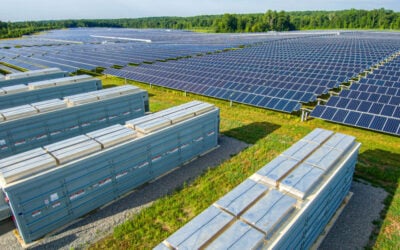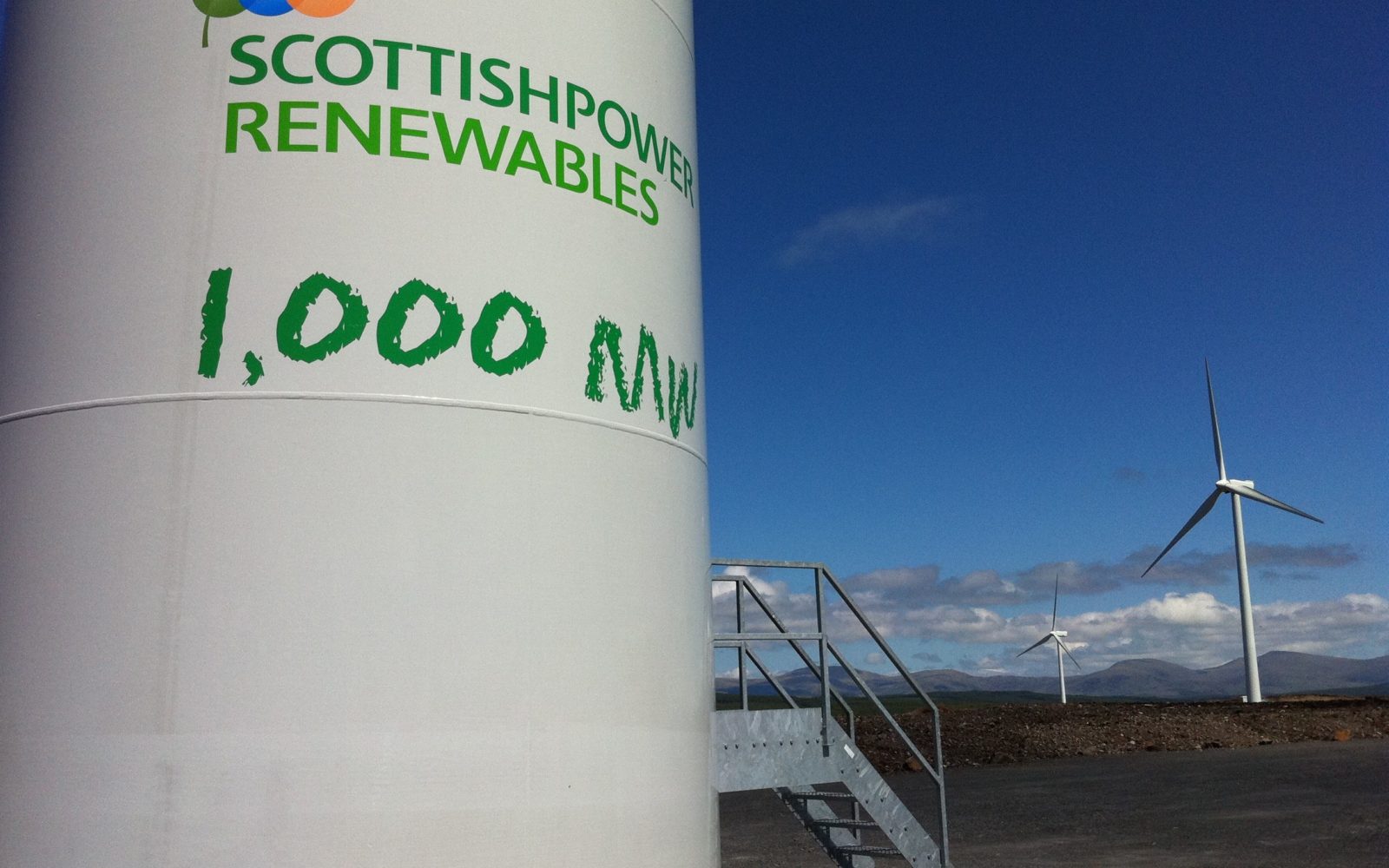
Utility ScottishPower has unveiled a new hybrid power strategy for the UK and Ireland, combining solar and battery storage with wind on both existing and new sites.
The new strategy comes amidst the energy giant’s first foray into solar PV, and will see ScottishPower, which is owned by Iberdrola, look to deploy more than one clean energy technology on the “vast majority” of future developments in the UK and Ireland.
In addition, the utility is looking to revisit existing generators and retrofit additional technologies. Planning applications have been submitted to add solar to windfarms at Carland Cross in Cornwall, Coal Clough in Lancashire and Coldham in Cambridgeshire, with further applications to add solar to wind farms in Scotland and Ireland currently under development.
ScottishPower has applications for more than 1GW of new onshore wind farms in its pipeline, and the company anticipates a significant majority of those will include plans for solar, battery storage or a mixture of both.
Try Premium for just $1
- Full premium access for the first month at only $1
- Converts to an annual rate after 30 days unless cancelled
- Cancel anytime during the trial period
Premium Benefits
- Expert industry analysis and interviews
- Digital access to PV Tech Power journal
- Exclusive event discounts
Or get the full Premium subscription right away
Or continue reading this article for free
Indeed, the utility has already lined up its first battery storage project, having received government approval to install a 50MW battery storage facility at the Whitelee onshore wind farm in June.
ScottishPower chief Keith Anderson unveiled the strategy at COP25 in Madrid yesterday, stating that “every green megawatt” of electricity will be crucial to the global net zero targets.
“This means squeezing the absolute maximum potential out of every clean energy project that we consider,” he said.
Anderson said that within the next 18 months, hybrids will be become the “new normal” for all renewable energy projects.
“In the UK and Ireland the perfect of blend of clean power from onshore renewables should include a mixture of clean energy technologies. The costs for building wind, solar and batteries have reduced considerably in recent years, and they complement each other very well. They perform best at different times of the day and at different times of the year.”
Co-locating wind, solar and battery storage is nothing especially new for the UK market. Other developers, most notably Vattenfall, have successfully combined two or more of the technologies at a single grid connection point in the past.
In February this year, ScottishPower unveiled a £2 billion (US$2.62 billion) investment programme, placing large-scale battery storage and EV infrastructure firmly in its crosshairs as part of a wider clean technology push.
This story first appeared on Current±, our publisher Solar Media’s channel for energy transition news and insight.