New technology which can help prevent flammable gas build-up in lithium-ion battery storage systems is being made available for “low-cost, non-exclusive licensing” by the US Department of Energy’s Pacific Northwest National Laboratory (PNNL).
PNNL scientists have developed IntelliVent, a deflagration prevention system that can automatically open doors on energy storage cabinet enclosures in the event of thermal runaway in battery cells causing liquid electrolytes to vaporise at high temperatures, releasing toxic and flammable gases.
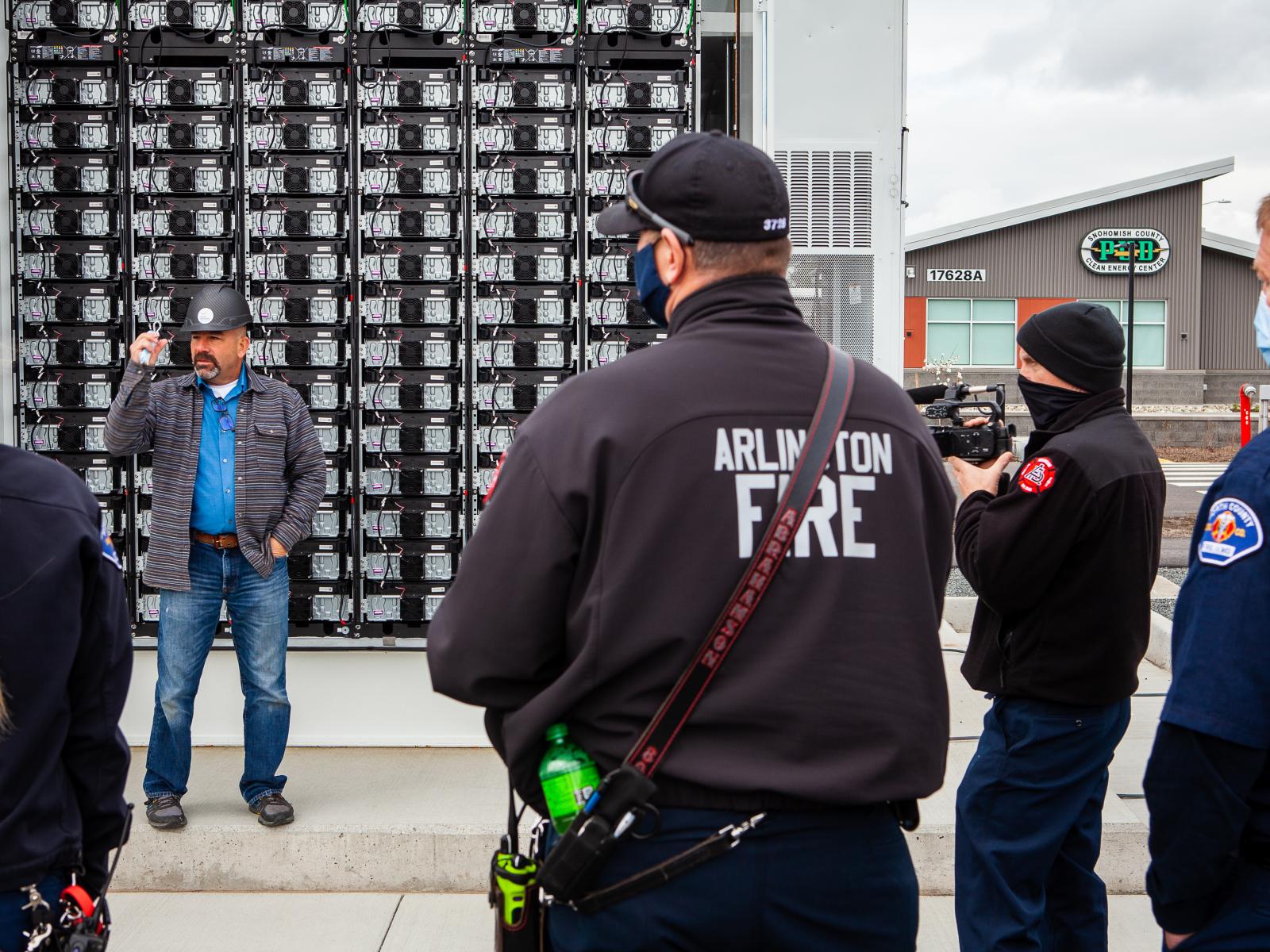
The system is being installed at Arlington Microgrid and Clean Energy Center, Everett, Washington, by public utility Snohomish County Public Utility District. Accompanying a megawatt-scale battery retrofit at the solar, storage and EV charger microgrid, it will be the first deployment for the IntelliVent.
The vent system is designed to work with a variety of sensors and responds to smoke, heat or gas alarms in battery enclosures, reducing the risk of explosions. At a session of the Energy Storage Summit USA hosted by our publisher Solar Media earlier this year, Matthew Paiss, a PNNL technical advisor for energy storage safety said that the “very rapid removal of gases” is key to the prevention of such events.
Try Premium for just $1
- Full premium access for the first month at only $1
- Converts to an annual rate after 30 days unless cancelled
- Cancel anytime during the trial period
Premium Benefits
- Expert industry analysis and interviews
- Digital access to PV Tech Power journal
- Exclusive event discounts
Or get the full Premium subscription right away
Or continue reading this article for free
One such high profile incident that PNNL highlighted in a press release this week was the explosion and fire at the McMicken Energy Storage facility in Surprise, Arizona, where four firefighters were injured, two of them seriously so. According to incident reports, injuries occurred when the responders opened up the doors to the grid-scale ESS. Matthew Paiss said that “many similar battery enclosures operating today could experience the same kind of failure”.
Bobby Ruiz, fire chief for the injured Arizona firefighters, said the development of the PNNL vent system “is absolutely in the right direction”.
“Getting all doors open early before gas buildup will make the incident safer. It will also increase situational awareness by being able to see if the batteries are smoking or are on fire. And, if extinguishment is needed, we can direct the water right at the modules from a safe distance.”
“Protecting our critical workforce is a high priority. The IntelliVent project works to address an important safety concern continuing to inhibit widespread adoption of energy storage for the grid. PNNL’s expertise in grid energy storage, fire safety and emergency response, and safety codes and standards position the team to bring this technology to fruition,” Dr Imre Gyuk, director of the energy storage programme at the Department of Energy’s Office of Electricity, said.
PNNL notes that while the system provides a simple early warning system to remove gases and is intended to reduce explosion risk, is not designed to the National Fire Protection Association (NFPA) Standard on Explosion Prevention Systems (NFPA-69) due to what the lab described as “limitations of the product standard”.
Read more about the IntelliVent and how to license it, at PNNL’s website here.