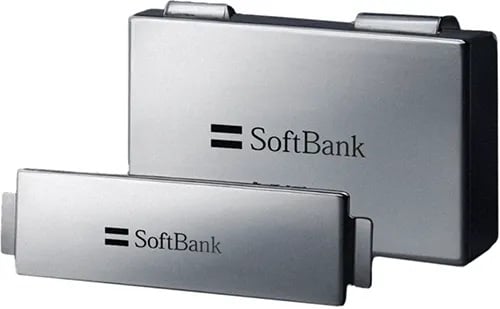
Japanese telecoms tech company Softbank Corporation has launched a battery cell and battery energy storage system (BESS) manufacturing arm in its home country.
The company, part of investment firm Softbank Group’s portfolio, said this week (11 May) that its new Japan-based business will manufacture non-lithium battery cells based on a zinc-bromine chemistry, aiming to achieve GWh-scale mass production “by around FY2028.”
It will also integrate the cells into containerised battery energy storage system (BESS) enclosures, in an “end-to-end” vertically integrated manufacturing approach.
The move is part of a play to capitalise on growing demand for both AI data centres and new energy infrastructure.
Try Premium for just $1
- Full premium access for the first month at only $1
- Converts to an annual rate after 30 days unless cancelled
- Cancel anytime during the trial period
Premium Benefits
- Expert industry analysis and interviews
- Digital access to PV Tech Power journal
- Exclusive event discounts
Or get the full Premium subscription right away
Or continue reading this article for free
Parent company Softbank Group, which reported JPY7.8 trillion (US$49.4 billion) in income for its 2025 financial year ending 31 March 2026, is perhaps best known in the global renewable energy industry as the original majority owner of developer SB Energy, now 85% owned by Toyota Tsusho Corporation with Softbank Group holding 15%.
SB Energy was launched by company founder Masayoshi Son, one of Japan’s richest people, in the wake of the 2011 Great East Japan Earthquake and Tsunami that spurred a policy push towards greater adoption of renewables, particularly solar PV.
Within Japan, the company is a household name, largely due to SoftBank Corporation’s status as one of the country’s largest cellphone network providers, while the company is also active in business telecommunications and IT.
Softbank aims to achieve annual revenue exceeding JPY100 billion for its domestic battery business by FY2030.
Non-lithium cell and system partnerships
Two new facilities, AX Factory and GX Factory will be built at the site of an LCD panel factory owned by consumer electronics manufacturer Sharp in Sakai City, Osaka. Softbank and Sharp entered a memorandum of understanding (MoU) in June 2024 regarding the site, with Softbank planning to construct an AI data centre accounting for around 60% of the plant’s land area.
The data centre would have a power capacity of more than 150MW and could be ramped to more than 400MW in the future, Softbank said at that time.
In this week’s announcement, Softbank said AX Factory will be a hub for AI data centre operations and AI infrastructure hardware manufacturing, while the GX Factory will manufacture “next-generation batteries, solar panels and related products.”
Interest will likely be drawn by Softbank’s decision to pursue mass production of cells that are neither lithium iron phosphate (LFP)—the most used cell chemistry in stationary BESS—nor sodium-ion (Na-ion), often discussed as the most promising next-generation alternative to lithium.
Softbank has partnered with battery technology startup COSMOS LAB to jointly develop battery cells that the company claimed would “combine highly safe and non-flammable characteristics with superior energy storage performance.”
COSMOS LAB, founded in 2021 and headquartered in Gyeonggi Province, South Korea, has developed a zinc-halogen battery technology that uses pure water as its electrolyte and is designed with 100% non-flammable materials.
The startup claims that this makes it inherently safer than liquid or solid-state electrolyte batteries. Use of a halogen (bromine) cathode and an ‘anode-less’ zinc anode also enables higher specific mAh/g capacity numbers than many types of lithium battery, according to COSMOS LAB.
In May 2025, the startup signed an MoU with the Korean subsidiary of solar PV inverter and BESS manufacturer Sungrow to pursue the joint development of energy storage systems based on the ‘water battery’ technology.
Softbank noted that the raw materials for the zinc-halogen battery could be sourced domestically within Japan, potentially uncoupling at least a portion of the Japanese market from existing battery supply chains that are largely reliant on China.
Softbank has also signed up a technology and manufacturing partner at the system level for its new BESS business.
It will collaborate with DeltaX, an AI-assisted mobility and ESS-focused tech startup, also headquartered in South Korea, aiming to develop and manufacture a BESS “that achieves world-class energy density.”
Two of DeltaX’s proprietary BESS manufacturing technologies for connecting battery cells and increasing energy density through design have enabled it to create a 5.37MWh Li-ion BESS in a standard 20-foot container. With Softbank, it now aims to do the same using its zinc-halogen batteries.
The Softbank announcement, which comes amid a long-awaited mini-boom in Japanese BESS market activity, closely follows the official launch of US automaker Ford’s new battery and energy storage system manufacturing subsidiary, Ford Energy.
Energy-Storage.news publisher Solar Media (part of the Informa Group) will host the Energy Storage Summit Asia 2026 on 1-3 July at QSNCC, Bangkok, Thailand. The conference takes place during ASIA Sustainable Energy Week 2026 (ASEW), the region’s most influential platform for driving clean energy. For more information, visit the official website.