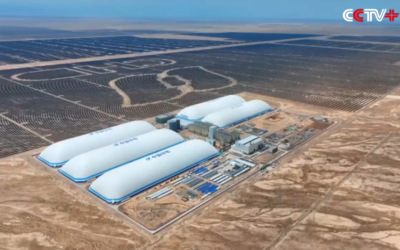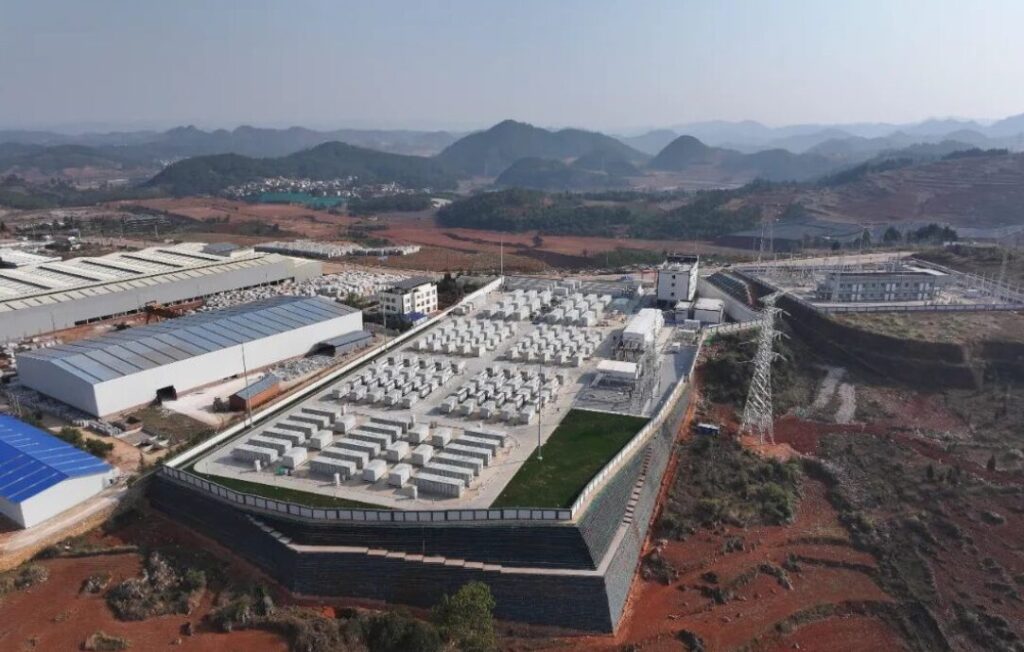
A 200MW/400MWh BESS project in China combining lithium-ion and sodium-ion batteries has been put into operation.
The project in Qiubei County, Wenshan Prefecture, Yunnan Province, has achieved ‘full capacity grid-connected operation’, technology provider HiNa Battery said yesterday (1 April).
The project combines 40MWh of sodium-ion batteries with the remainder lithium-ion and is the largest of its kind in China, the firm said, and therefore almost certainly the world. The firm also said it is the first 1-hour duration sodium-ion battery energy storage system (BESS) project, implying the lithium-ion portion of the site is a 160MW/360MWh, 2.25-hour system.
“It is the first commercial model for sodium-ion batteries to participate in the high- and low-rate compound operation of the power grid on a large scale,” the company said.
Try Premium for just $1
- Full premium access for the first month at only $1
- Converts to an annual rate after 30 days unless cancelled
- Cancel anytime during the trial period
Premium Benefits
- Expert industry analysis and interviews
- Digital access to PV Tech Power journal
- Exclusive event discounts
Or get the full Premium subscription right away
Or continue reading this article for free
HiNa is the same company that provided the batteries for a sodium-ion BESS in Qianjiang, Hubei province, claimed as the largest BESS using that battery chemistry in the world when it partially came online last year.
Sodium holds potential as an alternative to lithium-ion, thanks to its more abundant raw materials, lower fire safety risk, wider temperature operating conditions and higher depth of discharge capabilities. The latter means it can be fully charged or discharged with less negative effects on the batteries’ degradation.
However, if cycle limits are abided by, lithium-ion batteries do have a longer lifecycle and their energy density is far superior.
The more abundant raw materials mean that sodium-ion has a lower theoretical cost than lithium-ion, at US$5 per kWh versus US$25 per kWh for lithium-ion, according to figures cited by startup Moonwatt in an interview last week (Premium access). But, the industry will need to scale to achieve that.
The world’s largest EV firm BYD launched a BESS using sodium batteries last year, with reaction to it and the technology’s long-term potential a subject of much debate thereafter (Premium access).