The second MACSE auction for energy storage in Italy is right around the corner and the dynamics are different this time around to last year’s inaugural event, a developer said.
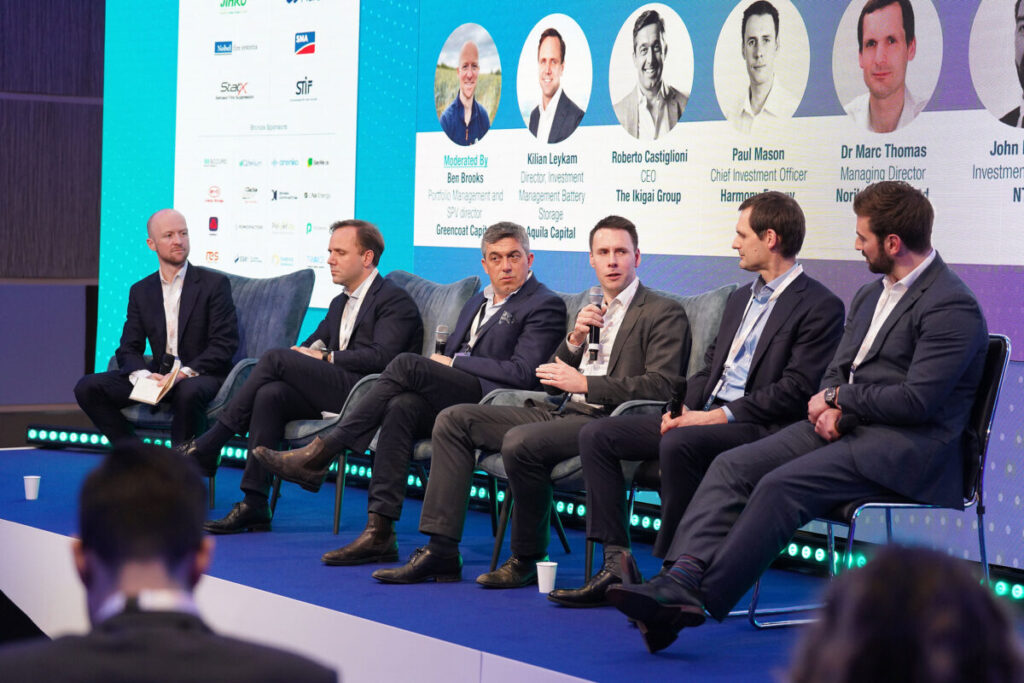
Power firm Enel is likely to take a big chunk of the 15-year capacity contracts again having taken half last year, but the clearing prices will probably be lower, said Roberto Castiglioni, CEO and co-founder of developer Ikigai Group.
MACSE will take place next week on 24 November and its results will be a huge topic at the Battery Asset Management Summit Europe 2026 in Rome in under two weeks’ time, on 2-3 December.
Enel to ‘bid hard again’
“I am hearing Enel will participate big this time. There is 60% more capacity in this auction (16GWh) so there may be some room for other batteries and investors. The cap has been reduced by 27% but as we saw last year, the average clearing price was way below that,” Castiglioni said.
Try Premium for just $1
- Full premium access for the first month at only $1
- Converts to an annual rate after 30 days unless cancelled
- Cancel anytime during the trial period
Premium Benefits
- Expert industry analysis and interviews
- Digital access to PV Tech Power journal
- Exclusive event discounts
Or get the full Premium subscription right away
Or continue reading this article for free
“Enel will be bidding hard again probably, maybe not as hard as last time, but they will probably be taking a decent chunk of the capacity.”
“I think some of the investors that bid and lost last year will bid again but probably not all of them as basically giving up your battery operations for a low return conflicts with the mandate of most investors. They will probably reduce their price if they can optimise some of their costs.”
MACSE’s 15-year contracts and guaranteed revenues make it highly attractive to some, though not all investors. The low prices mean you need to significantly optimise project capex and you also have to bid in the entire project’s capacity.
That is not attractive for all investors because “there is a lot of merchant risk and volatility to take on in the market,” Castiglioni added.
After the first auction in September 2025, we spoke to executives at two IPPs with different views about it for ESN Premium articles: Greenvolt discussing why it bidded successfully and Zelestra about why it did not try to.
The differing dynamics this time around means prices aren’t likely to go as low as list time, Castiglioni added.
“I think this time the clearing prices will be higher. They set the cap at €27,000. You wanna be as low as possible to win but not too low, but again, utilities can rely on brownfield development and optimised value chain so they’ll be hard to beat.”
“Last time Enel left money on the table so maybe this time they’ll bid higher. The gap was quite big between their bids and the next ones up (weighted average clearing prices against zonal marginal prices shows a spread of roughly €1,600 to €4,000/MWh-year between large utility bids and independent investors).”
MACSE round one drove down BESS capex in Italy as operators pushed their EPCs to make the bidding prices work, but Castiglioni does not see MACSE round two doing the same.
“I’m not sure we’ll see another reduction, especially because of pressure on lithium production as demand will outpace supply of lithium refining capacity in the short/medium term,” he said.
See all our coverage of MACSE here.
Italy trends: co-location and more offtakers
Discussing the Italian market more broadly, Castiglioni said he sees two changes coming down the line. One is an increase in co-location and hybridisation with solar, and the other is more offtakers coming into the Italian market.
“We are starting to see co-location and hybridisation with solar, that will be a big thing in Italy. We will see a lot of batteries co-located with solar and wind, thanks to the FER Z auction. Generation projects so far have mainly been standalone. We will also start to see negative pricing and massive volatility drive that co-location business case,” he said.
“Italy also has a lot of space for offtakers to come to market. At the moment we only have five main offtakers in the market: Engie, Shell, EnBW, BKW and Axpo. If you look at the number of batteries there is plenty of space for more than that.”
Ikigai has been in the UK’s grid-scale BESS market since it opened up in 2016, and has recently ramped up activities in Italy too.
It is developing 2.8GW of BESS in Italy, 500MW of which it is doing independently. It also partnered with investor Copenhagen Infrastructure Partners (CIP) last year to deploy 2.3GW of BESS in Italy (via GCSS, a JV entity with law firm Agnoli Giu).
Then this year it signed an MOU to develop a pipeline of projects in Italy using RheEnergise’s ‘high-density hydro’ technology for long-duration energy storage (LDES).