
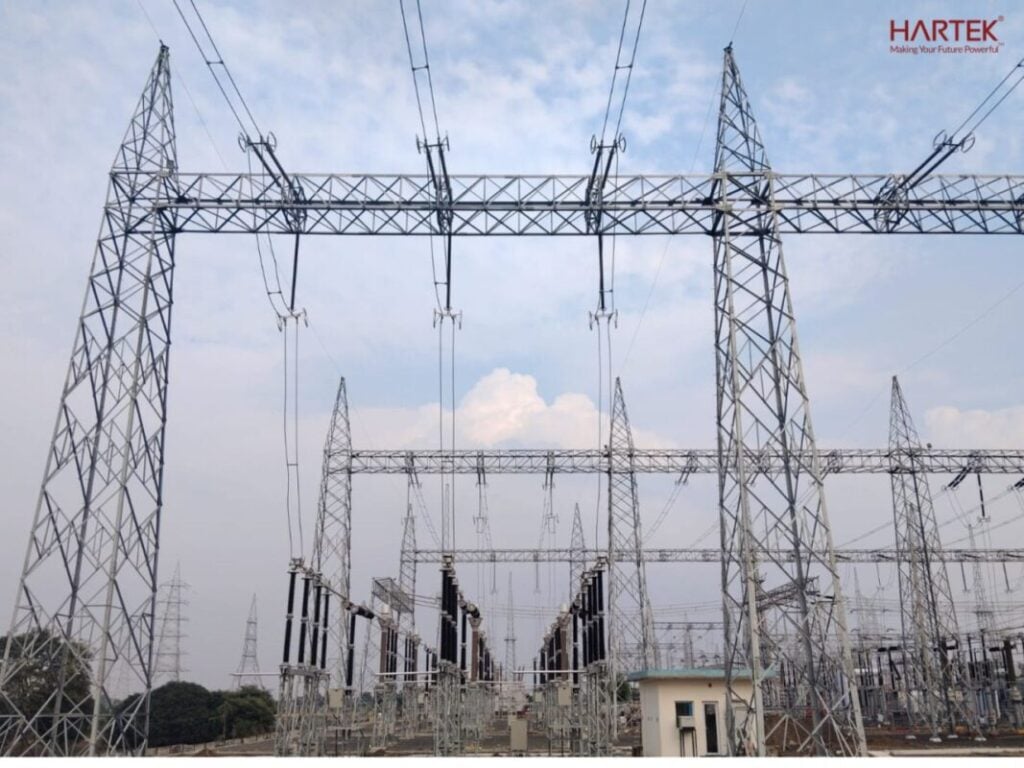
Simarpreet Singh, executive director and CEO of Hartek Power, engineering, procurement and construction (EPC) company, discussed the dynamics of India’s energy storage market amid the rapid growth of a maturing industry.
Regulatory developments are also shaping the market. The Central Electricity Regulatory Commission (CERC) has proposed new grid-operating requirements for standalone energy storage systems, including minimum trial-run requirements, staged commissioning provisions for larger projects and primary frequency-response capabilities for qualifying storage systems connected at 33kV and above. Meanwhile, the Central Electricity Authority (CEA) has proposed mandatory grid-forming inverter capability and co-located storage for new renewable energy projects from July 2027.
Speaking exclusively with Energy-Storage.news, Simarpreet Singh discusses how Green Energy Corridor Phase III can support the evacuation of 135GW of renewable energy capacity, the infrastructure priorities for strengthening grid reliability, and the role of BESS in reducing renewable energy curtailment and enabling round-the-clock clean power.
Try Premium for just $1
- Full premium access for the first month at only $1
- Converts to an annual rate after 30 days unless cancelled
- Cancel anytime during the trial period
Premium Benefits
- Expert industry analysis and interviews
- Digital access to PV Tech Power journal
- Exclusive event discounts
Or get the full Premium subscription right away
Or continue reading this article for free
Conversely, Singh also offers his thoughts on the challenges of project execution. These can typically include land acquisition, right-of-way clearances and stakeholder coordination, while highlighting opportunities for private-sector participation and integrated EPC capabilities in accelerating India’s transmission infrastructure development.
Our interview takes place ahead of Energy Storage Summit India 2026, happening this week (22-24 October) at India Expo Mart, Greater Noida, co-located with Renewable Energy India Expo and The Battery Show India.
Energy-Storage News: What role will Green Energy Corridor Phase III play in supporting the evacuation of 135GW of renewable energy capacity, and what are the key infrastructure priorities?
Simarpreet Singh: Green Energy Corridor Phase III is an important step towards aligning India’s transmission infrastructure with its renewable energy ambitions. The programme aims to support the evacuation of up to 135GW of renewable energy capacity by FY2032-33, alongside 50GWh of battery storage.
The key priority is to ensure that transmission infrastructure develops in parallel with generation. This requires timely commissioning of high-capacity transmission lines, pooling substations near renewable energy clusters and stronger intra-state networks to connect generation centres with the wider grid. Energy storage at strategic locations can further improve flexibility and help manage fluctuations in renewable power supply.
From an industry perspective, the programme’s success will depend on effective planning and timely execution. Delays in evacuation infrastructure can leave generation capacity underutilised and affect project economics. Our experience in substation development and renewable energy evacuation reinforces the importance of integrating transmission planning into the early stages of renewable projects.
What are the biggest execution challenges facing Green Energy Corridor projects, particularly around land acquisition, right of way, project timelines and coordination between stakeholders?
Right-of-way clearances, land acquisition, forest approvals and coordination among stakeholders remain some of the biggest challenges in transmission infrastructure development. A delay in securing permissions along a route can affect the construction schedule and postpone the commissioning of an entire transmission corridor.
Addressing these challenges requires early route surveys, proactive engagement with landowners and timely coordination between utilities, state authorities, developers and EPC contractors. Clear approval processes and predictable compensation mechanisms can help reduce uncertainty. Supply-chain readiness is equally important, particularly for specialised high-voltage equipment, where procurement delays can affect overall project timelines.
Execution planning must therefore begin well before construction mobilisation. Responsibilities, approval milestones and procurement schedules need to be aligned so that work can progress without avoidable interruptions.
What opportunities does the expansion of transmission lines, substations and associated grid infrastructure present?
India’s expanding transmission network presents a sustained opportunity across high-voltage transmission lines, extra-high-voltage substations, pooling stations and associated grid infrastructure. As renewable energy capacity grows, investment will be needed to connect generation centres with demand hubs and strengthen the reliability of the wider power system.
The opportunity extends across the infrastructure value chain, including civil works, transformers, switchgear, protection systems and battery storage. However, converting this demand into successful project delivery requires more than technical capability. Strong engineering expertise, dependable supply chains, financial resilience and disciplined project management will be essential to executing projects at scale and within timelines.
We believe the next phase of growth will favour companies that can manage complex projects across different voltage levels and geographies.
How can India strengthen grid reliability and minimise renewable energy curtailment as more intermittent capacity comes online?
As solar and wind capacity expands, India must strengthen the transmission and grid infrastructure required to absorb and deliver renewable power reliably. When evacuation networks are delayed or lack sufficient capacity, generation may be curtailed, affecting project economics and limiting the effective use of clean energy.
The priority is to align transmission development with generation commissioning, particularly in renewable-rich states. Stronger intra-state networks, timely completion of substations and improved coordination between utilities and developers can help reduce connectivity bottlenecks. Greater flexibility is also needed through battery storage, pumped hydro and better forecasting of renewable generation, enabling the grid to respond more effectively to variations in supply and demand.
Addressing curtailment requires a system-wide approach rather than isolated interventions. Connectivity approvals, transmission readiness and project schedules must be planned together.
What role can battery storage play in grid stability and round-the-clock (RTC) renewable power, and how should it be integrated into transmission planning?
Battery energy storage can play a vital role in improving grid stability and making renewable power more dependable. It can respond quickly to fluctuations in supply and demand, while storing surplus solar generation for use during evening peaks or periods of lower renewable output. Combined with solar and wind, storage can also support round-the-clock renewable power solutions.
For storage to deliver its full value, it must be considered alongside transmission planning rather than as a standalone asset. Deploying batteries at strategic pooling stations and congested grid nodes can help manage local constraints and improve the utilisation of existing infrastructure. Planning must also account for charging and discharging requirements, grid connectivity and clear commercial arrangements.
India’s planned deployment of 50GWh of battery storage under Green Energy Corridor Phase III is a significant step towards a more flexible power system. The next priority is to ensure that storage is located and operated where it can deliver the greatest system-wide benefit. Integrated planning across generation, transmission and storage will be essential to supporting reliable, round-the-clock clean power.
Keeping pace with India’s rapid energy transition
Is India’s current transmission infrastructure development keeping pace with its renewable energy ambitions? Where are the most significant gaps, and what needs to change?
India has made significant progress in expanding renewable energy capacity, but transmission infrastructure needs to develop at a comparable pace. The challenge is not simply adding generation; it is ensuring that electricity can be evacuated and delivered reliably to consumers.
Key gaps remain in intra-state transmission networks, pooling infrastructure in renewable-rich regions and storage capacity to manage fluctuations in generation. Where transmission development lags renewable projects, connectivity constraints can limit the utilisation of installed capacity and increase curtailment risks.
Closing these gaps requires closer coordination between generation and transmission planning. Connectivity requirements should be assessed early, while right-of-way clearances, equipment procurement and construction schedules need to be managed efficiently. Investment in state-level networks and grid flexibility will also be important.
Green Energy Corridor Phase III provides an opportunity to address these needs through investment in intra-state transmission and battery storage. Its impact will depend on timely implementation.
How can greater private-sector participation and integrated EPC capabilities accelerate transmission infrastructure development and India’s broader energy transition?
Greater private-sector participation can accelerate transmission infrastructure development by bringing investment, technical expertise and a focus on execution efficiency. Competitive frameworks can encourage cost discipline, while private developers and EPC companies can contribute to the timely delivery and management of critical infrastructure.
Integrated EPC capabilities are particularly important because engineering, procurement, construction and commissioning must work in tandem. A coordinated delivery model can reduce interface risks, align procurement with site readiness and establish clearer accountability for project timelines. This is increasingly relevant as transmission programmes expand across states and voltage levels.
Policy support will remain important. Predictable approvals, timely right-of-way resolution and clear commercial frameworks for battery storage can help improve project execution and encourage investment.
From Hartek Power’s experience in power infrastructure development, what are the key lessons for delivering renewable energy evacuation projects at scale, and how do you see the sector evolving over the next few years?
Our experience in power infrastructure has reinforced three key lessons for delivering renewable energy evacuation projects at scale: plan transmission alongside generation, engage stakeholders early and maintain execution discipline. Hartek Power’s experience across substation development and renewable energy evacuation underlines the importance of having supporting infrastructure ready when generation capacity comes online.
Early coordination with utilities and other stakeholders helps address connectivity, right-of-way and procurement requirements before they affect project schedules. Strong engineering capabilities, reliable supply chains and financial resilience are also important to managing complex projects and delivering them within defined timelines.
Looking ahead, the sector is likely to see continued investment in high-voltage transmission, stronger intra-state networks and battery storage. As round-the-clock renewable energy solutions gain importance, generation, storage and transmission will increasingly need to be planned as an integrated system.
We believe companies that combine engineering expertise with dependable execution will be well positioned to contribute to this growth. For Hartek Power, the focus remains on delivering reliable power infrastructure that supports renewable energy integration and India’s long-term energy ambitions.
The Renewable Energy India Expo and The Battery Show India will run from 22-24 October 2026 at India Expo Mart, Greater Noida, bringing together developers, utilities and global technology providers. The event is co-located with the Energy Storage Summit India, now in its second annual edition, which will offer a dedicated agenda for asset owners, developers and policymakers working through the commercial and regulatory questions shaping India’s energy storage build-out.
