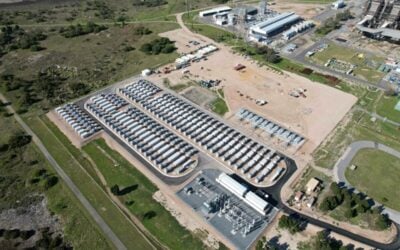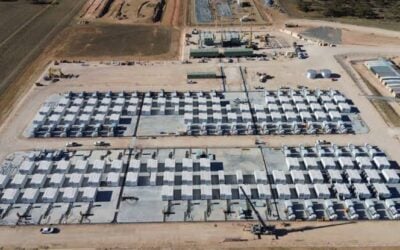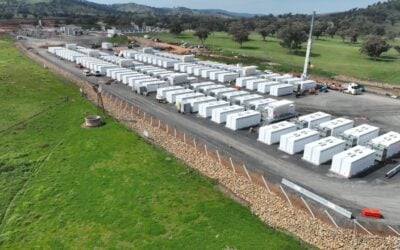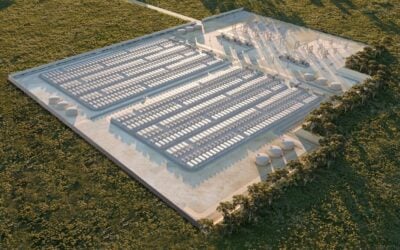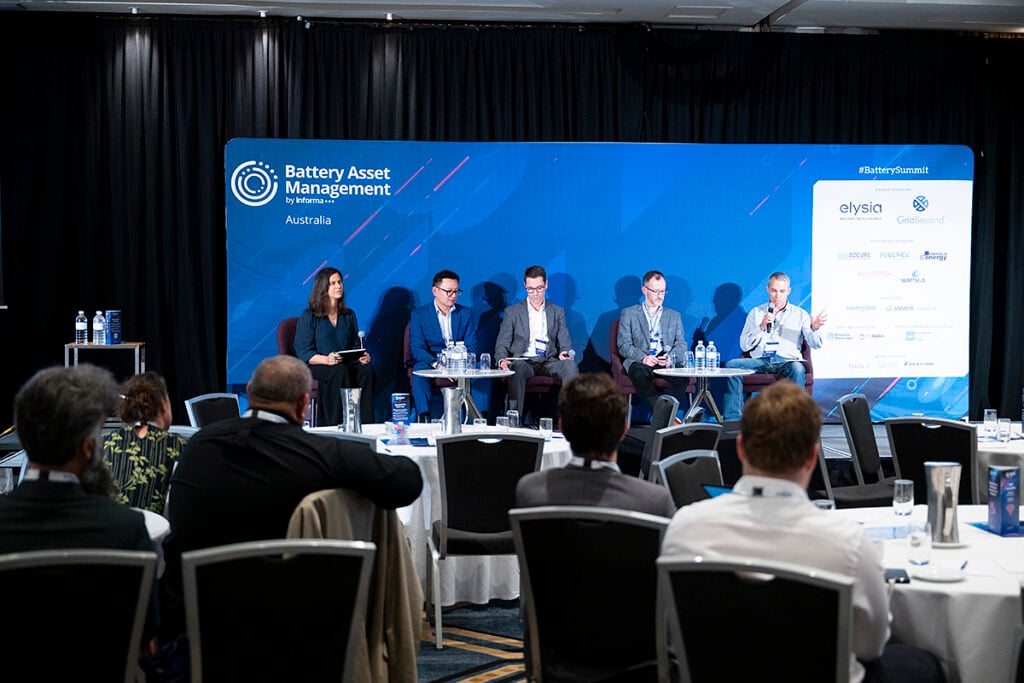
Copper theft has become a recurring physical security issue at Australian battery storage sites, with one regulator reporting multiple incidents observed firsthand in the past six months alone, according to panellists speaking at the Battery Asset Management Summit Australia 2026 in Sydney.
Speaking on the panel “Mitigating the Worst-Case Scenario: How are Developers Navigating Safety Measures?”, Steven O’Donnell, generation and storage manager for renewable energy safety at Energy Safe Victoria, said the trend had become a notable pattern during site visits.
“We’ve seen probably a growing trend of copper theft-initiated security issues,” O’Donnell said.
“I’ve personally seen it four or five times in the last six months when I’ve been on site.”
Try Premium for just $1
- Full premium access for the first month at only $1
- Converts to an annual rate after 30 days unless cancelled
- Cancel anytime during the trial period
Premium Benefits
- Expert industry analysis and interviews
- Digital access to PV Tech Power journal
- Exclusive event discounts
Or get the full Premium subscription right away
Or continue reading this article for free
O’Donnell said the discovery often came during routine or proactive inspections.
“Sometimes routine insights because there’s been an incident or it’s just a proactive visit, and we discover there’s a cabinet open, and we think, oh, someone’s working here today, and no, someone’s broken in and they’ve stolen copper,” he said.
He added that physical security risks extended beyond battery storage assets themselves to the high-voltage substations and installations that accompany them, including historical fatalities involving children entering substations on utility networks.
“I guess when you have hundreds of discrete [assets] around the country, that state of knowledge might not be there,” he said, noting that cameras provided at least an early warning of unauthorised activity near a site.
Peter Hulkenberg, director and principal consultant at Pelagion, said copper theft was not a new phenomenon, but one the industry could learn from managing in other contexts.
“I saw that about 18 or so years ago in the UK when I was commissioning cables and substations,” he said.
“Theft of copper earthing and stuff was going on almost on a weekly basis, and the risks associated with that are huge,” Hulkenberg said, and equipment enclosure security improved over time as a result.
“It took us a fair while with the OEMs to specify proper locks on equipment and panel doors to make sure that unauthorised access is limited to the best practices possible,” he said.
Spare parts storage carried its own security and degradation risks
Charlie Zha, an asset manager at BW ESS, said spare parts security was often overlooked compared with broader site security measures.
Recalling an early visit to a site as a new manager, Zha said he was shown extensive intrusion detection and camera systems before discovering a separate vulnerability.
“Before I leave, we’ll go into the spare parts container. We found once that the door was wide open,” he said.
“They think, oh, they’re just computers. I say they’re not computers. A lot of engineering hours have gone into the coding programme for all this. I cannot afford to lose them.”
Hulkenberg said storing spare battery modules on site introduced a separate risk tied to degradation rather than theft.
“Spare battery modules will degrade, they will lose capacity, and they’re not allowed to be stored for long periods of time below a certain state of charge,” he said.
“When you need them, the state of health might be far less than you want them to be.”
O’Donnell said his organisation deferred to manufacturer guidance when assessing compliance in this area.
“OEMs will specify how it’s to be stored,” he said.
“We would often go, well, what did the OEM recommend? What was specified? Have you followed that? If not, why not?”
On the broader fire risk posed by stored modules, O’Donnell said his agency’s primary concern was public safety and bushfire risk rather than asset protection itself.
“Our primary concern is the safety of people, property, and bushfire danger, not so much your property,” he said.
“If your storeroom burns down, that isn’t a major concern to us. But if that storeroom doesn’t have, or has, dry vegetation around it, and can then propagate, ignite a bushfire, then we are very focused on that.”
Safety began at the design stage, not the fire suppression system
Hulkenberg said the industry’s focus on battery fires often obscured the fact that safety needed to be addressed across the entire system, not just the cells.
“The battery is not just the energy storage component,” he said.
“We’ve got the inverters, we’ve got the transformers, we’ve got the switchgear, and everything associated with that.”
He said the process should begin with a functional specification covering where a system would be installed, ambient conditions, altitude, and access to spare parts and emergency services, particularly for remote sites such as mines.
“Safety starts not at the fire water tank. It starts at the functional specification,” he said.
Hulkenberg said due diligence on equipment selection should include close scrutiny of how a battery’s voltage window matched its inverter, how degradation had been demonstrated with real operational data rather than projections, and how well a battery management system (BMS) and power conversion system (PCS) had been tested together before arriving on site.
“A lot of battery fires, particularly in the early stage, the BMS was the underlying cause,” he said, pointing to cases where a BMS allowed a battery to be overcharged or overdischarged.
He also identified cooling system performance as a recurring failure point distinct from cell or BMS issues.
“Most issues I’ve seen are not on the cells, not on the BMS, but are actually on how this cooling system is performing,” he said, adding that site design “starts with understanding the results of the UL testing and the NFPA standards around thermal runaway” so that spacing and containment measures reflected what happened if a fault did occur.
On cybersecurity, Zha noted that Australian standards had shifted toward greater operator responsibility.
“Security of Critical Infrastructure Act (SOCI) doesn’t hold our hands anymore, so it will allow you to write in your own [framework], and you try to establish new things,” he said, referring to obligations under Australia’s Security of Critical Infrastructure Act.
On data practices, Zha said BW ESS structured its monitoring around three priorities: grid performance data to defend against non-compliance findings from AEMO or a transmission network service provider, availability and performance data to support warranty claims and negotiations with OEMs, and network traffic monitoring to flag cybersecurity anomalies.
Hulkenberg added that data resolution mattered as much as the categories collected.
“It’s assessing what I need the data for, and how fast or frequent I need to get that data to make the right decisions for my plant,” he said, noting that remote sites also required reliable communication links and local data historians to ensure access when connectivity was limited.
Never miss an Australian energy storage story. Sign up for our Australia newsletter and get the latest project announcements, policy updates and market analysis delivered directly to you.